

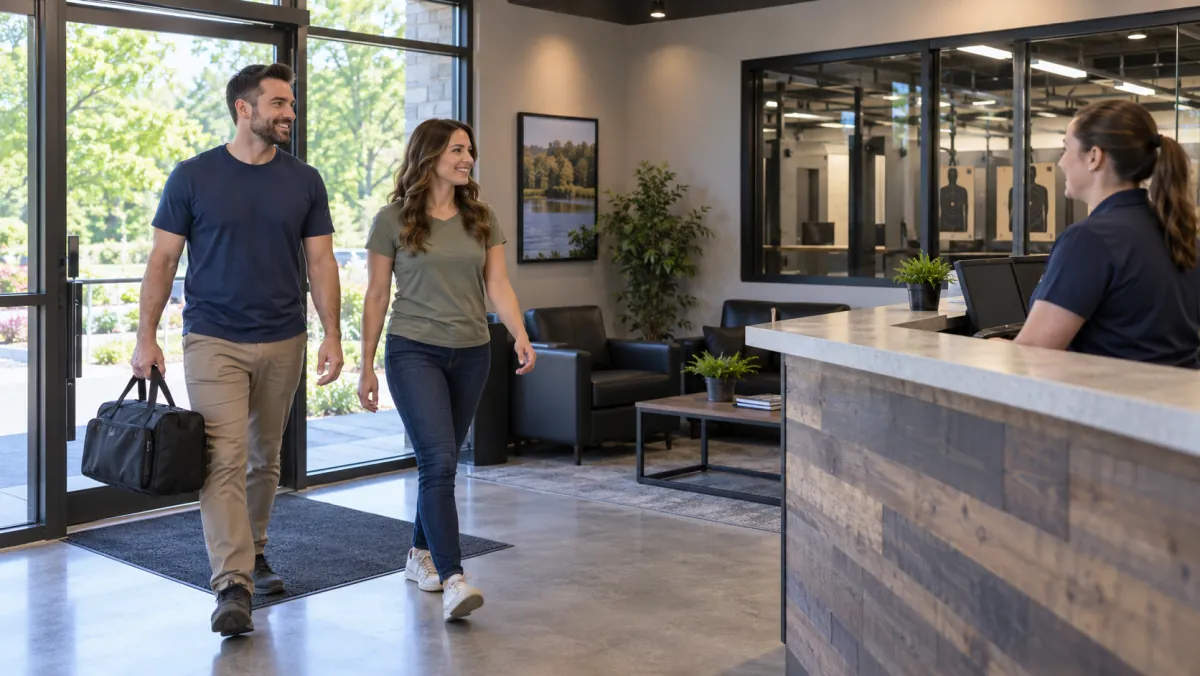
Summer calendars in Michigan fill quickly. A free afternoon can disappear between family gatherings, travel, yard work, and plans that depend on the weather. An indoor range visit can fit into that season, but it works better as a deliberate appointment than as something squeezed between a late lunch and an evening event.
Planning summer indoor range visits in Michigan is mostly about ordinary details: what you wear, when you arrive, how much time you have, and whether everyone understands the activity. The indoor setting removes some outdoor variables during the session, while the trip, the equipment, and the people still need attention.
For visitors around Detroit and Downriver, Range 313 in Lincoln Park is one local option to discuss. This guide explains how to make a summer visit manageable without assuming that indoor conditions, rental availability, or open lanes will always match your first guess.
Give the range its own place in the day
Start with the activity you want rather than the empty space on your calendar. A first-time lesson needs time for questions and orientation. A recreational visit with familiar equipment has a different pace. A full course is a much larger commitment and should not be treated as an afternoon stop.
Ask staff how much time to allow for your specific arrangement, including check-in, equipment selection, instruction, and packing up. If the provider cannot promise an immediate lane, leave flexibility. A reservation or confirmed plan is more useful than assuming that everyone will be ready to begin the moment you arrive.
Keep another appointment from pressing against the end. When someone is watching the clock, explanations and cleanup can feel like obstacles rather than parts of the visit. Our range visit timing guide helps separate shooting time from the full amount of time to set aside.
Dress for the activity before the temperature
Clothing that feels appropriate for a patio or beach may not suit a firing range. Ask about the facility’s dress expectations. Closed-toe shoes, comfortable movement, and coverage appropriate for the environment should guide the choice.
Lightweight clothing can still meet those needs. Choose items that let you stand, sit, and follow instructions without repeatedly adjusting them. Avoid loose accessories or clothing details that interfere with protective equipment or the lane setup. If you are uncertain about a particular item, ask before arriving.
Consider what you will do with sunglasses, hats, and an outer layer once inside. They should not become loose objects on the shooting bench or interfere with required eye and hearing protection. A small amount of organization keeps seasonal clothing from adding unnecessary clutter to a supervised session.
Check protection together, not piece by piece
Summer changes in clothing and eyewear can affect how your protective gear fits. The sunglasses you wear while driving are not automatically appropriate range protection. A cap, glasses, and earmuffs should be assessed as a complete setup according to facility requirements and manufacturer guidance.
Ask for help before entering the firing area if you are unsure. It is easier to make an adjustment in the designated preparation area than to discover a problem once the session starts. Keep required protection in place wherever staff instructs you to wear it.
If you are bringing a first-time guest, do not hand over a spare pair and assume the fit is adequate. Each person’s equipment should be checked individually. Comfortable, correctly used protection supports attention, while repeated fiddling with an uncomfortable setup can distract from the instructions that matter.
Keep food and drink outside the firing routine
Summer outings often revolve around meals and refreshments. Plan those separately from the shooting area. Ask where food and drinks are permitted, where you can wash, and whether a longer class has a scheduled break.
NIOSH identifies lead exposure as a concern at firing ranges and recommends washing before eating or drinking after exposure. Its range safety guidance is a useful reference. Follow the facility’s hygiene procedures instead of treating a quick wipe on clothing as preparation for lunch.
If you are making a restaurant stop afterward, allow time to finish the range visit properly first. Account for equipment, follow the cleaning and hygiene instructions provided, and complete any transport or storage arrangements lawfully. A meal reservation should not encourage hurried packing or an unresolved decision about what remains in the vehicle.
Plan the trip even when the destination is indoors
An indoor activity does not eliminate weather from the day. Heavy rain, storms, or poor road conditions can still affect travel and facility operations. Check the actual conditions before leaving rather than relying on the forecast you saw several days earlier.
For a visit from another part of Metro Detroit, use current navigation information and allow a reasonable arrival buffer. Avoid promising a fixed travel time based on distance alone. Road work, traffic, and an unfamiliar entrance can add time even on an otherwise ordinary afternoon.
If conditions become disruptive, contact the range about its status and your arrangement. A delayed or rescheduled visit is easier to manage before you are on the road. Do not let a prepaid activity become a reason to make an unsafe trip or arrive too unsettled to participate attentively.
Simplify equipment for a day with several stops
If you do not own a firearm, ask whether the facility offers an appropriate rental arrangement for your situation. Confirm eligibility, supervision, identification, ammunition, and any other requirements. A rental can simplify some logistics, but it is still subject to the provider’s rules and applicable law.
If you bring your own equipment, plan the entire itinerary in advance. Other destinations may have their own restrictions, and transport or unattended storage questions need to be resolved before the trip. A summer outing should not become a sequence of parking-lot decisions about where equipment can be left.
For many people, a dedicated range visit followed by a return home is easier to organize than a full day of unrelated stops. Choose the arrangement that you can carry out lawfully and securely. Convenience is useful only when the details actually work.
Introduce visitors to the plan before the drive
A friend visiting Michigan may be interested in trying a range without knowing what the experience involves. Explain the noise, protective equipment, orientation, and individual participation requirements before making the outing part of the itinerary. Give them an easy way to decline or ask for a different activity.
Do not assume that enthusiasm for a vacation experience means someone wants to handle a firearm. A person may prefer a conversation with staff first. Ask the facility about appropriate introductory instruction rather than assigning yourself the teaching role because you arranged the trip.
For visitors from another jurisdiction, resolve eligibility and documentation questions in advance. International visitors have additional considerations that should not be guessed from citizenship alone. Our Canadian visitor guide provides questions to discuss with staff and official sources before a cross-border plan is made.
Choose a session that matches everyone’s attention
A range visit after a long drive, an early start, or an exhausting outdoor activity may be less appealing in practice than it sounded on the calendar. Ask each participant how they are feeling before checking in. Anyone who cannot follow instructions reliably should speak with staff and reconsider participation.
Avoid framing a shorter visit as a disappointment. A focused introduction with time for questions can be a good summer activity. The objective is not to stay until every person is tired or to use a predetermined amount of ammunition simply because it was purchased.
If the group has mixed experience, let staff know. An experienced visitor’s idea of a casual session may be too fast for a newcomer. Separate instruction or a different format may give everyone a better experience than trying to keep the group on one pace.
Make photography a secondary decision
People often want a photo of a summer outing. Ask the range about its photography policy and respect other visitors’ privacy. If photography is allowed, coordinate it with staff and only do it when it does not interfere with instruction or safe procedures.
Do not ask someone to handle equipment for a dramatic pose or repeat an action for a better recording. A picture should document an appropriate moment, not create a new activity on the firing line. Put the phone away when attention belongs on the instructor.
Check with companions before posting images of them. Someone may be comfortable attending but prefer not to share the experience publicly. The best souvenir can be a useful lesson or a plan for another visit; it does not need to be a photograph of every part of the day.
Leave time for a complete finish
The end of the visit includes more than paying the bill. Follow staff instructions for returning rentals, packing personal equipment, handling targets, and cleaning the area. Check that identification, phones, protective gear, and bags are accounted for before leaving.
At home, complete the appropriate secure-storage routine promptly. Deal with damp clothing or bags according to their care instructions, and keep used range equipment separate from food preparation areas. Do not leave the entire setup packed simply because the next summer event is already calling for your attention.
Write down one thing to remember for next time. Perhaps you need different protective glasses, more time for orientation, or a lesson tailored to a particular question. A small note can make the next visit easier without turning a recreational afternoon into a complicated project.
Choose a manageable summer visit in Lincoln Park
A good plan can be straightforward: confirm the activity and requirements, travel in appropriate clothing, arrive with time to settle in, follow the instructor’s direction, and finish the visit before moving on to the next commitment. None of those steps requires an elaborate itinerary.
The value of an indoor summer option is the chance to arrange a focused activity with a clear purpose. It still deserves the same preparation and attention as any other range visit. Decide what you want to learn, ask about the format that fits, and give the experience enough space in the day.
Contact Range 313 to discuss your preferred date, group size, and experience levels. The team can explain current arrangements at its Lincoln Park location. With those details confirmed, you can build a summer plan around the visit instead of hoping the visit will fit whatever time remains.