
The range bag may be exactly where you left it, but that does not mean your next visit should pick up at the same pace. Work, family responsibilities, a move, or simply a change in interests can turn a short break into several years. Returning is easier when you treat your previous experience as useful background and give yourself time to discover what needs refreshing.
Returning to the shooting range in Michigan is not a test of whether you still deserve to call yourself experienced. It is an opportunity to reestablish safe routines, check equipment, and decide what you want from the activity now. You may want occasional recreation rather than the schedule you once followed. That is a perfectly workable starting point.
The most productive first visit is usually a planned one. Before bringing an old case to the counter, consider these questions about instruction, equipment, current rules, and expectations.
What has changed since your last visit?
Start with your own circumstances. Think about how long you have been away, what kind of shooting you previously did, and whether that experience included recent professional instruction. Occasional outdoor practice years ago may not prepare you for the procedures of a busy indoor range today.
Your physical comfort, vision, hearing, and ability to stand for a session may also be different. Describe relevant practical needs to the instructor. If a medical condition or medication raises a question about safe participation, address it with a qualified clinician before the visit rather than expecting range staff to make that assessment.
Then consider the facility. Ownership, rental policies, accepted ammunition, lane rules, and class options may have changed. A familiar name is not a guarantee that every procedure is unchanged. Reviewing the current range information and contacting staff can prevent an avoidable surprise at check-in.
Tell the instructor the actual story
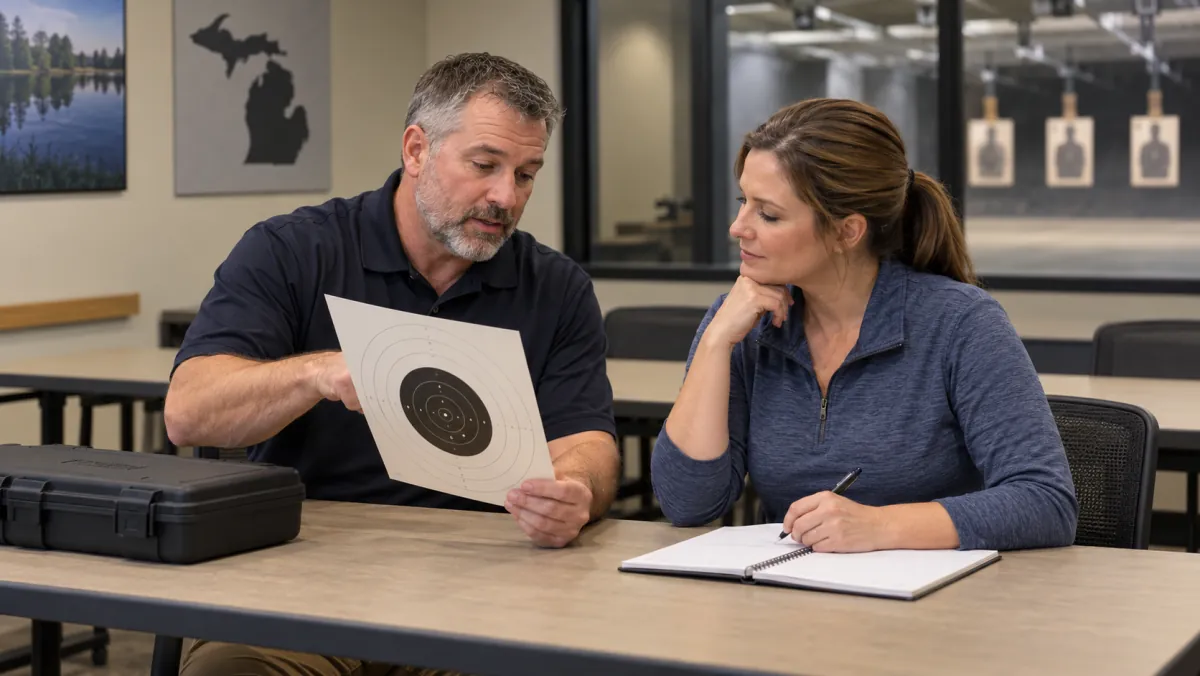
“I used to shoot regularly, but I have not been to a range in six years” is a useful description. “I know what I am doing” gives an instructor much less information. You do not need to minimize your previous experience or exaggerate how much you remember.
Explain what you used to practice and what you want help reviewing. Perhaps you remember classroom safety concepts but feel uncertain about handling a particular firearm. Maybe you have never used the target controls at an indoor facility. Those details help staff suggest the appropriate format.
A refresher session can be especially useful if you are returning with unfamiliar equipment or after a long period without supervision. Ask what the session includes and whether it will allow time for questions before entering the firing area. Paying for attention and clear feedback may be more valuable than paying for a longer unsupervised lane visit.
Check stored equipment before deciding to use it
Long storage can hide ordinary problems. Cases may hold moisture, protective equipment may deteriorate, and accessories may no longer work as expected. Inspect what you can appropriately inspect according to the manufacturer’s instructions, and seek qualified help with anything uncertain.
Do not make the first range visit an experiment to see whether a questionable firearm still works. If you notice corrosion, damage, missing parts, or unexplained changes in function, arrange professional evaluation before use. The gunsmithing service guide explains how to prepare information for that conversation.
Stored ammunition also deserves attention. Keep identifying information intact and do not rely on memory or appearance to establish compatibility. Ask a qualified professional about damaged or unknown ammunition. A small amount of uncertainty is enough reason to pause; using an item is not an appropriate way to identify it.
Reassess protective equipment as a complete setup
The glasses and earmuffs in an old bag may be familiar, but familiarity does not establish condition or fit. Check them using the manufacturer’s guidance. Look for worn components, damaged lenses, missing parts, and any change that affects how they sit on you.
Try the equipment together before the session, with staff assistance as needed. New prescription glasses, a different hairstyle, or a hat can change the way earmuffs fit. Ask about the facility’s current protection requirements and available replacements before assuming that everything you brought is suitable.
If you have questions about hearing devices, vision changes, or personal protection needs, consult the relevant professional or manufacturer. Range staff can help explain the environment and equipment rules, but they cannot turn an uncertain medical question into a safe answer simply by offering another pair of earmuffs.
Separate current law from remembered advice
A long break is a good reason to refresh your understanding of Michigan requirements. Ownership, transport, licensing, and storage are distinct subjects. Advice you remember from a friend or an old class may be incomplete for your present situation.
Use the Michigan State Police firearms resources as an official starting point. If you hold a CPL, check its status and the requirements relevant to it rather than assuming an old card or course certificate answers the question. Do not rely on a range visit to resolve licensing uncertainty after you have already traveled with equipment.
At home, review your storage arrangement as well. A changed household or new visitors can make an old routine unsuitable. Our secure firearm storage guide offers practical questions to consider alongside current official guidance.
Give the first session a small, clear purpose
The urge to recreate your best past performance can make a return unnecessarily frustrating. Choose a first-session goal that an instructor can help assess: understanding the current range commands, becoming familiar with the equipment again, or identifying the next topic that needs attention.
Discuss that goal before starting. Ask the instructor how the session will be structured and what signs should prompt a pause. Leave room for explanation and feedback. If your booking is so tightly packed with activity that nobody can discuss what is happening, it may not suit a refresher visit.
You do not need to use every minute of a lane reservation to justify the trip. A shorter session that ends with a clear understanding is worthwhile. Staying only because you bought more ammunition or remember practicing longer in the past can distract from your current readiness.
Relearn procedures even when they sound familiar
Listen to the full orientation. Let staff explain how cases are handled, where equipment may be opened, what commands mean, and how to request help. A procedure with a familiar name can still be implemented differently at another facility.
Ask for clarification before acting on an uncertain instruction. Avoid filling a gap with a habit learned elsewhere. On a shared firing line, consistency with the current facility’s procedures matters more than proving that another range once did it differently.
The same principle applies if something unexpected happens with equipment. Keep it oriented as instructed, stop, and get staff assistance. A long-remembered troubleshooting technique is not a reason to attempt a procedure you cannot confidently and safely perform under the present conditions.
Notice comfort and attention as well as results
After time away, the environment can feel more demanding than expected. Noise, protective equipment, standing, and concentration all compete for attention. Tell the instructor if you are becoming uncomfortable or having trouble following the sequence of instructions.
Use an approved break when appropriate. Discuss any recurring concern before another session rather than assuming it will disappear if you push harder. The first return gives you information about what a sustainable visit looks like now.
Avoid evaluating the day only through a target photograph. Safe decisions, good questions, and a realistic understanding of your limits are meaningful outcomes. A target can inform an instructor’s feedback, but it does not show how you responded to commands or whether you recognized when to ask for help.
Write a short record while the visit is fresh
A few notes can make the next session much easier to plan. Record the date, the equipment used, the instructor’s main recommendation, and one question to revisit. Keep the notes factual and brief enough that you will actually read them.
For example, “Ask staff to check the fit of my new glasses with these earmuffs” is more useful than “Buy better gear.” “Book a refresher on the procedure discussed today” is more useful than “Practice more.” Specific notes turn a general intention into something you can arrange.
If you save targets, label them with context appropriate to your own recordkeeping. Do not use isolated results to compare yourself with other visitors online. Your first several sessions should help you understand your own progress and learning needs, not provide material for a performance contest.
Choose a follow-up you can maintain
A burst of enthusiasm can lead to an unrealistic promise to visit every few days. Instead, choose a follow-up that fits your schedule and the instructor’s advice. If you need another lesson before independent practice, make that the next step.
If regular recreational visits are appropriate, consider travel time, budget, and the practical work of packing and securing equipment afterward. A manageable routine is easier to maintain than one that consumes an entire weekend or depends on perfect timing.
You can revisit larger decisions later. Memberships, equipment changes, and additional courses make more sense once you know how you intend to participate. Give yourself a few purposeful experiences before making purchases based on the habits you had several years ago.
Make the return fit your life today
Imagine someone who once visited a range with coworkers every month and now returns after moving to Downriver. Their old routine may no longer fit their schedule, equipment, or interests. A local refresher lesson and occasional planned visits could be a better match than trying to recreate the former arrangement exactly.
That is the advantage of beginning with a conversation. You can identify the relevant changes, avoid assumptions, and choose a realistic first session. Previous experience helps most when it makes you more willing to ask useful questions, not less willing to hear the orientation.
Range 313 is at 1125 Fort St in Lincoln Park. Contact the team with the length of your break, your equipment questions, and what you hope to review. Returning thoughtfully gives you a clearer foundation for whatever comes next, whether that is an occasional recreational visit or a renewed commitment to formal training.