

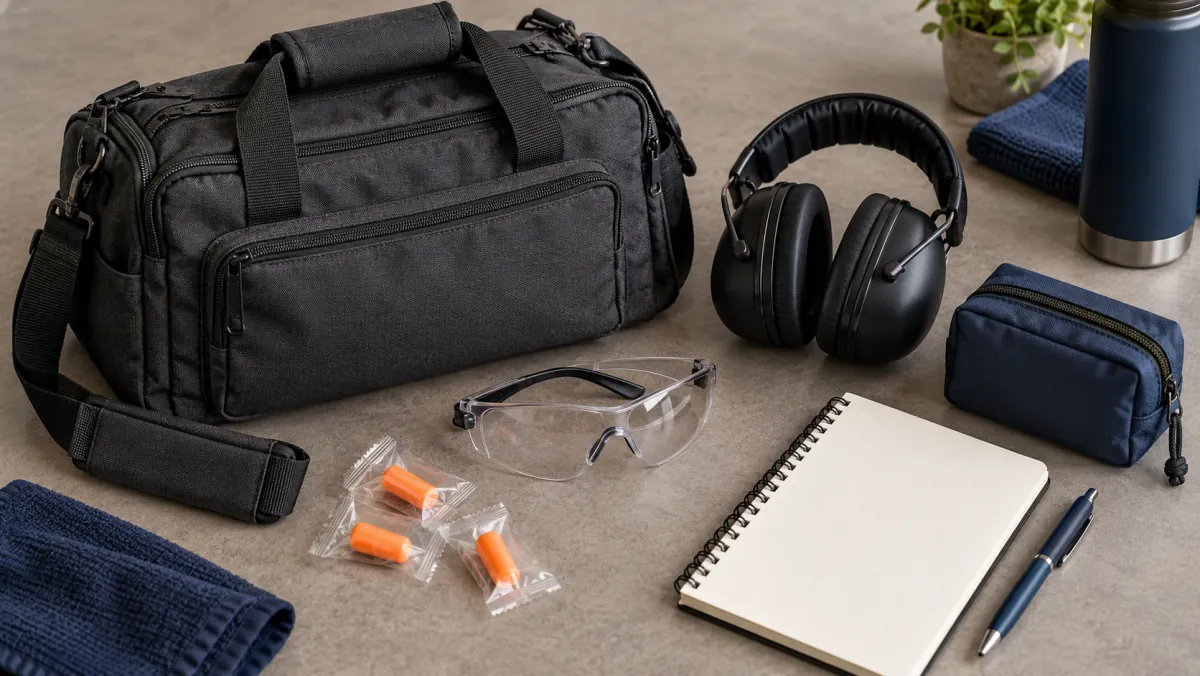
An overfilled range bag can make a simple visit harder. The glasses are under a pile of unused accessories, paperwork is mixed with old targets, and nobody remembers which pocket contains the small item needed at check-in. More capacity does not necessarily create better preparation.
The most useful range bag essentials in Michigan are the items that support the visit you have actually arranged. A first rental session, a full training day, and a short recreational visit may call for different packing choices. Start with the provider’s instructions, then organize the approved items so you can find them without unpacking everything at the counter.
This guide focuses on practical organization rather than a shopping list of brands. You may already own much of what you need. The objective is to arrive prepared, follow staff directions, and return home with equipment accounted for and properly secured.
Let the reservation determine the contents
Before choosing a bag, confirm the nature of your visit. Are you attending a class with equipment included, renting for a supervised introduction, or bringing your own equipment for approved recreational use? Each arrangement changes what belongs in your bag.
Ask the facility for its current requirements. Clarify identification, protective equipment, ammunition policies, targets, and any forms that can be completed in advance. If you are attending a course, use the course’s specific instructions instead of assuming a general range checklist covers everything.
Keep that information in one place. A short note on your phone or a printed confirmation can prevent a last-minute search through emails. For a visit to Range 313, begin with the range page or the relevant course information , then ask staff about anything unclear.
Choose a bag you can carry and organize comfortably
The right size is large enough for the required items and small enough that you can manage it without strain or clutter. Consider the weight when packed, the handle or strap, the quality of closures, and whether you can identify compartments easily.
A bag with many pockets is useful only if you have a consistent purpose for them. Otherwise it creates more places to lose small items. A modest layout with a few labeled pouches can work well, especially for someone who visits infrequently and does not remember an elaborate packing system.
Do not confuse organization with security. A soft bag, a zipped pocket, or an inconspicuous appearance does not automatically satisfy storage or transport needs. Firearms require the appropriate arrangements for your situation, current law, and facility instructions. The outer bag is only one part of that plan.
Keep check-in items easy to reach
Identification and booking details should be available without exposing or handling unrelated equipment. Put paperwork in a clean, protected compartment and know which identification the facility requires before leaving home. Our Michigan range ID guide can help you prepare questions.
Bring a payment method the provider accepts and any course materials specifically requested. If a waiver must be completed, read it carefully and answer accurately. Do not assume that a friend can sign or answer eligibility questions for you.
Leave unnecessary documents at home. Carrying a large collection of old certificates, purchase paperwork, and unrelated personal records can increase confusion and create an avoidable privacy concern. Pack what the provider actually requests and keep originals secure when they are not needed.
Give eye protection a protected place
Protective glasses should not be loose at the bottom of a bag where they can be scratched or distorted. Use suitable storage according to the manufacturer’s guidance, and inspect their condition before the visit. If you wear prescription lenses, confirm how your required range protection will work with them.
Bring the equipment you have discussed with staff rather than assuming ordinary sunglasses are sufficient. Lens tint, coverage, and compatibility with other gear can affect suitability. The range’s requirements and the product’s intended use matter more than whether the glasses look similar to someone else’s.
If you do not own appropriate protection, ask whether rentals or purchases are available. You do not need to solve every equipment question independently before your first visit. A clear answer from staff is more useful than buying an unfamiliar product in a hurry and hoping it meets the requirements.
Pack hearing protection as a usable system
Earmuffs and earplugs need to be accessible before entering any area where protection is required. Keep them clean and stored as directed. Check their condition and, for electronic equipment, follow the manufacturer’s guidance about power and maintenance.
Do not assume that two items work well together simply because each fits separately. Glasses, hats, and hair can affect fit. Ask staff for help checking your setup and follow the facility’s protection rules throughout the visit.
If you carry spare plugs, keep them in their original packaging or another suitable clean container. Loose foam plugs rolling around with tools are not an organized backup. Our eye and ear protection article explains why fit and appropriate use deserve more attention than the number of accessories in a bag.
Keep ammunition questions outside the guessing category
Ask the range what ammunition is permitted for your planned activity. A rental program may have requirements different from those for a visitor’s own equipment. Do not buy a large quantity before confirming compatibility and facility policy.
Preserve labels and identifying information, and keep ammunition organized according to appropriate guidance. Do not mix loose items from different boxes and expect to sort them by appearance later. If identification or condition is uncertain, stop and seek qualified advice before use.
Avoid packing excess simply because the bag has space. A class may specify what is required or provide it. A short practice session should have a reasonable plan. Bringing more than needed can add weight and leave you with a less manageable collection to account for afterward.
Use one small place for learning materials
A notebook and pen can be among the most useful items in the bag. Write down the question you want to ask before the session, then record the instructor’s main recommendation afterward. Keep the notebook separate from used targets and dirty equipment.
If the provider allows you to retain targets, decide how you will carry them without filling every compartment. A simple folder or suitable sleeve can keep a small number organized. You do not need to save every target to remember what you learned.
Label notes with enough context to be useful later. “Review the procedure with the instructor next time” is actionable. A page of unexplained numbers or a target with no date may be difficult to interpret after a few weeks. Good recordkeeping should reduce confusion rather than create another collection to manage.
Keep hygiene supplies and food in separate plans
Range surfaces and equipment can carry contaminants. NIOSH advises washing hands, forearms, and face before eating or drinking after range exposure. See its firing range lead and noise guidance . Follow the facility’s hygiene instructions and use appropriate products as directed.
Ask where food and drinks are allowed and where you can wash before a break. A bottle for use in an approved clean area should not become an item placed on the shooting bench. Pack meals separately from range equipment when attending a long course.
Keep cleaning products closed and in their intended containers, and do not mix chemicals or transfer them into unlabeled bottles. Only bring supplies needed and permitted for your visit. A routine range session is not an invitation to perform unapproved maintenance at the lane or counter.
Leave the workshop at home
It is easy for a range bag to collect tools, spare parts, and products over time. Ask which items genuinely support the planned session and which have simply stayed in the bag since an unrelated task. A smaller, purposeful kit is easier to inspect and account for.
If equipment needs repair or adjustment, arrange the appropriate service. Do not assume that carrying a tool means you should use it during a public range visit. Staff must approve what happens in the facility, and a qualified professional should address work beyond your knowledge or the manufacturer’s permitted procedures.
Similarly, avoid bringing unfamiliar accessories to try without discussing them. Something purchased online may not suit the equipment or the facility’s rules. Resolve those questions before the visit so your session can focus on the activity you actually booked.
Adapt the outer layer to Michigan weather
Rain, snow, and slush can affect the trip from your vehicle to the entrance even when the activity is indoors. Choose a bag you can close securely and carry without dragging it through wet ground. Protect paperwork and sensitive items using suitable compartments or covers.
Pack clothing for the facility’s requirements rather than only for the weather outside. Closed-toe shoes and comfortable, appropriate clothing still matter on a hot day. In winter, think about where bulky outerwear will go so it does not crowd the lane or interfere with protective gear.
If the bag becomes wet, address it appropriately after the visit instead of leaving everything packed until next time. Follow the relevant manufacturers’ care and storage instructions. A weather-conscious routine is about maintaining equipment and organization, not adding a large collection of seasonal accessories.
Finish with an unpacking routine
Before leaving the range, account for your belongings under staff direction. Keep equipment in its required condition and containers, dispose of waste as instructed, and check that personal documents and protective gear are with you. Avoid an improvised search that involves opening firearm cases in an inappropriate area.
At home, put firearms and ammunition into appropriate secured storage promptly. A packed bag is not a reason to postpone that step. Separate used items, follow care instructions, and replenish only the consumables you actually used.
Then make one small change if the packing arrangement caused trouble. Move the glasses to an easier compartment, remove an unused tool pouch, or keep the confirmation details closer to your identification. A useful bag becomes simpler through experience. Contact Range 313 before your next visit to confirm the essentials, and let the planned session determine what comes along.