Effective pistol training Michigan shooters can sustain begins with disciplined fundamentals, not advanced drills. A productive session has a defined goal, a safe handling sequence, and enough pauses to evaluate what happened. It does not require a large ammunition budget or the newest accessory. For beginners, qualified instruction is the fastest route to understanding; for experienced shooters, periodic coaching helps prevent familiar errors from becoming permanent habits.
This guide outlines a responsible practice framework for indoor range users. It emphasizes target shooting and safe skill development rather than defensive tactics.
Establish safety before technique
Accuracy instruction only works when firearm handling is already controlled. Keep the muzzle in the range’s approved safe direction, keep your finger outside the trigger guard until ready to fire, treat every pistol as loaded, and know the target and backstop.
Use the same process during loading, unloading, target changes, conversations, and equipment adjustments. Safety rules do not pause because the pistol is believed to be empty.
Read the facility’s posted rules before each new location. The Michigan DNR range rules provide a strong public example, but private indoor ranges define their own permitted activities. Review Range 313 range information or ask staff before your session.
Begin with qualified pistol instruction
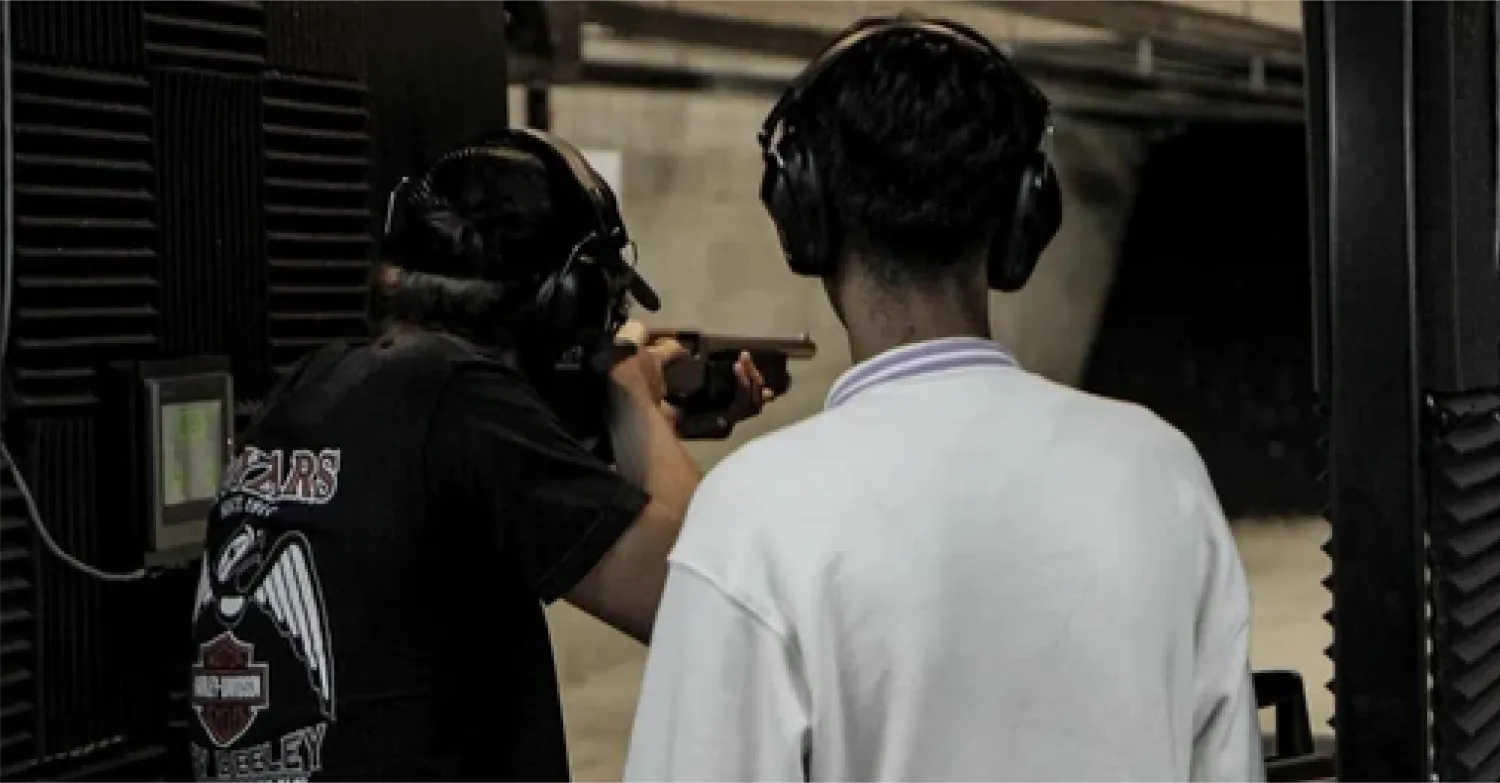
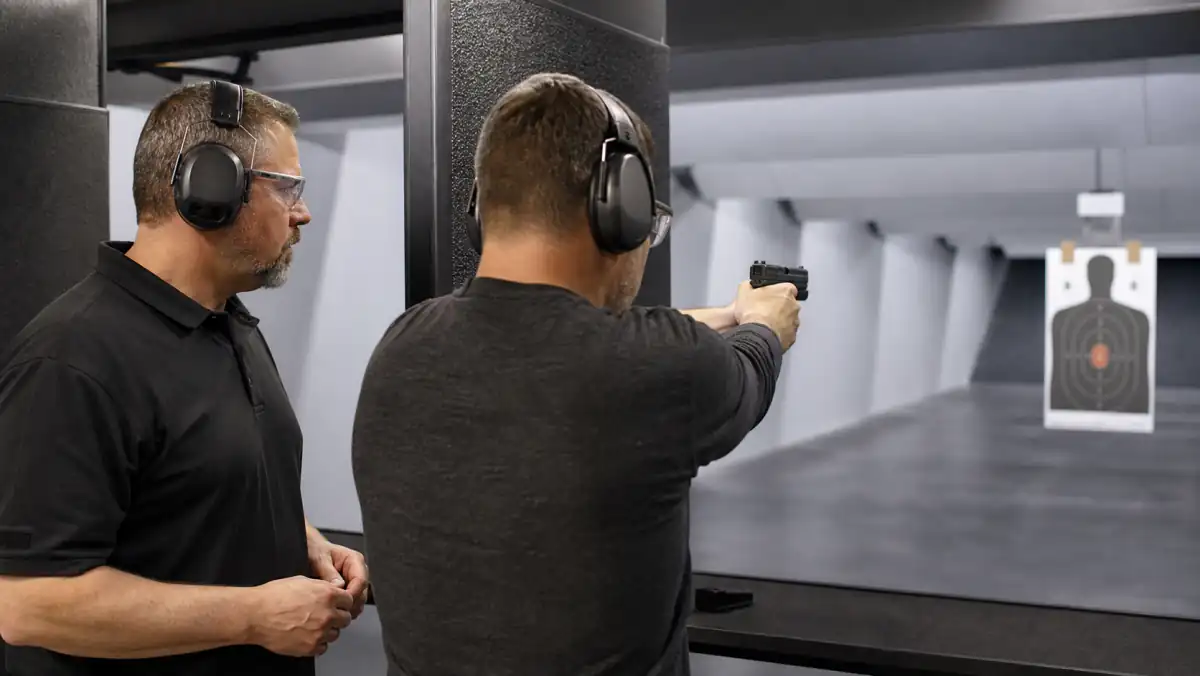
A beginner should not have to assemble a curriculum from videos. An instructor can demonstrate safe operation, watch muzzle and trigger-finger behavior, adjust the pace, and stop errors immediately.
When comparing pistol training Michigan courses, ask about prerequisites, class size, instructor qualifications, live-fire supervision, equipment, and learning outcomes. A beginner class should not assume that every student knows how to confirm a pistol’s condition or use the range safely.
Range 313 offers structured firearms courses for different skill levels. If you are unsure where to begin, tell the team exactly what experience you have and what you want to learn.
Make equipment fit part of the lesson
A pistol that fits poorly can create unnecessary tension and distract from fundamentals. Grip size, control reach, sight visibility, recoil sensation, and the force needed to operate the slide all influence the learning experience.
Fit does not mean choosing the smallest pistol. Very compact designs may offer less gripping surface and feel less forgiving to a new shooter. Larger is not always better either. The appropriate choice balances safe operation, purpose, and the individual.
Supervised rentals can provide useful context before purchase. Ask for an explanation of each model’s controls; similar pistols can differ. Never assume operation based on appearance.
Core pistol accuracy fundamentals
Build a stable shooting position
A stable position should feel balanced rather than rigid. Stand where you can manage the pistol without leaning backward or locking every joint. The exact foot position may vary based on body proportions and instructor approach.
Keep the upper body organized behind the pistol and avoid unnecessary muscular tension. Stability should come from alignment and a repeatable stance, not from squeezing every muscle until you shake.
During pistol training Michigan sessions, notice whether your balance changes after recoil. If each shot pushes you into a new position, slow down and ask an instructor to assess your stance.
Develop a repeatable grip
A useful grip places both hands consistently, supports control, and allows the trigger finger to move independently. It should be firm without causing tremors or pain. Consistency matters more than trying to create maximum pressure.
Build the grip before extending the pistol toward the target. Check that hands do not interfere with moving parts. Keep fingers away from the trigger until you are ready to fire.
Do not diagnose every target pattern as a grip issue. Sight management, anticipation, trigger movement, and visual focus interact. Change one element at a time with instructor feedback.
Understand sights and visual focus
Iron sights require consistent alignment and an appropriate visual focus. Red-dot sights use a different visual process, but neither system corrects unstable handling automatically. Ask your instructor where your eyes should focus for the equipment and exercise being used.
Begin at a manageable distance with a target that has a clear aiming reference. Fire slowly enough to observe the sight picture before and after the shot. If you cannot describe what you saw, reduce the pace.
Sight adjustment should follow a demonstrated pattern, not one scattered group. Confirm technique and ammunition consistency before changing hardware.
Practice controlled trigger movement
The goal is to move the trigger without disturbing the pistol’s alignment. This requires deliberate pressure and a grip that allows the trigger finger to work without pulling the entire hand.
Avoid trying to predict the exact instant of discharge through sudden movement. An instructor may use inert training tools or supervised dry practice to help you observe unwanted motion. Only conduct dry practice in a controlled environment with all ammunition removed and a verified safe backstop, following qualified guidance.
During live fire, pause between shots and reset your process. Pistol training Michigan beginners gain more from ten observed repetitions than fifty hurried ones.
Use small groups to collect information
Fire a small group of deliberate shots, then assess. A group shows repeatability. One shot may be luck; a pattern gives the instructor information.
Record the target distance, pistol, ammunition, and goal. If the group is consistent but not centered, confirm technique before adjusting sights. If it is widely dispersed, reduce variables and return to the foundation.
Do not bring the target close after every shot. Finish the planned group unless staff or safety considerations require stopping. Constantly judging individual holes can increase tension and distract from the process.
Separate accuracy work from speed
Speed adds pressure and can conceal poor decisions. Build an accurate, safe process first. Only add a timer or faster cadence when an instructor confirms that the exercise, facility, and skill level make it appropriate.
When speed is eventually introduced, measure whether safety and accuracy remain intact. Faster is not improvement if shots leave the intended area or handling degrades.
Many public and private facilities restrict rapid fire. Ask before attempting any timed exercise. A pistol training Michigan plan must respect the range’s rules, not a drill’s online description.
Structure a 45-minute practice session
Start with five minutes of setup and a clear goal. Confirm protective equipment, organize the bench, and review the range commands. Use the first live-fire group as a calm baseline rather than trying to perform at maximum ability.
Spend the next 20 to 25 minutes on one fundamental. Fire small groups with pauses for notes. If an instructor is present, ask for one correction at a time.
Use the final portion to repeat a familiar process correctly. Finish before fatigue damages attention. Secure the pistol according to facility procedure and record the main takeaway.
This structure can be productive with a modest round count. The quality of observation matters more than volume.
Keep a pistol practice journal
Document every session. Record date, equipment, ammunition, distance, group observations, coaching cues, comfort, and any mechanical issue. Photograph targets if that helps comparison, but add written context.
A journal prevents repeated guesswork. It also reveals whether an equipment change improved anything or simply felt new. Bring notes to follow-up instruction.
Set the next goal before leaving. “Maintain consistent visual focus for five groups” is measurable. “Shoot better” is not.
Know when equipment needs professional attention
Stop using a pistol that produces repeated unexpected behavior, visible damage, or controls that no longer work normally. Do not continue firing to see whether the issue resolves itself.
Keep it pointed safely, involve range staff, and secure it as directed. A qualified gunsmith can inspect mechanical concerns. Range 313 provides firearm maintenance and gunsmithing support for cleaning, repairs, parts, sights, and related services.
Accessories should solve a defined need. Before replacing sights, triggers, grips, or springs, ask whether instruction or maintenance addresses the problem more directly.
Protect hearing and manage lead exposure
Indoor pistol training produces intense impulse noise. Wear properly fitted hearing protection for the entire time you are in the live-fire area. Many shooters use plugs plus earmuffs indoors. Eye protection should remain secure without breaking the earmuff seal more than necessary.
Do not eat, drink, or smoke on the range. Wash hands and face with cold water and soap before eating. Keep range bags away from kitchen surfaces and children’s areas.
CDC/NIOSH publishes recommendations for reducing lead and noise exposure . Frequent shooters should treat ventilation, hygiene, and protective equipment as part of their training system.
Plan consistent follow-up
Skill fades without repetition. Choose a schedule you can maintain financially and practically. A focused visit every few weeks may be more valuable than a burst of sessions followed by months away.
If you shoot regularly, compare Range 313 memberships based on realistic frequency. Membership value depends on actual purposeful use, not intention alone.
Return to instruction after a break, when changing equipment, or when a pattern persists. Experienced shooters benefit from external observation because familiarity makes self-diagnosis difficult.
Pistol training Michigan progression
Stage one is safe handling and range procedure. Stage two is stable accuracy at a manageable distance. Stage three adds varied distances or time only when the foundation remains consistent. Stage four is continued learning based on your lawful purpose and the activities your facility permits.
There is no universal timeline. A responsible student repeats a stage as long as necessary. Training is not a race toward complicated drills.
The strongest pistol training Michigan approach is intentionally simple: qualified instruction, one goal per session, repeatable fundamentals, written observations, and a willingness to stop when safety or concentration declines.
Final practice checklist
Before the session, confirm the range rules, equipment condition, ammunition approval, and protective gear. During practice, maintain safe direction and trigger-finger discipline, work slowly, fire small groups, and ask for help early. Afterward, secure equipment, wash thoroughly, update your journal, and choose the next specific goal.
Pistol training Michigan shooters can rely on is not defined by how dramatic it looks. It is defined by how consistently it produces safe, observable improvement.