The new vs used firearms decision is not simply “higher price versus lower price.” A new firearm typically offers a known factory history, current documentation, and clearer warranty expectations. A used firearm may cost less, include useful equipment, or make a discontinued model available, but its maintenance, round count, modifications, storage, and prior problems may be uncertain. The right choice depends on condition, fit, lawful purpose, professional inspection, total ownership cost, and the support available after the sale.
Michigan buyers also need to separate product comparison from transfer compliance. A used firearm is not exempt from applicable federal or state requirements merely because someone owned it before. The seller, buyer, firearm type, residence, and transfer channel can affect the lawful process. Confirm current requirements with a federally licensed dealer, official agencies, and qualified counsel when needed.
This guide provides a careful way to compare new vs used firearms without assuming that either category is automatically better.
New vs used firearms: quick comparison
Use this new vs used firearms scorecard to compare the complete ownership picture rather than one tag price. Start with the practical differences most buyers will encounter.
| Factor | New firearm | Used firearm |
|---|---|---|
| Ownership history | No prior retail owner | One or more prior owners may be involved |
| Condition | Expected to match current factory specifications, subject to inspection | Varies from nearly unused to heavily worn or modified |
| Warranty | Current written factory terms may apply | Coverage may be limited, expired, or nontransferable |
| Documentation | Usually includes current manual, case, and supplied components | Original materials may be missing or incomplete |
| Configuration | Usually factory configuration | May include aftermarket parts or prior gunsmith work |
| Selection | Current production models and variants | Current, discontinued, collectible, or older models |
| Price | Often higher initial purchase price | May be lower, but repairs or missing items can erase savings |
| Evaluation | Inspect before accepting transfer | More extensive professional evaluation is especially important |
| Transfer process at an FFL | Federal and Michigan requirements apply | The same requirements generally apply to an FFL transfer |
The table describes common patterns. “New in box” does not guarantee perfect condition, and “used” does not mean damaged. Every firearm must be evaluated individually.
What buying new actually gives you
A new firearm’s strongest advantage is usually predictability. It should arrive in the manufacturer’s intended configuration with current markings, documentation, supplied magazines or components, and packaging. The dealer can compare the item with the distributor or manufacturer listing before transfer.
A clearer starting condition
There is no unknown prior owner who may have altered parts, used incompatible ammunition, stored the firearm poorly, or attempted repairs. Manufacturing or shipping defects remain possible, so “new” is not a reason to skip inspection. It simply removes one layer of uncertainty.
Before completing a purchase, confirm that the model, caliber, included items, and configuration match the sales description. Inspect for visible shipping damage and ask the dealer about anything that appears inconsistent.
Current documentation and support
New firearms commonly include a manufacturer manual and current safety information. Read the manual for that exact model before use. Similar-looking firearms can have different controls, maintenance requirements, ammunition restrictions, and inspection intervals.
Warranty terms may be easier to establish when you are the original retail purchaser. Keep the dated receipt, model and serial information, warranty materials, and dealer contact details secured with your records—not loose in the firearm case where they may be lost.
Never assume “lifetime warranty” means every owner, component, cause of damage, or shipping cost is covered. The written terms control.
Easier access to current parts and accessories
A current-production model may have better availability of factory magazines, sights, holsters, replacement parts, and manufacturer support. That matters if the firearm is intended for regular training rather than occasional collecting.
Accessory availability should not drive the purchase by itself. Fit, safe operation, lawful purpose, reliability, and training support come first.
What buying used can offer
Used firearms can provide strong value when the condition and history justify the price. The category includes trade-ins, consignments, former rentals, estate items, discontinued models, and firearms an owner barely used. Those histories are not interchangeable.
A lower entry price
Depreciation may reduce the purchase price even when wear is limited. The savings can preserve budget for qualified training, secure storage, eye and hearing protection, ammunition, a suitable case, and maintenance supplies.
Compare the used price with the real current new price, not an inflated manufacturer’s suggested price. Include taxes, transfer charges, missing magazines, replacement sights, professional inspection, and anticipated service.
A used firearm that needs a magazine, case, springs, refinishing, or repair can exceed the cost of a comparable new package.
Access to discontinued or older models
A used market may be the only way to find a discontinued model, older configuration, or collectible variation. Availability does not prove suitability. Parts, factory support, qualified service, holsters, magazines, and safe ammunition options may be limited.
Collectors and experienced buyers may accept those tradeoffs. A beginner who needs regular practice and straightforward support may prefer a current model.
Included equipment
A used package may include additional magazines, sights, grips, a case, or other accessories. Assign value only after confirming that each item is compatible, lawful, serviceable, and useful for your plan.
Aftermarket parts can reduce value when their origin or installation is unknown. A box of accessories is not a benefit if the original factory parts are missing and the current configuration has not been professionally evaluated.
The transfer requirements do not disappear when a firearm is used
Condition has no general exemption from transfer law. ATF states that licensed manufacturers, importers, and dealers must conduct required background checks before transferring firearms to nonlicensed individuals. The agency’s current firearms background-check questions and answers applies to dealer transfers whether inventory is new, used, consigned, traded, or redeemed from pawn, subject to limited lawful exceptions.
Michigan has additional purchase, license, record, and transfer provisions. The Michigan State Police firearms page links current state forms and official resources, while the Legislature’s Firearms Laws of Michigan compiles relevant statutes.
Laws change, and individual circumstances differ. Before exchanging money or taking possession:
- Tell the FFL exactly what type of transaction is proposed.
- Confirm what identification, permits, licenses, records, and timing currently apply.
- Disclose if the seller, buyer, or firearm is in another state.
- Do not rely on an old forum post, seller assurance, or a form downloaded years ago.
- Stop if the seller pressures you to omit information or avoid a required dealer process.
This article does not determine anyone’s eligibility or provide legal advice. A reputable dealer should be willing to explain the shop’s process while directing legal interpretation to appropriate authorities or counsel.
How to evaluate a used firearm before buying
A responsible new vs used firearms comparison separates the item’s age from its documented condition, configuration, and service history.
A used-firearm evaluation should be performed by a qualified dealer or gunsmith familiar with that model. The buyer can ask questions and review records, but should not improvise disassembly or function testing at a sales counter.
Verify the exact identity and configuration
Confirm the manufacturer, model, caliber or gauge, variant, and serial markings. The description on the tag, case, and firearm should agree. Similar model names may conceal important generational or configuration differences.
Ask whether the firearm is in original factory configuration. If not, request a written list of changes and the original parts when available. Unknown components, removed safety devices, altered triggers, refinished markings, or mismatched assemblies deserve professional scrutiny.
The serial number should be intact and unaltered. If markings appear damaged, obscured, or inconsistent, stop the transaction and notify the dealer.
Ask for the known history without assuming it is complete
Useful questions include:
- Is this a trade-in, consignment, former rental, estate item, or dealer-owned firearm?
- Is the round count known, documented, or only estimated?
- Has it been repaired, refinished, recalled, or returned to the manufacturer?
- Which parts were replaced and by whom?
- Are the original manual, case, test target, lock, magazines, and parts included?
- Does the seller have maintenance or service records?
- Why was it traded or consigned?
An honest “unknown” is better than an invented story. Price uncertainty appropriately and have the firearm inspected.
Request a condition and safety inspection
The scope depends on the firearm. A qualified professional may evaluate visible damage, corrosion, bore condition, action and controls, locking surfaces, headspace where relevant, timing, springs, magazines, optics mounting, prior modifications, and model-specific wear points.
The inspection should also identify whether service bulletins, recalls, or factory updates apply to that model and serial range. Check the manufacturer’s current website directly rather than relying on a search-result snippet.
An inspection cannot guarantee future performance or reveal every hidden history. It reduces uncertainty and creates an informed basis for the decision.
Range 313 offers gunsmithing and firearm services for owners who need professional support. Confirm the exact inspection service and firearm type before bringing equipment to the store.
Used-firearm red flags
Some issues require a professional opinion; others are reasons to pause immediately.
The seller resists lawful paperwork
Walk away from requests to misstate the buyer, price, residence, firearm, or nature of the transaction. Do not participate in a straw purchase or any arrangement designed to hide the actual recipient.
The story changes
Inconsistent answers about ownership, repairs, configuration, or included items undermine confidence. A legitimate seller may not know every detail, but should distinguish known facts from guesses.
The price depends on immediate pressure
“Cash right now,” refusal to allow dealer involvement, or discouraging inspection are not savings. A careful purchase can survive time for verification.
Parts or markings appear altered
Unexplained modifications, damaged screw heads, missing factory components, homemade work, severe corrosion, cracks, bulges, or altered serial markings require immediate attention. Do not accept “it still shoots” as an inspection.
The deal has no written terms
For dealer inventory, understand whether the sale is final, whether there is an inspection period, what happens if a defect is discovered, and whether store service support is included. Get material promises in writing.
Warranty, return, and service questions
New vs used firearms can differ sharply after the sale. Ask these questions before completing the transaction:
- Is this firearm sold as new, used, consigned, or “as is”?
- What written return or exchange policy applies after transfer?
- Has the dealer inspected or test-fired it, and what did that process include?
- Does the manufacturer’s warranty apply to a subsequent owner?
- Who pays shipping if factory service is needed?
- Does installing accessories affect coverage?
- Will the dealer help coordinate warranty or repair service?
Firearm returns are not equivalent to ordinary retail returns. Once transfer paperwork is completed, legal and store-policy constraints may limit the options. Read the policy before signing or paying.
If a problem appears after purchase, stop using the firearm, keep it secured, document the concern, and contact the dealer or manufacturer. Do not keep firing to see whether the issue becomes clearer.
Compare total ownership cost, not sticker price
The firearm price is only the first line of the budget.
Include:
- Applicable taxes and transfer fees.
- Secure storage prepared before bringing the firearm home.
- A durable case for lawful transport and protection.
- Initial and continuing professional training.
- Eye and hearing protection.
- Manufacturer-approved ammunition.
- Targets and range time.
- Cleaning and maintenance supplies.
- Replacement magazines or missing factory components.
- A gunsmith inspection or expected service.
- Manufacturer shipping costs if warranty support is needed.
A $100 discount disappears quickly when a used firearm lacks two magazines and needs inspection. Conversely, a professionally inspected used model at a fair price may free enough budget for a class and several practice sessions.
Use our buying your first handgun in Michigan guide to build a full purpose, fit, storage, training, and cost plan before focusing on individual listings.
Is new or used better for a first-time buyer?
Neither category is automatically correct, but new firearms often reduce variables for a beginner. Current documentation, factory configuration, clearer support, and readily available parts make it easier to build a training plan.
A used firearm can still be a responsible first purchase when:
- It fits the buyer and lawful purpose after qualified guidance.
- Its identity and condition are clear.
- A professional has evaluated it.
- The configuration is factory-original or documented.
- Parts, magazines, and support are reasonably available.
- The total cost leaves room for training and secure storage.
A beginner should avoid a used firearm chosen solely because it is cheap, compact, powerful, collectible, or endorsed by a friend. The first purchase should support consistent safe handling and practice.
Try comparable firearms before deciding
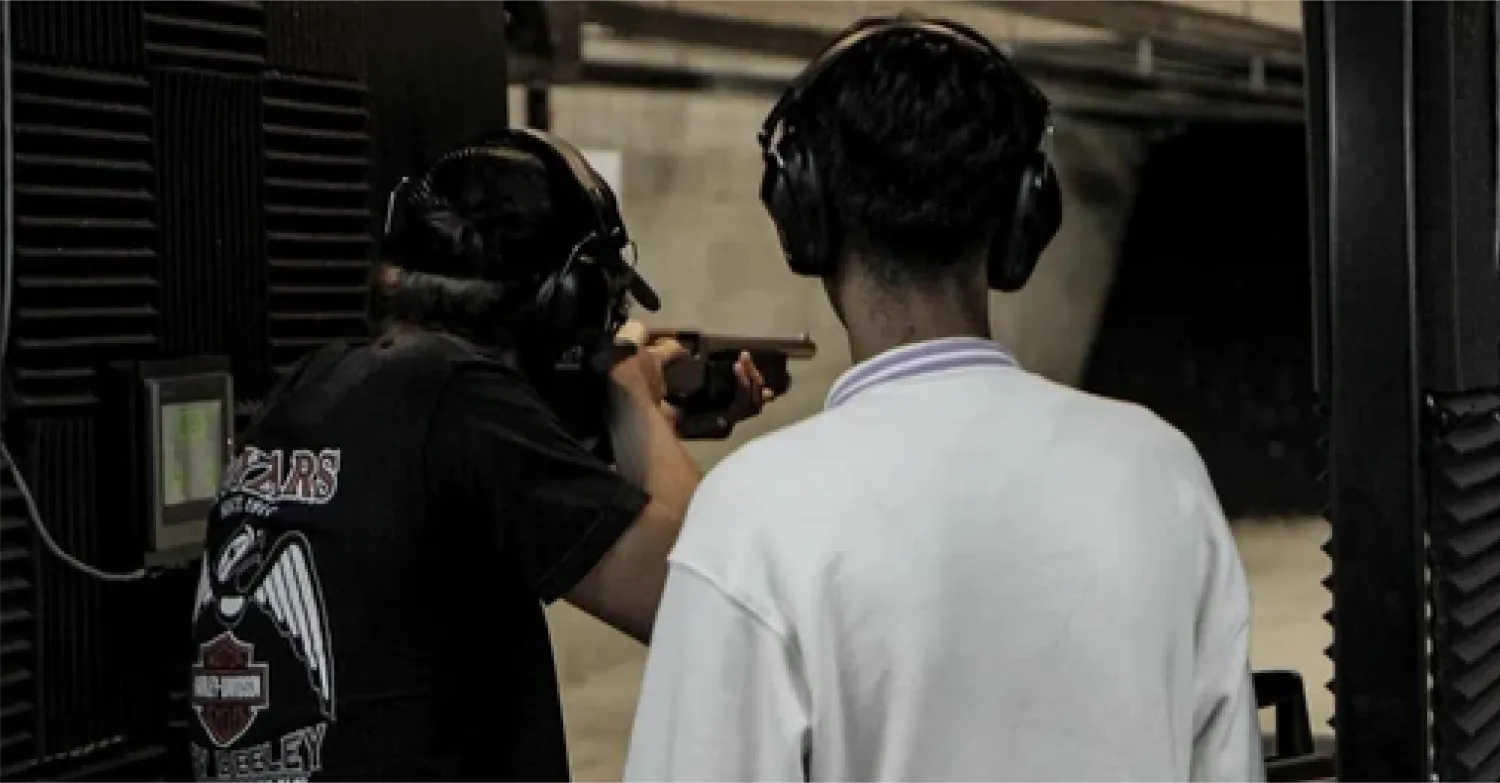
Live-fire rental experience can reveal differences that counter handling cannot. Grip comfort, control reach, sight visibility, recoil sensation, trigger reach, and ease of operation become clearer under supervision.
Do not test a used firearm offered by a private seller in an improvised location. Use an approved range and follow its rules. If the exact used firearm cannot be tested, a rental of the same model or a comparable factory configuration may still provide useful information, but it cannot verify the condition of the item for sale.
Range 313’s indoor range and firearm rentals can help Michigan shoppers learn before purchasing. Contact the team about current rental inventory rather than assuming a specific model is available.
Take notes after each rental. Separate comments about the model from comments about your technique, ammunition, or fatigue. One exciting group is not enough evidence for a purchase.
Questions to ask a Michigan gun shop
A trustworthy dealer should answer practical questions without pushing you toward the fastest transaction.
About the firearm
- Is it new, used, consigned, a trade-in, or a former rental?
- What inspection has the shop completed?
- Are modifications or repairs documented?
- Which original items are missing?
- Are factory service notices or recalls relevant?
About the transaction
- What federal and Michigan steps apply to this purchase today?
- Which identification or permits should I bring?
- What fees are included in the listed price?
- What happens if the transfer cannot be completed?
- When may the firearm lawfully be delivered?
About support
- What return, exchange, or service policy is written on the receipt?
- Will the shop help with manufacturer service?
- Is a qualified inspection available?
- Can I arrange instruction and range time?
- Are compatible factory magazines and parts available?
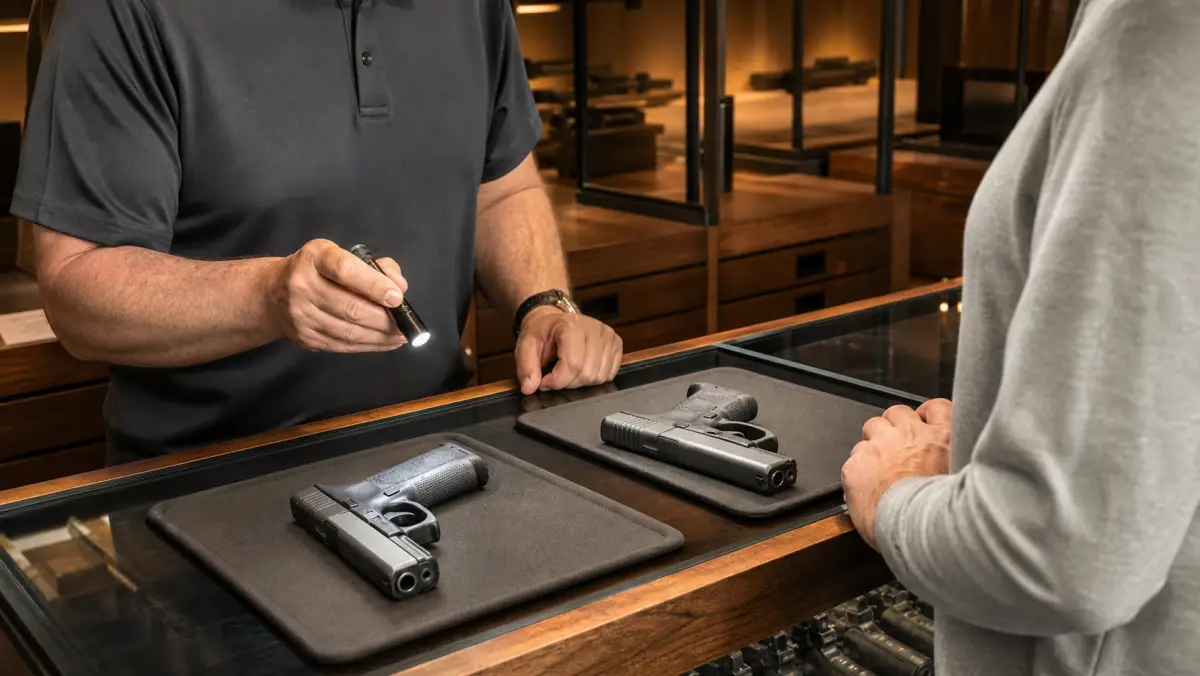
Visit the Range 313 product department in Lincoln Park to discuss current inventory, trade-ins, accessories, and support. Inventory changes, so call before traveling for a particular model.
Local perspective for Metro Detroit buyers
Metro Detroit shoppers can use the new vs used firearms framework to compare exact models, included equipment, condition disclosures, transfer requirements, and support after purchase.
Southeast Michigan buyers can encounter new inventory, used dealer stock, consignments, estate firearms, online transfers, and private-party offers. The variety makes professional verification more important, not less.
For shoppers in Lincoln Park, Allen Park, Southgate, Taylor, Wyandotte, Dearborn, Detroit, and nearby communities, a local FFL can explain its current transfer workflow and identify what information must be confirmed before an order or private arrangement moves forward.
Do not send payment for an online firearm until the receiving dealer confirms it will accept the transfer, the firearm is lawful and within store policy, the seller is acceptable, and the complete fee structure is clear. A listing’s “ships to your FFL” language does not obligate a particular dealer to receive it.
Ontario visitors should understand that using a rental at a Michigan range is fundamentally different from purchasing or transporting a firearm across an international border. Do not begin a purchase based on tourist eligibility or rental access. Obtain authoritative legal guidance specific to residency, import, export, and border requirements.
The bottom line
In the new vs used firearms comparison, new offers a more predictable factory starting point and usually clearer support. Used can offer excellent value, discontinued options, and useful included equipment, but it demands stronger verification of history, condition, configuration, warranty, and total cost.
Choose the individual firearm—not the category. Define the lawful purpose, evaluate fit, budget for secure storage and training, confirm the current transfer requirements, and have used equipment inspected by a qualified professional. If the facts are incomplete or the seller resists careful review, wait for a better option.
Range 313 combines a Lincoln Park retail counter, indoor range, rentals, training, and firearm services so buyers can research with more context. Call (313) 436-0197 or use the Range 313 contact page to ask about current products, used inventory, transfers, inspections, and appropriate training before making a special trip.