A Michigan CPL class is one part of a broader licensing process that combines training, legal eligibility, official paperwork, and continued personal responsibility. Completing a class does not automatically create a license, guarantee approval, or replace the need to understand current law. It gives an applicant structured education in safe pistol handling and the subjects Michigan requires an appropriate course to cover.
Because firearm laws change and individual circumstances matter, this guide is educational rather than legal advice. Verify all requirements with Michigan State Police, your county clerk, and qualified legal counsel when needed.
What a Michigan CPL is
CPL stands for Concealed Pistol License. Michigan State Police administers statewide firearms resources, while county clerks play a central role in the application process. A license is subject to eligibility rules, restrictions, expiration, and responsibilities that continue after issuance.
The official Michigan CPL requirements page states that an applicant must meet age, residency, training, and legal eligibility conditions. It also lists disqualifying circumstances and explains that federal prohibitions apply through the National Instant Criminal Background Check System.
Do not rely on a social media summary or a class advertisement as your only legal source. Start with Michigan State Police and your county clerk. A Michigan CPL class instructor can explain course material, but only the appropriate authorities or your attorney can address your specific legal situation.
Who should consider a CPL course
A Michigan CPL class is intended for eligible adults who want the education required before applying for a concealed pistol license. It may also be useful for someone who wants a structured review of pistol safety and Michigan legal concepts even if they have not decided to apply.
It is not the ideal first step for every complete beginner. If you have never handled a pistol, an introductory course before the CPL class can reduce cognitive overload. Learning basic controls, safe direction, and range procedure separately allows you to engage more fully with the legal and judgment components later.
Range 313 offers firearms training courses for different experience levels. Contact the team to discuss whether an introductory class or Michigan CPL class best matches your current skills.
Confirm eligibility before paying for training
Training is only one requirement. Before registering, read the current MSP eligibility page carefully. Applicants generally must satisfy minimum age and residency provisions, possess valid state-issued identification, complete required training, and not be disqualified under listed state or federal conditions.
The official list is detailed. Do not ask a range employee to make a legal eligibility decision that belongs to government authorities. If your history includes a conviction, pending charge, court order, involuntary commitment, immigration issue, or another circumstance you believe may matter, consult the appropriate agency or qualified Michigan attorney before proceeding.
Federal eligibility is also relevant. The FBI NICS overview explains the purpose of the background-check system and common response categories. That public overview is informative but does not determine an individual outcome in advance.
What the course should cover
Michigan law defines training requirements, and course providers are responsible for delivering a compliant program. Prospective students should ask the provider to confirm that the course meets current Michigan statutory requirements and that the instructor holds the qualifications required by law.
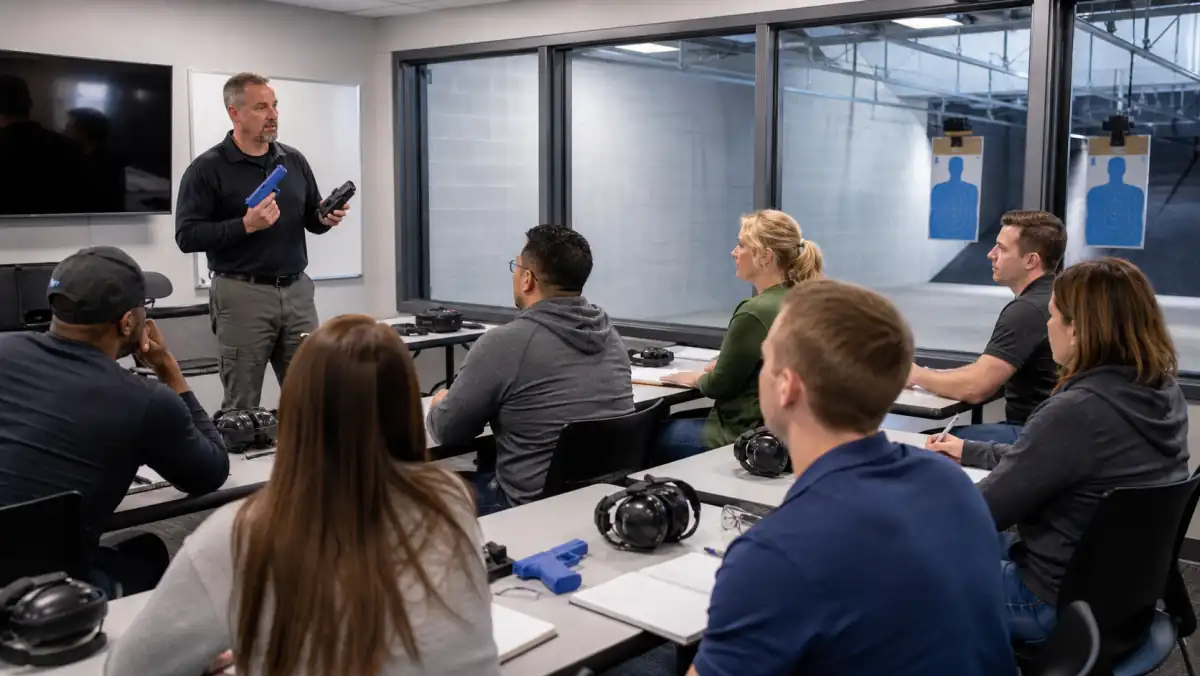
A Michigan CPL class should integrate safe storage, pistol handling, ammunition knowledge, range safety, shooting fundamentals, and legal education. It should create time for questions and include the required live-fire component. The exact schedule and teaching method can vary.
Quality matters beyond minimum compliance. Look for a course that emphasizes judgment, de-escalation, avoidance, secure storage, and the serious consequences of carrying a pistol. Avoid marketing that presents a CPL as a shortcut to confidence or treats live fire as a performance contest.
Preparing for the classroom portion
Read the registration instructions closely. Bring required identification, note-taking materials, and any documents specified by the instructor. Arrive rested and free from alcohol or impairing substances. A long class requires sustained attention, so plan meals and childcare rather than trying to manage distractions during instruction.
Write down questions beforehand. Useful topics include:
- How current Michigan law defines prohibited premises.
- Duties during contact with law enforcement.
- Storage and access around minors.
- Renewal training and timing.
- Interstate reciprocity and the duty to follow another state’s law.
- The difference between a license, safe judgment, and legal justification.
The Michigan State Police firearms portal links to official pages on prohibited premises, renewal, reciprocity, and carrying under the influence. Review those resources before class so you can identify what needs clarification.
Preparing for live fire
Ask what firearm, ammunition, eye protection, and hearing protection the provider expects. Do not buy equipment solely because a course advertisement implies that one model or caliber is mandatory unless the provider explicitly requires it for a legitimate reason.
If you will use your own pistol, confirm it is in safe working order and permitted by the range. Transport it according to current law and course instructions. Keep it cased until directed to uncase it at the approved location.
If rental equipment is available, ask how selection works and whether ammunition is included. A rental can be appropriate, but you still need instruction on its controls. An unfamiliar pistol should never be handled based on assumptions.
Wear closed-toe shoes, a crew-neck shirt, and practical clothing. Bring properly fitting eye and hearing protection. Review our first-time Michigan range checklist if the live-fire environment is new to you.
The live-fire goal is safe competence
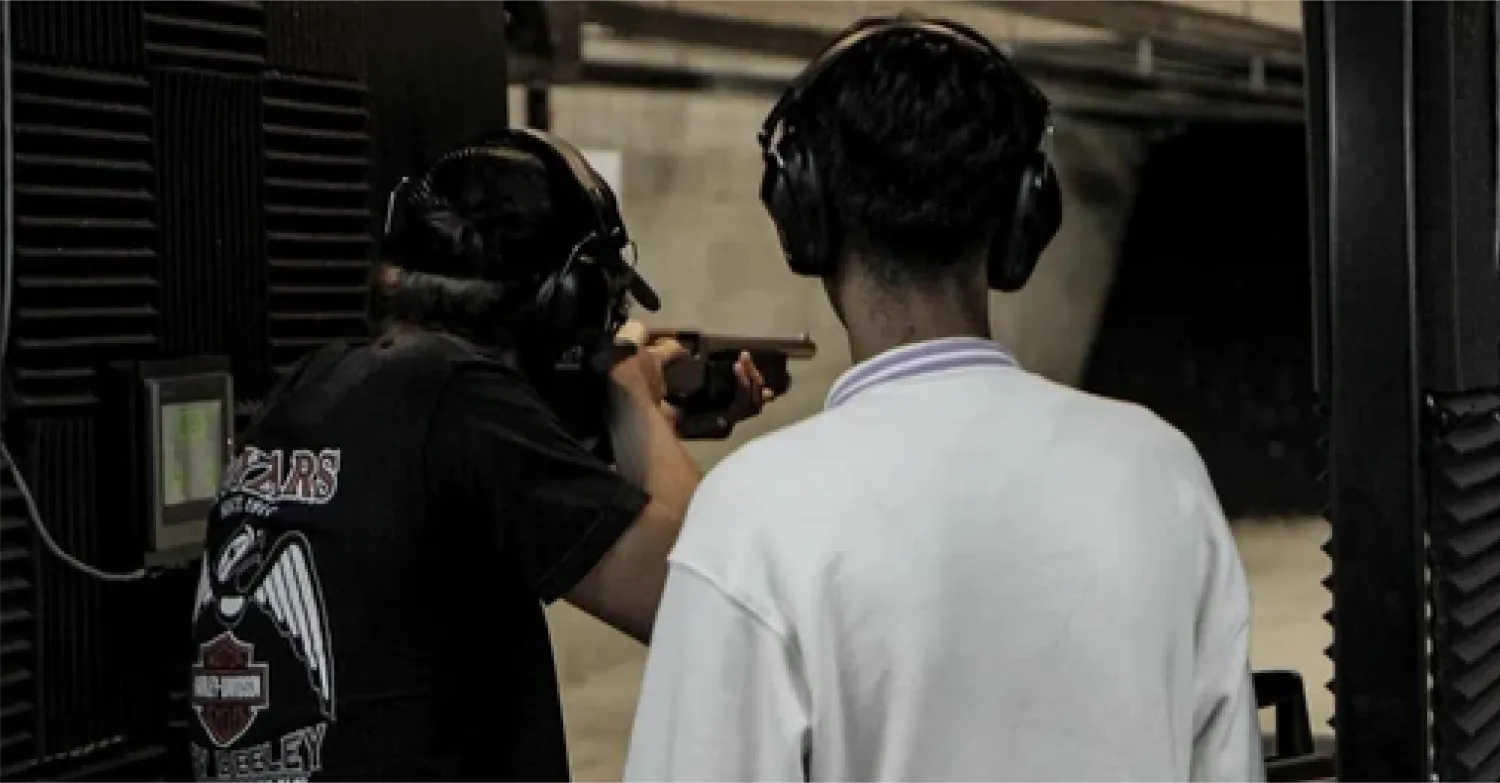
The live-fire portion evaluates and develops safe handling and shooting behavior within the course’s requirements. Treat it as a demonstration of calm procedure—not speed, bravado, or competition with classmates.
Listen for commands and keep the muzzle downrange. Keep your finger visibly outside the trigger guard until directed and ready to fire. If the pistol behaves unexpectedly, stop and involve the instructor. A student who asks for clarification shows better judgment than one who guesses.
Fatigue, noise, and performance anxiety can affect concentration. Slow your breathing, listen to one instruction at a time, and focus on the process. If you feel unwell or overwhelmed, tell the instructor immediately.
A Michigan CPL class cannot make anyone an expert in a single day. It establishes a baseline and identifies skills that require continued supervised practice.
Understanding the legal education
Legal instruction is not a list of phrases to memorize. It should help students understand that carrying a concealed pistol creates continuous responsibilities involving possession, prohibited locations, alcohol, interactions with police, storage, and decision-making.
Michigan State Police publishes a specific page on carrying under the influence . Rules involving alcohol and controlled substances are serious, and a responsible licensee should adopt personal limits that keep judgment well inside legal boundaries.
Students should also understand that a CPL does not create universal permission. Property rules, prohibited premises, federal law, and other states’ laws may apply. Reciprocity means researching the destination state before travel, not assuming a Michigan license works everywhere in the same way.
Application steps after class
After successful course completion, preserve the certificate as directed and review the current application instructions from your county clerk and MSP. The process may include an application, fee, photograph, fingerprints, and background review. Requirements and payment procedures can change.
Use exact legal names and accurate information on every form. If you do not understand a question, ask the issuing authority rather than guessing. Keep copies or receipts where appropriate.
Course completion does not authorize concealed carry while the application is pending. Do not carry under CPL authority until the license has actually been issued and is valid. Continue following the transportation rules applicable to you.
Renewal and continuing responsibility
A license has an expiration date. Michigan State Police maintains CPL renewal information , including the review and range-time certification associated with renewal. Read the current page well before expiration instead of relying on memory.
Minimum renewal activity should not define your entire practice plan. Skills decline without repetition. Build a sustainable schedule that includes safe handling, accuracy fundamentals, judgment, and review of legal updates.
State law can change between initial training and renewal. Bookmark official MSP resources and revisit them periodically. A responsible licensee treats legal education as ongoing.
Safe storage belongs in CPL preparation
Carrying and storage are connected. You need a plan for times when the pistol is not under your immediate control, when you enter a prohibited location, when children may be present, and when the firearm is stored at home.
Michigan’s secure-storage law took effect in 2024. The MDHHS secure storage law resource explains that unattended firearms must be secured under specified circumstances when a minor is present or likely to be present. Read the law and current official guidance for definitions, requirements, and exceptions.
Choose storage equipment before you need it. A locked container or appropriate locking device must be used correctly to be meaningful. Control keys, combinations, and access credentials.
How to evaluate a course provider
Ask direct questions before registering:
- Does the course meet current Michigan CPL training requirements?
- Who is the instructor, and what qualification supports the course?
- How many students attend?
- How is live fire supervised?
- What equipment is required or available?
- What is the cancellation policy?
- Does the schedule allow meaningful questions and breaks?
Be cautious of guaranteed-license claims, unrealistically short schedules, or language that minimizes legal responsibility. No instructor controls the government’s licensing decision.
A professional provider communicates clearly, sets expectations before payment, and treats safety as more than a liability statement. You can contact Range 313 to ask about current course options and prerequisites.
Build a post-class training plan
After class, identify two or three skills to improve. Schedule deliberate practice rather than firing without a plan. Early sessions may focus on safe loading and unloading under allowed conditions, consistent grip, sight management, and accuracy at manageable distances.
Seek coaching when a problem repeats. Purchasing a new accessory rarely substitutes for technique. Keep written notes on date, goals, results, and questions.
A Range 313 membership can support regular practice for shooters who visit often, but the value comes from purposeful sessions. Stop before fatigue causes careless handling.
Michigan CPL class final checklist
Before registering, verify official eligibility information and confirm that the provider offers a compliant course. Before class, read the instructions, gather required documents, prepare safe equipment, and arrive ready to learn. During training, prioritize calm handling and honest questions. Afterward, follow the current county and state process precisely and wait for actual issuance before carrying under CPL authority.
A Michigan CPL class is an important educational step, not the finish line. The standard you set after the course—ongoing learning, legal awareness, secure storage, and regular responsible practice—defines what the training becomes.