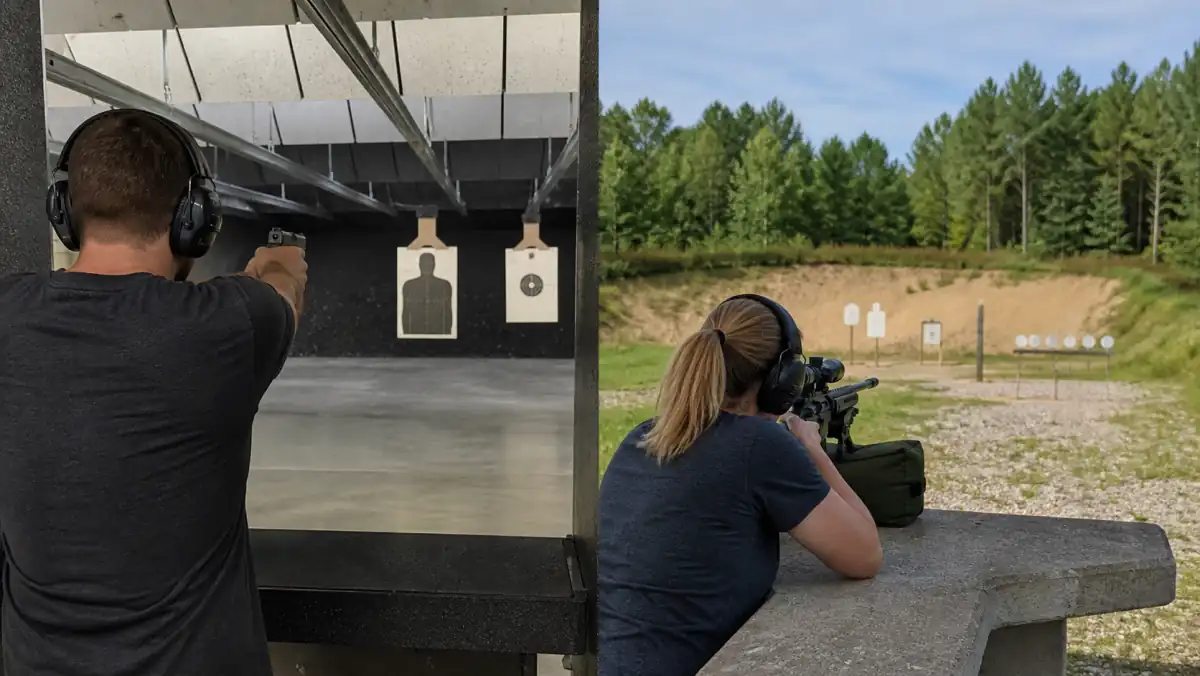
An indoor vs outdoor shooting range Michigan comparison does not produce one universal winner. Indoor facilities offer controlled conditions, nearby staff, predictable distances, and year-round comfort. Outdoor ranges can provide longer distances, natural light, changing conditions, and disciplines that require more space. The right choice depends on what you want to learn, the equipment involved, and the rules of the specific facility.
This guide compares the two settings so Michigan shooters can choose intentionally rather than assuming every practice goal belongs in the same place.
Quick indoor vs outdoor range comparison
| Factor | Indoor range | Outdoor range |
|---|---|---|
| Weather | Controlled year-round | Affected by wind, rain, heat, and snow |
| Distance | Usually shorter, fixed limits | Often offers longer distances |
| Staff access | Typically close to lanes | Varies by facility and staffing |
| Lighting | Consistent artificial light | Natural light changes |
| Noise | Reflected by enclosed surfaces | Dissipates more in open space |
| Ventilation | Engineered mechanical airflow | Natural airflow, with site-specific concerns |
| Convenience | Often near population centers | May require more travel |
| Best fit | Fundamentals, rentals, regular practice | Distance confirmation, weather exposure, some disciplines |
These are tendencies, not guarantees. Evaluate the actual range.
Michigan weather strongly affects the choice
Winter temperatures, summer humidity, rain, wind, and rapid seasonal changes can make outdoor practice unpredictable. Weather is also a training variable: wind affects targets and projectile flight, cold affects hands and equipment, and heat increases fatigue.
An indoor facility removes many of those variables. For beginners, that can make it easier to focus on range commands, protective equipment, and fundamentals. For regular shooters, it creates a stable reference across sessions.
An indoor vs outdoor shooting range Michigan decision may change by season. Many shooters use indoor lanes for consistency during winter and an outdoor facility for longer-distance work when conditions improve.
Distance determines what you can validate
Indoor ranges commonly use fixed, shorter distances. These are useful for pistol fundamentals, rifle function checks, grouping, and preliminary sight work. They cannot prove performance at distances the facility does not provide.
Outdoor facilities may offer 50, 100, 200 yards, or more, depending on location. The Michigan DNR range rules describe designated distances and firearm restrictions at state ranges.
Match the distance to the lawful purpose. A shooter preparing hunting equipment should confirm at an appropriate outdoor distance. A first-time pistol student may learn more in a controlled indoor lane close to staff.
Supervision and staff access vary
Indoor commercial ranges often place staff near the lanes and check-in desk. This can be reassuring when you need clarification, a rental explanation, or help with an unexpected equipment issue.
Outdoor ranges range from staffed state facilities to private clubs and unsupervised areas. Rules and oversight differ significantly. A new shooter should not choose an unsupervised setting merely because it appears less intimidating.
The Michigan DNR range directory identifies facilities across the state, but visitors must verify current staffing, hours, and rules directly.
Noise feels different indoors and outdoors
Firearm discharge creates hazardous impulse noise in either setting. Indoor walls and ceilings reflect sound, which can make the environment feel more intense. Outdoor space permits more dissipation, but hearing protection remains essential.
CDC/NIOSH recommends strong hearing controls for range users and workers. Its indoor firing range guidance discusses double hearing protection and the way eye-protection arms can affect an earmuff seal.
Do not assume outdoors means safe without protection. Keep properly fitted hearing protection in place anywhere live fire can occur.
Air quality and lead require different controls
Indoor ranges depend on engineered ventilation that moves air from behind shooters toward the backstop. Maintenance and cleaning are also important. Visitors should avoid food and drink on the firing line and wash thoroughly afterward.
Outdoor air dilutes contaminants differently, but shooters still handle ammunition residue and should use good hygiene. Soil and environmental management become larger site considerations outdoors.
The CDC/NIOSH resource on reducing lead and noise exposure explains indoor controls. Ask any facility about its safety and maintenance practices rather than assuming the setting alone solves every concern.
Target systems and pacing differ
Indoor lanes often have mechanical target carriers. Shooters can change distance without calling a facility-wide cease fire. This supports individual pacing and short sessions.
Many outdoor ranges use scheduled cease fires so everyone can walk downrange and change targets safely. Commands must be followed precisely. Shooters step behind designated lines and do not handle firearms while people are downrange.
An indoor vs outdoor shooting range Michigan visitor should understand the target process before unpacking equipment. Never walk downrange or touch a firearm during a cease fire unless staff expressly direct it.
Equipment and ammunition rules are facility-specific
Indoor backstops may restrict calibers, projectile construction, muzzle devices, shotguns, or black-powder firearms. Outdoor facilities also impose restrictions based on berms, neighboring property, fire risk, target material, and range design.
Bring original ammunition packaging and ask about anything unfamiliar. The fact that a product is legal to own does not mean a particular range must allow it.
Review Range 313 indoor range options and call before bringing a rifle, specialty ammunition, or unusual configuration.
Beginners often value indoor consistency
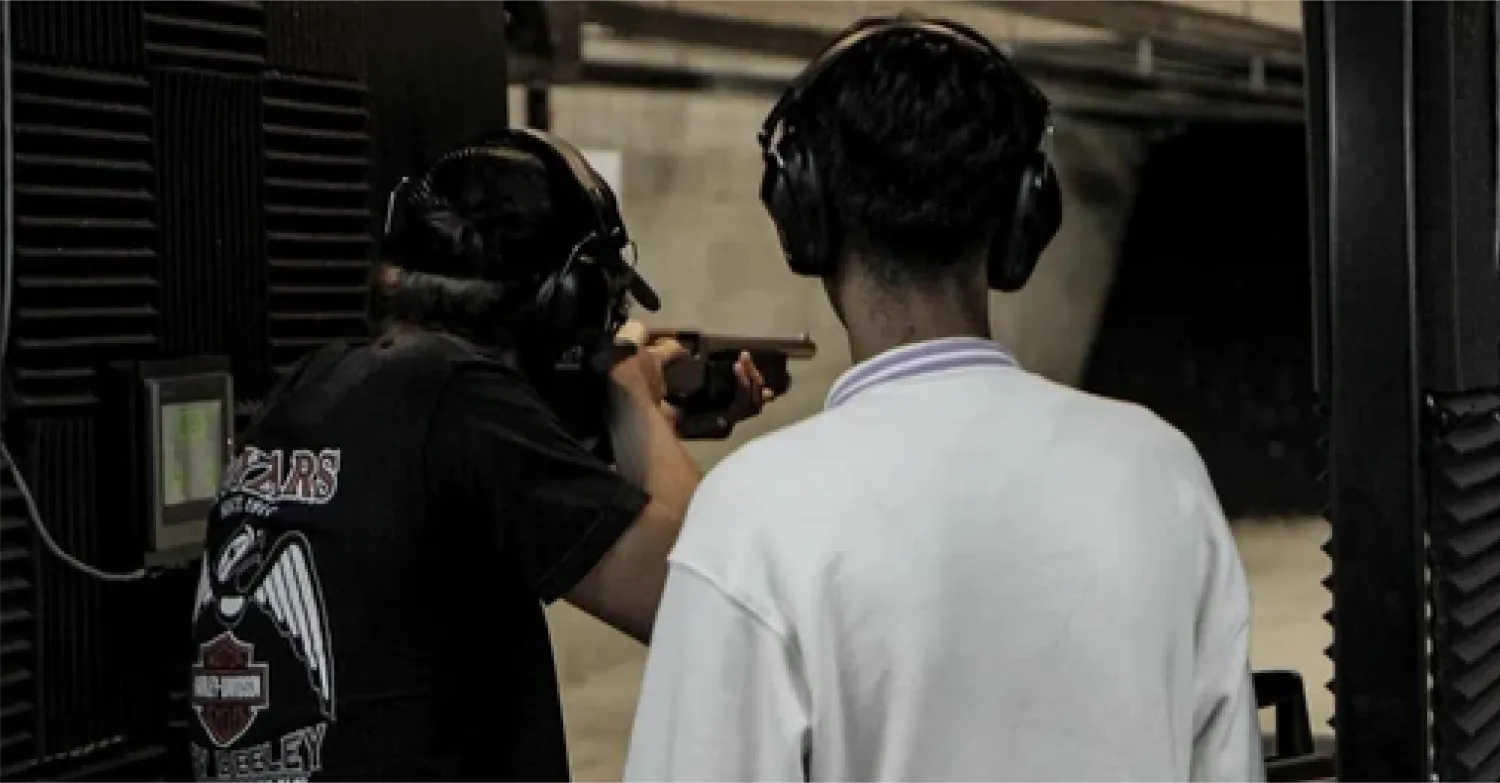
A controlled indoor setting reduces variables. Lighting, target distance, footing, and temperature remain predictable. Staff can observe the lane, and rentals or instruction may be available in the same facility.
These advantages do not make every indoor range beginner-friendly. Look for clear rules, patient communication, and qualified training. Our first-time Michigan range checklist helps prepare for the visit.
Outdoor instruction can also be excellent when the program is structured, staffed, and suited to the student. Choose based on the provider and objective, not a stereotype.
Experienced shooters benefit from both
Indoor practice can isolate fundamentals and provide consistent data. Outdoor practice introduces changing light, wind, temperature, and longer distances. Together, they reveal whether a skill or equipment setup works only under ideal conditions.
Use indoor sessions for efficient repetitions and outdoor sessions for goals that require space or environmental variation. Keep the same safety standards in both settings.
Record conditions in a practice journal. Comparing targets without noting distance, wind, temperature, and support position can produce misleading conclusions.
Cost and memberships affect frequency
Indoor ranges may charge hourly lane fees and offer rentals, retail support, classes, or memberships. Outdoor state ranges, clubs, and private facilities use different fee structures.
Calculate total cost: travel, membership, lane fees, targets, ammunition, equipment, and time. A nearby indoor membership may support frequent short sessions, while a distant outdoor club may make sense for specialized monthly practice.
Compare Range 313 membership benefits using your actual visit frequency. Convenience is a real economic factor when it changes whether you train.
Group experiences need coordination
Indoor ranges can simplify group check-in, lane assignment, rentals, and staff support. Space remains limited, so groups should contact the facility in advance rather than arriving unannounced.
Outdoor ranges may offer more physical room but can involve scheduled cease fires, weather contingencies, and equipment transportation. Organized activities at some public ranges require permission.
For birthdays, social outings, or team events, explore Range 313 group packages and discuss experience levels before the date.
Accessibility and comfort deserve attention
Ask about accessible parking, entrances, restrooms, lane height, seating, and communication accommodations. Indoor facilities may offer more controlled access, but building design varies.
Outdoor terrain, gravel, mud, snow, and distance from parking can create barriers. The Michigan DNR range directory includes information about some accessible features.
Sensory sensitivity is another factor. Indoor noise can feel intense even with protection. Visit the lobby first, discuss quiet times, and arrange instruction at a suitable pace.
Legal and transportation responsibilities remain
The destination does not remove legal obligations. Transport firearms according to current Michigan law and your circumstances. Keep equipment secured and cased until the approved area.
The Michigan DNR firearms page provides general transportation guidance, while Michigan State Police maintains broader firearms resources. Seek qualified advice for individual questions.
Follow posted rules regarding minors, alcohol, permitted equipment, and safe storage after the visit.
How to choose for your next session
Choose indoor when you want controlled weather, efficient target changes, nearby staff, rentals, or a short regular practice session. Choose outdoor when your goal requires longer distance, natural conditions, or a discipline the indoor backstop cannot support.
Call the facility with your exact goal and equipment. Ask whether the distance, rules, and staff support match the plan. Be willing to use a different range if the answer is no.
An indoor vs outdoor shooting range Michigan decision is best made session by session. The setting is a tool; the quality of your goal and behavior determines how useful it becomes.
Final comparison
Indoor ranges excel at convenience, consistency, and year-round access. Outdoor ranges excel at space, distance, and environmental variety. Neither setting excuses poor safety, improper protection, or unplanned practice.
Many Michigan shooters benefit from using both. Start with the environment that offers appropriate supervision for your current skill, then expand only when a clear training need requires it.