

Searching for indoor activities near Windsor for adults usually starts with weather, but rain and cold are only part of the decision. The better question is what kind of time the group wants together. Some people want conversation and food. Others want to learn a skill, solve a problem, see something new, or take part in a structured challenge.
Windsor and the Detroit area provide options across all of those moods. You can keep the outing entirely in Ontario or make it a cross-border day trip. Range 313 in Lincoln Park, Michigan, can be one of those indoor options for legally eligible visitors who are interested in a supervised live-fire activity and willing to prepare responsibly.
This guide does not pretend every activity suits every group. An indoor range is a poor surprise for someone who dislikes loud environments or does not want to handle a firearm. A museum is not the right choice for a group seeking active competition. The most successful plan begins with consent, practical constraints, and a clear idea of how the day should feel.
Start with the experience, not the venue
Before searching listings, ask every participant to choose one or two words for the outing: relaxed, social, creative, competitive, educational, active, or memorable. That short exercise reveals more than sending ten links into a group chat.
Then settle five practical questions:
- Does anyone object to crossing the U.S. border?
- How many total hours can the group commit, including travel?
- What is the comfortable all-in budget per person?
- Are there mobility, hearing, vision, sensory, medical, or dietary needs?
- Does the group expect alcohol to be part of the event?
These answers eliminate mismatches early. A cross-border activity needs documents and flexible timing. A live-fire range requires complete sobriety before and during participation. A hands-on workshop may involve standing or fine motor work. A crowded entertainment venue can be difficult for someone with sensory sensitivity.
No one should have to defend a limitation or preference. Choose a plan that people can join honestly rather than one they feel obliged to tolerate.
Museums and galleries: low-pressure discovery
Museums and galleries work well when the group wants conversation, flexible pacing, and a shared topic. They are especially useful for mixed-age adult groups because people can move through exhibits at different speeds and regroup in common areas.
Check current operating hours, admission rules, bag policies, accessibility, parking, and timed-entry requirements directly. A rainy weekend can increase demand. If the venue is across the border, add inspection time to the itinerary and avoid booking the earliest available slot unless the group plans to cross well in advance.
The main planning risk is trying to “do the whole museum.” Pick a section or exhibit that interests the group and leave before attention fades. A shorter cultural visit paired with lunch often feels more complete than racing through every room.
This category suits groups that want:
- Easy conversation
- Minimal competitive pressure
- A wide range of ages and physical abilities
- A plan that can expand or contract
- An outing that works without specialized clothing
It may be less satisfying for people who want active participation or a skill they can immediately practice.
Creative workshops: make something together
Pottery painting, drawing, floral design, cooking, baking, and other guided workshops turn the group into participants without requiring athletic ability. They provide a natural conversation rhythm: instruction, individual work, and comparison at the end.
Ask whether the listed price includes materials, firing, packaging, gratuity, or take-home supplies. Some projects cannot leave the same day. Cooking classes may have allergen and alcohol policies. Craft sessions can require deposits or minimum group sizes.
Creative activities are strongest when the group accepts that results will vary. The point is the shared process, not producing ten identical objects. They are a good alternative when one or more people would not enjoy a loud or highly competitive environment.
For a date or small group, a workshop can also remove the pressure to maintain nonstop conversation. The task provides focus while still leaving room to connect.
Escape rooms and puzzle experiences: cooperate under a clock
An escape room offers structure, teamwork, and a clear finish. It is often a good fit for coworkers or friends who enjoy solving problems together. Unlike an activity based on individual scores, the group generally succeeds or fails as one unit.
Confirm room capacity, difficulty, accessibility, lighting effects, confined-space concerns, and whether clues use color, sound, or small text. Some participants find countdown pressure exciting; others find it unpleasant. Ask before booking a horror theme or a room that uses darkness, sudden sound, or actors.
Assigning roles can help. One person tracks unused clues, another organizes physical objects, and another communicates with the game host. People who dislike grabbing or searching can still contribute by observing patterns.
The format works best for a group willing to listen to one another. It is less useful when one confident participant intends to dominate every puzzle.
Bowling, arcade, and game venues: flexible social competition
Bowling, darts, pool, simulators, arcade games, and board-game cafés let adults participate at different intensity levels. Someone can play every round, observe, or join the conversation without disrupting the group.
Compare the advertised activity price with the real visit: shoe rental, game cards, lane reservation, food minimums, parking, taxes, and gratuities. Noise and flashing lights can be significant. Call about accessible equipment or quieter hours if anyone needs them.
Set the tone before starting. Friendly scoring can add energy, but an adult outing becomes tedious when every game is treated as a championship. Consider team formats or small rotating groups when experience levels differ.
This category fits birthdays and casual reunions because late arrivals can often join. It also accommodates food more easily than an activity that requires constant attention.
Wellness and movement: recharge indoors
Yoga, climbing gyms, indoor pools, skating, fitness classes, spa appointments, and guided wellness sessions appeal to groups that want physical movement or recovery. These activities vary greatly in accessibility and intensity, so the label “wellness” is not enough.
Ask about waivers, footwear, rental equipment, changing facilities, health restrictions, beginner instruction, and the actual physical demand. A climbing session requires different preparation from a gentle yoga class. Spa appointments may be difficult to coordinate for a large group and often have strict cancellation policies.
Movement-based options are good when the group wants to leave feeling physically engaged. They are less suitable as a surprise because clothing, comfort, and medical considerations need advance discussion.
Live performance and indoor spectator events
Comedy, theatre, music, film screenings, and indoor sports give the group a shared experience without asking everyone to perform. They work well as the evening portion of a Windsor or Detroit outing, particularly after an earlier meal or activity.
The fixed start time is the main planning issue. For a U.S. event, border delay can mean missed tickets. Cross early, choose refundable or transferable options where possible, and know the venue’s late-entry policy. Parking and post-event traffic deserve their own buffer.
Alcohol is common at some entertainment venues, so decide in advance who is driving and whether the evening stays entirely on one side of the border. Never carry cannabis across. Keep receipts and make accurate declarations when returning to Canada.
An indoor range: structured, skill-based, and different
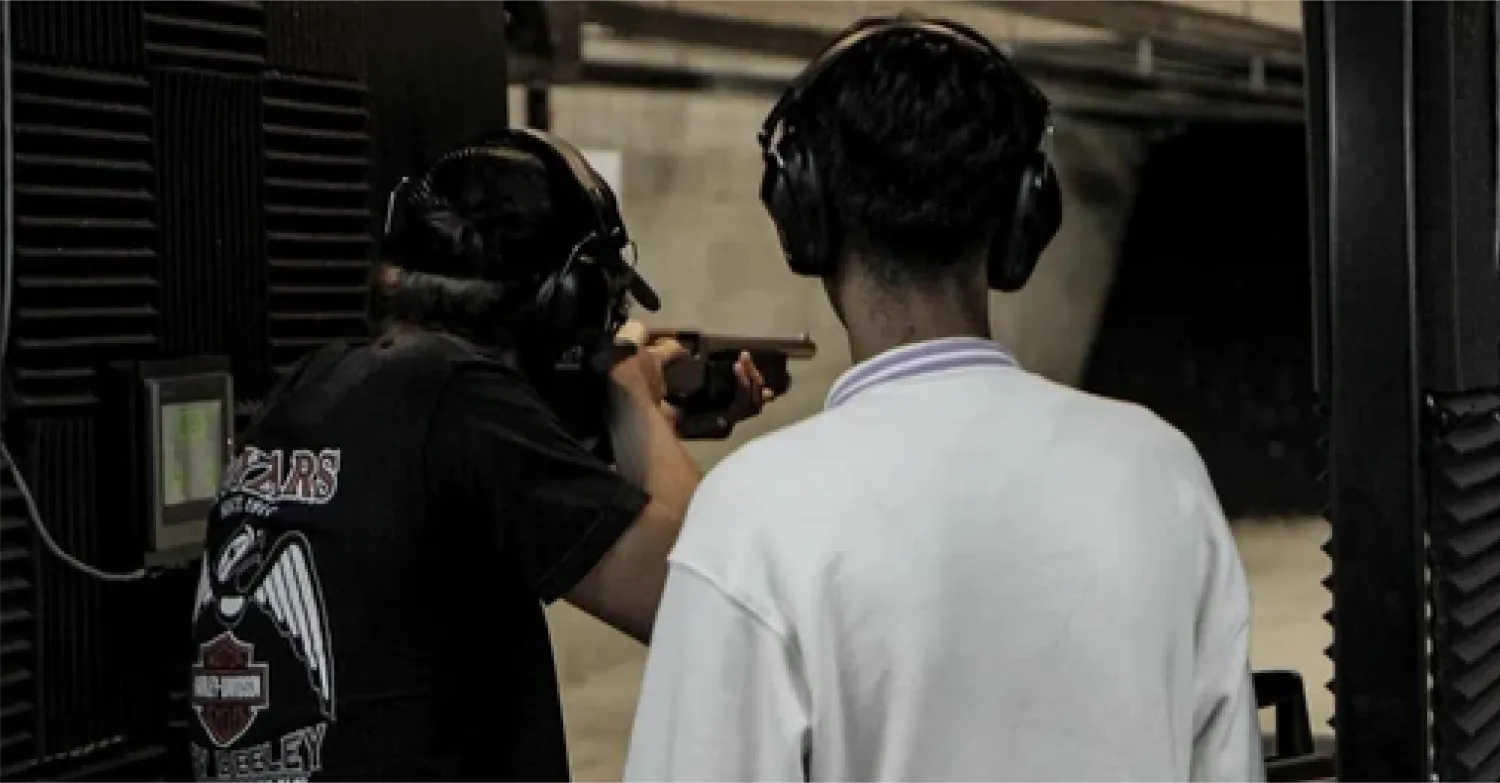
For eligible adults who are genuinely curious, an indoor shooting range offers a more structured experience than most rainy-day activities. It combines a safety briefing, protective equipment, equipment-specific instruction, concentration, and immediate feedback on a target.
Range 313 is located at 1125 Fort Street in Lincoln Park, south of Detroit. The facility lists indoor lanes, firearm rentals, eye and hearing protection, training, and support for domestic and international visitors. Canadian guests should call before traveling because legal eligibility, identity documents, citizenship or immigration status, rental policy, and current inventory all matter.
This is not a drop-in novelty for everyone. A suitable participant must be able to understand and follow safety commands, maintain control of the equipment, and remain sober and attentive. Someone who is uncomfortable may observe only if the facility permits, choose a different activity, or leave. Consent does not become less important because the rest of the group is excited.
The range option fits adults who want:
- A guided skill experience rather than passive entertainment
- A clearly defined safety structure
- An activity that can be completed indoors in most weather
- A focused session with measurable feedback
- The option to ask about training beyond a first visit
It does not fit a group that plans to drink beforehand, wants a loud party atmosphere, intends to pressure hesitant guests, or cannot allocate flexible border time.
What a Canadian visitor needs to confirm
Start with entry documents. U.S. Customs and Border Protection lists acceptable land-border documents for many Canadian citizens, but requirements depend on citizenship and immigration status. A Canadian permanent resident who holds another citizenship may need different documentation. Review the CBP Canadian visitor guidance for each actual traveler.
Next, confirm firearm eligibility. ATF explains that federal rules can differ between visitors admitted with a nonimmigrant visa and those lawfully admitted without one. Other prohibitions can apply in either case. The range cannot provide personal immigration or legal representation, so obtain qualified advice if a visitor’s circumstances are uncertain.
Finally, call Range 313 at (313) 436-0197 . Explain citizenship or immigration status accurately and ask about ID, rentals, lane availability, beginner instruction, group size, protective gear, pricing, and current hours. The contact page lists current facility information.
For many eligible visitors, approved on-site rentals are simpler than cross-border transport. Do not assume personal firearms, ammunition, magazines, components, knives, or defensive sprays can be carried into the United States and returned to Canada. Separate import, export, declaration, classification, and transport rules may apply. Review the CBSA firearms and weapons guidance before considering any regulated item.
How an indoor range visit compares
Use the following questions rather than comparing venues only by price.
How much attention does it require?
A museum or casual game can allow conversation and distraction. A live-fire lane cannot. Every participant must listen to staff, maintain muzzle direction, keep the trigger finger correctly indexed until ready, and stop when commanded. If the group wants an activity where people can chat continuously, choose something else.
How flexible is participation?
A range session should be voluntary. Ask whether non-shooting observers are allowed under current policy, but never use that possibility to corner someone into attending. Escape rooms also require broad participation; museums and cafés offer more individual flexibility.
What sensory conditions matter?
Indoor ranges are loud even with proper hearing protection. They can also involve vibration, close attention, and the smell associated with a live-fire environment. People with sound sensitivity, certain medical conditions, or anxiety should discuss concerns in advance and choose freely.
How predictable is the schedule?
The range session itself can be planned, but the international border cannot be guaranteed. A Windsor-side workshop may provide the most predictable total time. A Detroit-area outing needs a border buffer in both directions.
What belongs in the budget?
For any option, calculate the full cost. A range visit can include lane time, rental, ammunition, targets, eye and hearing protection, instruction, taxes, tolls, fuel, food, and exchange-rate or card fees. A workshop may include materials; a show may add parking and ticket fees. Compare door-to-door totals.
Build a weather-proof cross-border plan
Weather can make indoor activities attractive while also slowing the roads. Snow, heavy rain, fog, or freezing conditions may affect the crossing approaches and I-75. The fact that the destination is indoors does not make the drive low-risk.
Check official border waits and live road conditions immediately before departure. Choose a crossing based on current conditions. Set a cancellation threshold: if roads, visibility, wait times, or a participant’s condition falls outside the plan, reschedule.
Pack suitable outerwear even when the venue is indoors. A secondary inspection, collision, mechanical problem, or closed parking area can leave travelers outside longer than expected. Keep medication and essential items accessible, not buried under event supplies.
For the return, inventory bags and pockets. An eligible rental visit should not end with ammunition, casings, magazines, components, or other range items leaving the facility. Keep ordinary purchase receipts and declare goods truthfully to CBSA. The CBSA travel checklist is a useful final review.
Three sample adult-outing combinations
Quiet and curious
Choose a late-morning museum or gallery visit, a relaxed lunch, and coffee. Keep everything in Windsor for maximum schedule predictability, or cross early if a Detroit exhibit is the goal. This plan suits conversation, mixed mobility, and people who prefer low sensory intensity.
Active and collaborative
Book an escape room, beginner climbing session, or creative class, then share a casual meal. Confirm physical and sensory needs in advance. This plan works when people want to do something together without the eligibility requirements of an international range visit.
Structured and memorable
For an eligible, interested group, cross early, visit Range 313 after confirming rentals and requirements, wash up, and have lunch afterward. Add only one flexible Detroit-area stop. Review the Detroit day-trip itinerary from Windsor for a sample schedule.
Final decision checklist
Before booking any indoor activity near Windsor, ask:
- Does every person genuinely want this experience?
- Can the venue meet the group’s mobility, medical, sensory, and communication needs?
- Is the full cost comfortable after fees, travel, food, and exchange?
- Does the schedule include realistic transport and parking time?
- If crossing the border, does everyone have correct documents and admissibility confidence?
- For a range, has every person’s legal eligibility and facility acceptance been confirmed?
- Is the entire pre-range period free from alcohol, cannabis, and impairment?
- Is there a simple alternative for anyone who changes their mind?
- Can the plan be shortened if weather or border conditions deteriorate?
- Has someone checked the venue’s current hours and rules directly?
The best indoor activity is not the most unusual one. It is the option that matches the group’s energy, gives everyone meaningful choice, and remains enjoyable after the practical details are counted. For eligible adults seeking a structured cross-border experience, Range 313 can add a distinctive skill-based option to the Windsor list. For everyone else, the region still offers plenty of ways to make a wet or cold day worthwhile.
Sources
- Range 313 contact, visitor, and range information
- U.S. Customs and Border Protection: Canadian visitor documents
- U.S. Customs and Border Protection wait times
- ATF nonimmigrant firearms questions and answers
- Canada Border Services Agency firearms and weapons guidance
- CBSA travel reminder checklist
This article provides general activity-planning information, not legal advice. Verify current border, eligibility, booking, and facility rules for the people and date involved.