Choosing a CPL class in Michigan should be a deliberate decision. The course is not simply a certificate purchase or a few rounds at an indoor range. It is the training component of a state licensing process and an opportunity to study safe pistol handling, Michigan law, judgment, conflict avoidance, and live-fire fundamentals under qualified supervision.
Two course advertisements can look similar while offering very different student experiences. One provider may communicate a complete schedule, explain every cost, maintain an appropriate student-to-instructor ratio, and welcome beginner questions. Another may emphasize speed, guaranteed results, or a low headline price without explaining the range portion.
This guide gives Michigan residents 15 practical questions to ask before registering. It applies whether you are comparing classes in Lincoln Park, Detroit, Dearborn, Downriver, Lansing, Grand Rapids, or elsewhere in the state. It is educational, not legal advice. Current statutes, Michigan State Police resources, county officials, and qualified legal counsel should guide legal decisions.
Start with the legal structure, not the advertisement
Michigan law defines the minimum structure of a qualifying pistol training or safety program. Under MCL 28.425j, the training must have occurred within five years before the application and contain at least eight hours of instruction.
The statute currently requires five hours of instruction covering subjects that include safe storage, use and handling, ammunition knowledge, shooting fundamentals, pistol shooting positions, firearms law and civil liability, use of deadly force, avoiding criminal attack, controlling a violent confrontation, and laws governing concealed carry in Michigan.
It also requires at least three hours of firing-range instruction and at least 30 rounds fired. The program must issue a compliant certificate after successful completion, and the instructor must meet the statutory certification requirements.
Read MCL 28.425j in the official Firearms Laws of Michigan publication . A provider should be comfortable confirming that its complete program satisfies the current law.
1. Does the complete program comply with current MCL 28.425j?
Ask this question directly. The answer should be clear and confident, not dismissive. The provider should explain that the course includes both classroom and firing-range instruction and identify the overall time commitment.
Be cautious when the advertised duration appears shorter than the statutory minimum or when the live-fire portion is described as optional. A quick online module followed by an informal meet-up is not automatically a compliant program. Students should not have to reverse-engineer the schedule from vague marketing.
Compliance is the starting point, not the only measure of quality. A class can satisfy minimum time requirements while still being poorly organized. Continue asking questions.
2. Who teaches the class, and what qualifies that person?
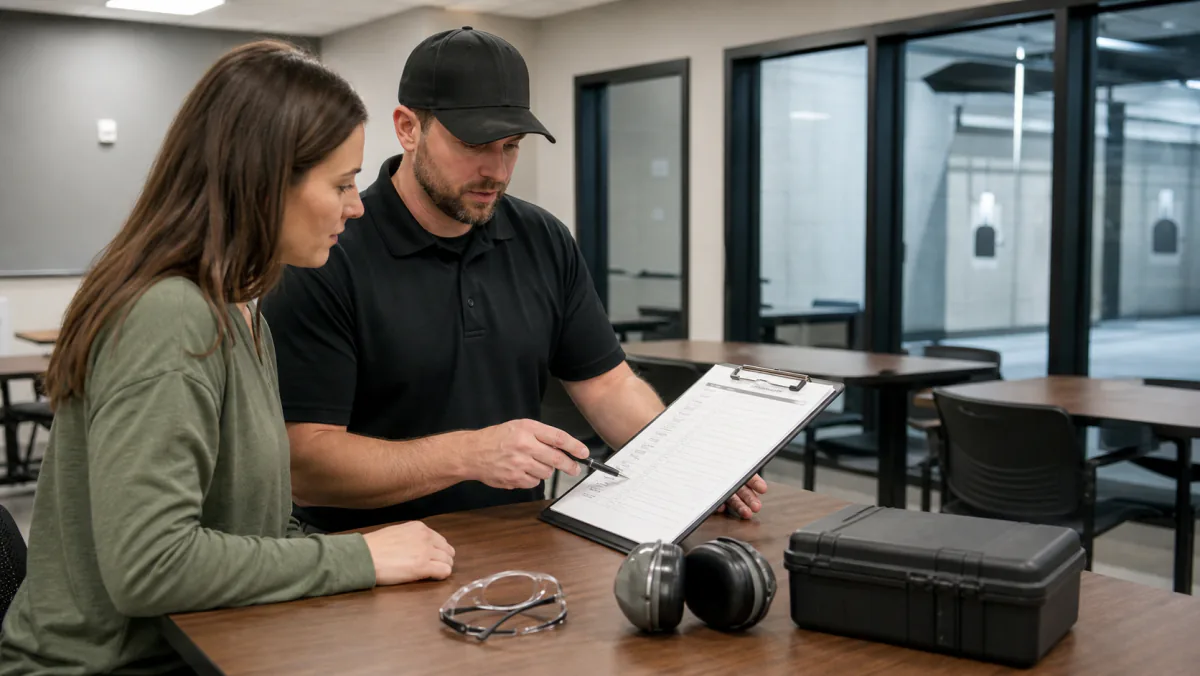
Michigan law addresses instructor certification and who may teach the legal portion involving civil liability and deadly force. Ask for the instructor’s name, relevant certification, and role in each part of the course.
Qualifications are not a reason to expect a dramatic biography. They are a reason to expect accurate instruction, calm supervision, and accountability. An instructor should distinguish between teaching general legal concepts and offering personal legal advice.
Good teaching also requires communication skill. Someone can be technically experienced yet unable to explain a concept to a nervous beginner. Ask whether the instructor routinely works with first-time students and how questions are handled.
3. What does the full class schedule look like?
Request the expected check-in time, start time, classroom blocks, breaks, range period, and approximate end time. Michigan requires a substantial program, so students need to plan transportation, meals, medication, childcare, and work obligations.
A transparent schedule helps you arrive rested and remain present for every required portion. Avoid booking a class when you already know you must leave early. Ask what happens if weather, an equipment problem, or a facility interruption affects the range portion.
The provider should also explain its tardiness and absence policy. Successful completion should mean completing the required work—not simply appearing for part of the day.
4. How large is the class?
Class size affects questions, feedback, range rotations, and the amount of direct observation available. A larger class is not automatically unsafe or ineffective, but it needs enough qualified staff, an appropriate range plan, and clear communication.
Ask how many students normally attend and how many instructors or range-safety personnel supervise live fire. New students may need help with equipment fit, unfamiliar controls, grip, or the noise environment. The course design should allow those concerns to be addressed without pressuring everyone to rush.
5. How is the live-fire portion supervised?
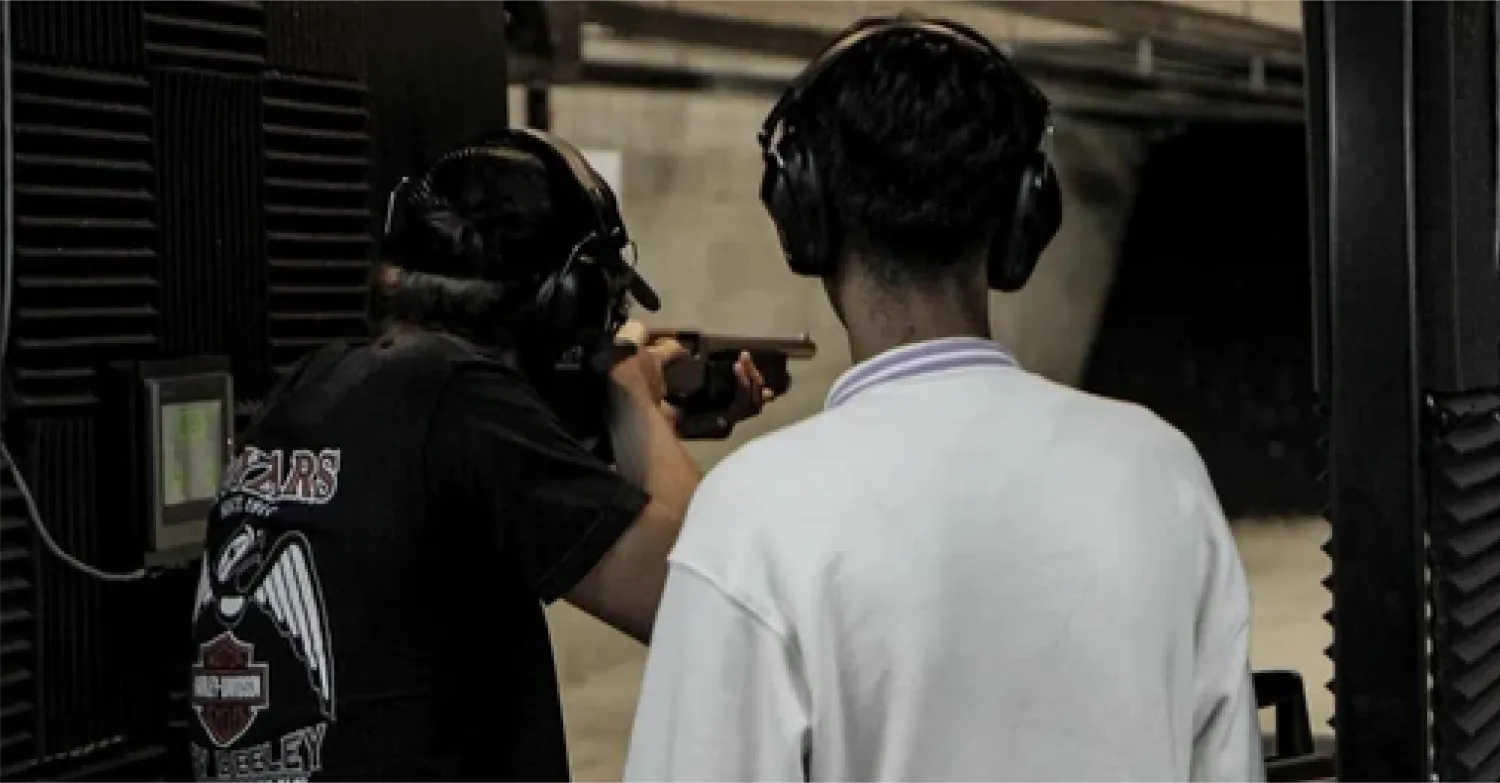
The firing-range portion is not an administrative formality. Ask where it occurs, how students are assigned to lanes, what commands are used, how loading and unloading are managed, and what the instructor does when a student needs additional help.
The best answer emphasizes controlled procedures. Students should know how to stop, keep a pistol safely oriented, and request assistance. The provider should not frame the range portion as a speed contest or entertainment event.
Ask what successful live-fire completion means within the curriculum. The provider should explain expectations before registration or class day rather than surprising students on the lane.
6. Is the course appropriate for a first-time pistol student?
Some providers welcome complete beginners; others recommend a separate fundamentals class first. Neither approach is inherently wrong if it is communicated honestly.
Tell the provider exactly what you have done. “I have never handled a pistol” is more useful than “I am new.” Ask whether basic controls, safe direction, loading procedures, grip, stance, sight use, and range commands will receive enough attention for your starting point.
If an introductory session is recommended, consider taking it. Entering the CPL class with basic familiarity can free more attention for legal concepts and judgment. Range 313 offers multiple firearms training courses and can help students compare a fundamentals course with a CPL class .
7. Are firearm rentals available?
You should not have to buy a pistol just to begin learning. A provider with rentals may help a student complete training before choosing personal equipment.
Ask which models or categories are available, whether the rental must be reserved, and who provides the ammunition. Confirm whether rental use is included in the class price. An unfamiliar rental still requires a clear explanation of its controls and safe operation.
If you own a pistol, ask whether it is permitted and suitable for the course. Do not assume any firearm, modification, holster, or ammunition will be accepted.
8. What exactly does the advertised price include?
Build a complete class-day cost instead of comparing one number. Ask whether the listed amount includes:
- Classroom and range instruction.
- Range time.
- Targets.
- Firearm rental.
- Required ammunition.
- Eye protection.
- Hearing protection.
- Course materials.
- The completion certificate after successful completion.
- Taxes or card fees.
Range 313 offers its Lincoln Park CPL class every Saturday at 10am for $79.99. A firearm rental and ammunition are included with no hidden class fees, and no advance sign-up is required. Government application and fingerprinting fees are separate from private course tuition.
9. What equipment and ammunition are required?
Ask for a written or clearly stated list. If ammunition is required, obtain the exact cartridge designation, quantity, and source policy. Similar names do not prove compatibility, and the range may require ammunition for rentals to be purchased on site.
Ask about eye and hearing protection, clothing, footwear, cases, bags, and note-taking materials. If you use prescription glasses, hearing aids, mobility equipment, or another accommodation, contact the provider early enough to plan safely.
Do not buy a holster, accessory, or large ammunition supply simply because a generic article lists it. Follow the actual provider’s curriculum.
10. How does the class teach the legal portion?
Michigan’s required topics include firearms law, civil liability, use of deadly force, and laws applying to concealed carry. Ask who teaches this portion, which current official materials support it, and whether students receive links for future updates.
Responsible instruction should emphasize that a CPL is not universal permission. Prohibited premises, private-property rules, alcohol and controlled-substance restrictions, interactions with law enforcement, interstate travel, and the facts surrounding any use of force deserve serious attention.
No class can resolve every hypothetical. The instructor should tell students when a question needs an official answer or individualized legal advice. A confident but unsupported answer is not better than an honest boundary.
11. Does the provider explain eligibility limits honestly?
Training is only one requirement. Michigan State Police publishes a detailed CPL requirements page covering age, residency, identification, criminal-history, court-order, mental-health, firearm-possession, and other provisions.
A training provider should not guarantee license approval or claim that purchasing the class proves eligibility. If your history presents a possible issue, consult the appropriate government office or a qualified Michigan attorney before registering.
Avoid any provider that treats a completion certificate as a temporary license. Successful completion does not authorize concealed carry while an application is pending.
12. What certificate is issued after successful completion?
MCL 28.425j specifies statements and identifying information required on a compliant certificate. Ask whether the provider reviews the student’s legal name before printing or completing the document and when the certificate is delivered.
At the end of class, inspect the certificate before leaving. Confirm that your name is accurate and that required instructor information is present. Ask how to protect the original and what to do if an error is discovered later.
The certificate is an important application document. It is not a CPL and should never be represented as one.
13. What are the cancellation and rescheduling terms?
Life happens, but a full-day course may require advance staffing and range space. Ask whether a deposit is refundable, how much notice is required, whether a seat can be transferred, and what happens if the provider cancels.
Also ask what happens if you arrive late, forget required identification, bring unapproved equipment, or cannot safely complete the range portion. Clear policies protect the student and provider.
Do not register for a date that depends on everything going perfectly. Leave room for work, childcare, transportation, and health needs.
14. What support exists after the class?
A quality course should point students toward official application instructions and continued practice. Ask whether the provider offers beginner pistol training, private instruction, regular lanes, equipment guidance, or another appropriate next step.
Post-class support does not mean the range completes government forms or makes legal decisions for the student. It means the student knows where to find current Michigan State Police resources and how to continue building safe skill.
Range 313 students can return to the same Lincoln Park facility for indoor practice and ask about the most appropriate course or range option for their experience.
15. Does the provider communicate like a safety organization?
Pay attention before payment. Are phone questions answered clearly? Does the provider distinguish confirmed facts from items that must be checked? Does the website avoid guaranteed-license language? Are rental, ammunition, and schedule details explained?
Marketing tone matters. Concealed carry should not be sold as status, fear, or instant expertise. A responsible provider emphasizes safe handling, judgment, legal responsibility, conflict avoidance, and continued learning.
Red flags when comparing Michigan CPL classes
Pause before registering when you see:
- A total schedule that appears shorter than Michigan’s statutory minimum.
- No identifiable firing-range portion.
- A promise of guaranteed government approval.
- A certificate offered without full participation.
- Vague instructor qualifications.
- Pressure to purchase a particular firearm before training.
- Hidden ammunition, rental, or range charges.
- Dismissive answers to beginner safety questions.
- Legal claims with no current official source.
- A culture built around speed, intimidation, or humiliation.
One red flag may result from poor wording, so ask for clarification. A pattern of evasive answers is a reason to choose another course.
A simple Michigan CPL class comparison worksheet
Create one row for each provider and compare the same fields:
| Question | Provider A | Provider B | Provider C |
|---|---|---|---|
| MCL 28.425j compliance confirmed? | |||
| Total schedule and range time clear? | |||
| Instructor and qualification identified? | |||
| Typical class size and supervision explained? | |||
| Beginner suitability discussed? | |||
| Rental available? | |||
| Ammunition requirement and cost clear? | |||
| Protection and targets included? | |||
| Cancellation policy clear? | |||
| Continued training available? |
Do not score solely by price. Give weight to clarity, qualified instruction, safe range procedures, and a schedule you can attend without rushing.
Choosing a CPL class near Detroit
Metro Detroit residents have many choices, which makes a consistent comparison especially useful. Consider travel time from Detroit, Dearborn, Allen Park, Taylor, Southgate, Wyandotte, or another community. A nearby course can reduce stress and make post-class practice easier, but quality remains essential.
Range 313 is located at 1125 Fort Street in Lincoln Park. Its current CPL Classes page lists a $79.99 course every Saturday at 10am, including a firearm rental, ammunition, and a same-day certificate for successful students. No advance sign-up is required, and walk-ins are welcome. Call (313) 436-0197 with questions.
Make the decision with complete information
The right CPL class is not necessarily the first, cheapest, or loudest advertisement. It is a compliant, well-organized program taught by qualified people who communicate responsibilities honestly and supervise live fire carefully.
Review Michigan’s official eligibility information before registering. Compare complete costs. Tell the provider your real experience level. Confirm the schedule and equipment list. Then arrive prepared to participate in every required portion.
That process takes more effort than clicking a payment link, but it reflects the judgment a Michigan CPL class is supposed to develop.