Choosing a gun shop near Detroit should involve more than finding the closest storefront or the lowest advertised price. A good shop helps lawful buyers understand the transfer process, compare appropriate options, budget for training and secure storage, and get support after the purchase. It should also be comfortable telling a customer to pause when an item is a poor fit or important information is missing.
For shoppers in Detroit, Dearborn, Allen Park, Southgate, Taylor, Lincoln Park, and throughout Downriver, convenience matters—but confidence in the business matters more. This guide explains 12 practical signs of a trustworthy gun shop near Detroit and the questions to ask before you buy, order online, arrange a transfer, or trade in a firearm.
Quick scorecard for choosing a gun shop near Detroit
Use this table to compare each gun shop near Detroit consistently instead of relying on one impressive display case or one online review.
| What to evaluate | A strong sign | A reason to pause |
|---|---|---|
| Licensing and transfers | The shop explains its process, checks identification, and completes required records | Staff suggest skipping, changing, or misrepresenting required information |
| Pricing | Taxes, fees, included items, and policies are clear before payment | A low headline price hides transfer, shipping, or accessory costs |
| Staff guidance | Questions focus on lawful purpose, fit, experience, and training | The conversation begins and ends with “most popular” or “most powerful” |
| Inventory | Options serve different needs, hand sizes, budgets, and experience levels | Staff push the one product they happen to have |
| Range and rentals | Customers can ask about supervised comparison and current rental availability | A purchase is encouraged before the customer understands basic handling |
| Training | The shop can connect a buyer with appropriate beginner or continuing education | Training is treated as unnecessary once the sale is complete |
| Service | Inspection, maintenance, warranty, and gunsmithing routes are explained | No one can say who helps if a problem appears |
| Storage | Secure-storage solutions are discussed as part of the purchase | Storage is treated as an optional afterthought |
| Policies | Returns, consignments, trade-ins, transfers, and special orders have written terms | Material promises exist only in casual conversation |
| Local access | Hours, parking, contact options, and travel time fit the buyer’s plan | The trip is convenient, but follow-up help is hard to obtain |
No single feature proves that a local firearm retailer is right for everyone. The goal is to find one whose complete process supports a careful, lawful, informed decision.
1. Look for a licensed dealer with a careful transfer process
A professional gun shop near Detroit does not treat required paperwork as a nuisance. It treats compliance as part of customer service.
The ATF’s current Federal Firearms Licensee Quick Reference and Best Practices Guide explains that federal firearms licensees must obtain required records, verify qualifying identification, and conduct a National Instant Criminal Background Check System check before applicable transfers to nonlicensees, subject to limited lawful exceptions. The ATF also identifies failures involving Form 4473, background checks, buyer identification, prohibited persons, and nonresident sales as serious compliance issues.
Buyers do not need to memorize the dealer’s obligations, but they should expect the process to feel deliberate. Staff should ask for the required identification, let the actual buyer complete their own answers, review the record, and respond appropriately to the background-check result. A reputable dealer will not promise an approval, invent an exception, or transfer an item to a spouse, relative, or friend in place of the person listed as the buyer.
The ATF maintains the current Form 4473 and official instructions . Read each question yourself and answer accurately. If something is unclear, ask what the question requests; do not let another person tell you what answer will “make it go through.”
Michigan requirements can also affect a transaction. The Michigan State Police firearms page links current state forms and firearms-law resources and directs legal-interpretation questions to appropriate law-enforcement or prosecuting authorities. Because laws, forms, and individual circumstances change, confirm requirements before arriving.
This article is general buyer education, not a determination of eligibility or legal advice.
A retailer that takes this process seriously will welcome accurate questions and never coach a customer around a required step.
2. Expect transparent total pricing
The price on a tag is not always the complete cost. When comparing a gun shop near Detroit, ask for an itemized total before putting down a deposit or ordering a firearm.
Depending on the transaction, the full budget may include:
- The firearm’s selling price and applicable tax.
- Shipping or special-order charges.
- An incoming FFL transfer fee for an online purchase.
- Any fees associated with a particular service or transaction.
- Magazines, a manufacturer-approved case, and other missing equipment.
- Secure storage prepared before the firearm comes home.
- Eye and hearing protection.
- Appropriate training, range time, targets, and ammunition.
- Inspection, maintenance supplies, or future gunsmithing.
A lower advertised price can become the more expensive choice after shipping, transfer fees, missing magazines, and service are added. Conversely, a local shop may include guidance, inspection, easier warranty coordination, or the ability to compare the product in person.
Ask what is included in the box and what is not. Confirm the exact model, generation, finish, sights, magazine capacity, and number of magazines rather than assuming a stock photo represents the item. For pre-owned inventory, ask whether the price reflects condition, missing components, modifications, or a consignment arrangement.
When the retailer provides a complete written total, buyers can compare genuine value instead of competing headline prices.
3. Choose staff who listen before recommending
Good product guidance begins with questions. Staff should ask what the buyer wants to accomplish, what experience they have, whether they have trained before, how the firearm will be stored, and what complete budget is realistic.
Those questions are not a substitute for the buyer’s judgment or professional training. They help narrow a large selection to options that deserve closer evaluation.
Be cautious when an employee immediately recommends the product they personally carry, the most expensive item, or the smallest handgun without discussing fit and purpose. Popular does not mean suitable. Two people with the same general goal may have different hand size, strength, vision, experience, storage constraints, and tolerance for recoil.
A trustworthy gun shop near Detroit should also be willing to say:
- “This may not fit your hand well.”
- “That feature may not solve the problem you described.”
- “Try a comparable rental before deciding.”
- “Take a class first and come back with better information.”
- “We do not know, but we can check the manufacturer’s documentation.”
Honest uncertainty is more useful than confident guessing.
The strongest retailer earns trust by helping a customer narrow the choice, not by making every product sound equally suitable.
4. Compare useful inventory, not just large inventory
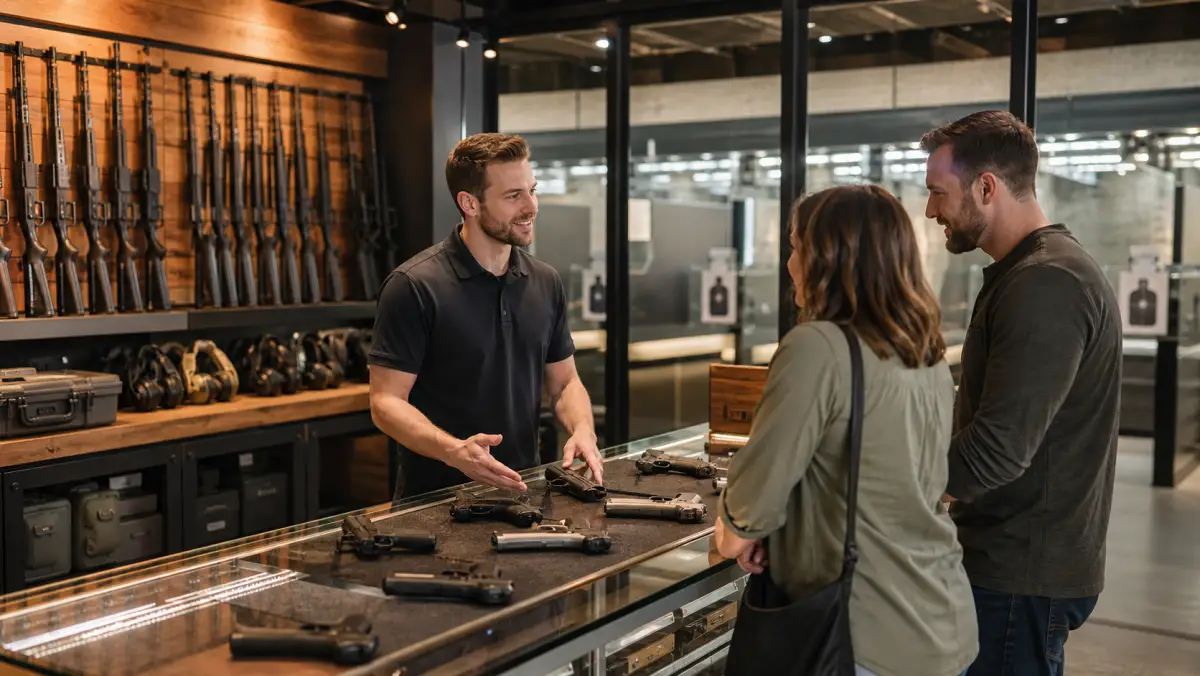
A wall full of firearms can look impressive, but selection should be judged by relevance and support. A useful Detroit-area shop carries options across common purposes, sizes, operating systems, and budgets, plus the accessories needed to store, transport, maintain, and practice with them responsibly.
Range 313’s retail firearm and range products include new and pre-owned firearms, special orders, ammunition, eye and hearing protection, cleaning supplies, optics, holsters, magazines, and secure-storage products. Availability changes, so call rather than assuming a particular model is in stock.
Ask whether the staff can explain meaningful differences between similar models. They should be able to identify the exact variant, show what is included, locate the correct manual, and tell you whether parts, magazines, holsters, and manufacturer support are reasonably available.
Inventory breadth is helpful only when the comparison remains focused. If every visit introduces five more choices without clarifying the decision, return to the buyer’s purpose, fit, training plan, and total budget.
A shop with a curated selection should still be able to explain what it does not stock and how a special order would work.
5. Value the opportunity to try before buying
Counter handling can reveal grip size, control reach, weight, sight visibility, and general ergonomics. It cannot show how the shooter experiences recoil, recovers the sights, manipulates controls under instruction, or maintains comfort across a range session.
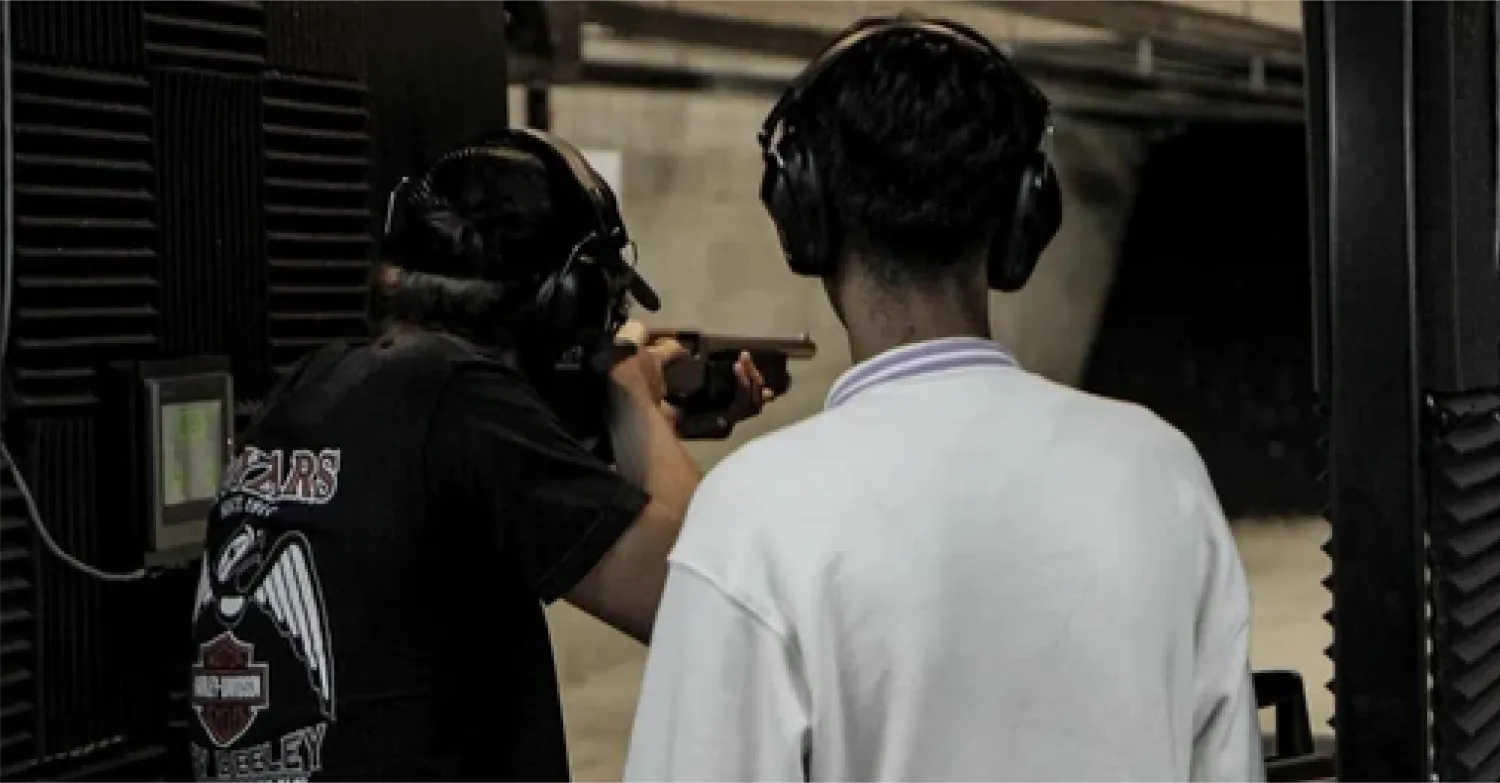
That is why an indoor range can be a meaningful advantage when choosing a gun shop near Detroit. A supervised rental session may help a customer compare available models before committing. The exact firearm under consideration may not be in the rental fleet, but a comparable model can still provide more information than a display-only decision.
Range 313 has an indoor range with firearm rentals in Lincoln Park. Contact the team about current rental inventory, identification, age, ammunition, and guest requirements before making the trip. Rental access does not guarantee that any person can purchase or possess a firearm, and store policies may be more restrictive than the legal minimum.
During a comparison, focus on practical questions:
- Can you reach and operate the controls safely under instruction?
- Can you see the sights clearly?
- Does the grip remain manageable through more than one shot?
- Can you follow the loading, unloading, and status-checking process taught for that model?
- Do you feel rushed, confused, or physically strained?
One exciting target is not enough evidence for a purchase. Notes from a calm, supervised comparison are more valuable than a friend’s brand loyalty.
6. Look for training that matches your current level
Buying equipment does not create skill. New owners need professional education on universal safety rules, safe handling, storage, transportation, range procedures, and the operation of their specific firearm. Experienced owners benefit from refreshers and structured practice as goals change.
A strong firearm retailer should treat training as part of ownership, not as an upsell for people who “do not know enough.” The team should be able to explain which class is designed for a first-time shooter, which course supports concealed-carry licensing, and which options require prior experience.
Review Range 313’s firearms courses and training options to compare current programs. Contact the range before enrolling so the class level, required equipment, prerequisites, schedule, and learning objectives match your needs.
Be skeptical of vague promises such as “master the basics in an hour” or courses that emphasize certificates without describing what students will learn and demonstrate. A responsible instructor sets expectations, enforces safety standards, and identifies the next practice step rather than implying that one class completes the learning process.
A business that supports continuing education can help turn a one-time purchase into a responsible long-term training plan.
7. Ask how online orders and FFL transfers work
Online listings expand the available selection, but the transfer still needs a lawful receiving process. Before ordering, contact the receiving gun shop near Detroit. Confirm that it will accept the specific firearm and shipment, what information the seller needs, what the transfer fee is, what happens if the firearm arrives damaged or incorrect, and how long the shop will hold it.
Do not send a firearm to a dealer without permission. Do not assume every shop accepts transfers from every seller or handles every firearm type. A bargain can become a long dispute when the seller’s return policy, shipping terms, and receiving dealer’s policy were never compared.
Our Michigan FFL transfer guide explains the sequence in more detail, including why buyers should arrange the receiving dealer before placing an order. Range 313 supports incoming transfers and Form 4473 processing, subject to current policies and applicable law.
Before ordering, record:
- The exact manufacturer model number and configuration.
- The seller’s name, contact details, and return terms.
- The receiving shop’s permission and current fee.
- Shipping, insurance, and tracking terms.
- The plan if the item is incorrect, damaged, or cannot lawfully be transferred.
The receiving dealer is not automatically responsible for the online seller’s description or refund. Resolve those responsibilities in advance.
8. Evaluate service after the sale
The relationship with the retailer should not end at the register. Ask who will help if the firearm has a suspected defect, needs a manufacturer return, requires an inspection, or needs an optic installed.
Range 313 offers gunsmithing and firearm services , including cleaning, inspection, general repairs, parts installation, sight work, optics mounting, and zeroing support. Service scope varies by firearm and job, so confirm the details before bringing equipment into the store.
Questions worth asking the store include:
- Does the store inspect new and pre-owned inventory before sale?
- Will it help document and coordinate a manufacturer warranty issue?
- Which work is performed in-house and which is referred elsewhere?
- Is there an estimate, approval threshold, and expected turnaround process?
- What happens if additional damage is found?
- Are replaced parts returned when appropriate?
If a firearm appears unsafe or begins behaving abnormally, stop using it, keep it secured, and contact a qualified professional. Continuing to fire it “to see if the problem clears” can worsen the issue.
9. Read written policies before paying
Firearms are not ordinary retail returns. Once paperwork and transfer steps are completed, the shop may be unable or unwilling to reverse the transaction in the way a clothing retailer would.
Ask to read the relevant policy before paying, particularly for:
- New, pre-owned, consignment, and as-is inventory.
- Deposits, layaway, and special orders.
- Online orders and incoming transfers.
- Inspection periods and refused or denied transfers.
- Manufacturer defects and warranty shipping.
- Trade-in valuations and consignment fees.
- Storage charges for items not collected on time.
Get important promises from the retailer in writing. If an employee says a used firearm has a warranty, ask to see the terms. If a special order can supposedly be canceled, confirm the deadline and fee. If a deposit is refundable, the receipt should say so.
A careful retailer will not object to a customer reading the transaction terms.
10. Make secure storage part of the purchase plan
Storage should be decided before bringing a firearm home. The right approach depends on the household, firearm, access needs, unauthorized-user risks, and current law. A simple cable lock may be one layer, but it may not address theft, fire protection, children, visitors, or access to ammunition.
Knowledgeable staff should discuss options without pretending one product fits every home. Depending on the situation, that may include a locking case, quick-access lockbox, anchored safe, cabinet, separate ammunition storage, or additional access controls.
Ask how the product resists unauthorized access, how it can be anchored, whether it fits the firearm without pressure on controls, how keys or codes should be managed, and what happens if the electronic system loses power. Check manufacturer instructions and applicable current requirements.
Do not spend the entire budget on the firearm and postpone storage until the next paycheck. Include it in the initial cost comparison.
11. Use reputation as evidence—not a substitute for evaluation
Reviews can reveal patterns in service, wait times, transfer communication, beginner support, and problem resolution. Read recent reviews, not only the overall rating. Look for detailed accounts from people who used the service you need.
At the same time, online reputation has limits. A glowing review may reflect one easy transaction; an angry review may omit important facts. Pay more attention to recurring themes and how the business responds to problems.
When visiting a local shop, compare the reviews with what you observe:
- Are customers greeted and given time to ask questions?
- Are safety and muzzle-direction rules enforced at the counter?
- Do staff distinguish facts from opinions?
- Are prices and policies consistent with what was advertised?
- Does the shop protect customer privacy during paperwork?
- Is the facility organized enough to manage firearms and records carefully?
Your direct experience should confirm the reputation, not be overridden by it.
12. Consider local convenience and complete support
Travel time matters because responsible ownership involves more than one visit. A nearby store is easier to revisit for training, range practice, an accessory fit check, warranty help, or maintenance. But the closest business is not automatically the most supportive.
Compare hours, parking, phone responsiveness, range availability, course schedules, and whether the retailer combines the services you will actually use. A Detroit resident may prefer a short drive into Downriver when one facility can support retail comparison, a supervised range session, training, transfers, and service.
Range 313 is located at 1125 Fort Street in Lincoln Park, serving customers from Detroit, Dearborn, Allen Park, Melvindale, Southgate, Taylor, Wyandotte, and neighboring Metro Detroit communities. Call ahead for current inventory, rental availability, course dates, and service timing, especially if you need a specific item.
Canadian visitors should distinguish a range visit from purchasing, possessing, importing, exporting, or transporting a firearm. Those are separate legal questions involving citizenship or residence, transaction type, border rules, and other facts. Never assume that being permitted to use a rental on the premises means a firearm can be purchased or taken across the border.
Questions to ask a gun shop near Detroit
Bring this short list to the counter:
About the product
- Is this exact item new, pre-owned, consigned, or a former rental?
- What is the manufacturer model number and what comes with it?
- Has it been modified, inspected, repaired, or subject to a recall?
- Are compatible magazines, parts, holsters, and factory support available?
About the transaction
- What is the total price, including current fees and tax?
- Which identification and documents should I bring?
- What written return, deposit, special-order, and warranty policies apply?
- If the transfer cannot be completed, what happens to the firearm and payment?
About long-term support
- Can I try a comparable rental before deciding?
- Which class fits my current experience?
- What secure-storage options suit my household plan?
- Who helps if the firearm needs inspection, installation, or factory service?
The quality of the answers matters, but so does the manner. Helpful staff should explain the process without rushing, embarrassing, or pressuring a beginner.
Red flags when choosing a gun shop near Detroit
Leave or pause the transaction if:
- Someone suggests that another person complete the purchase or paperwork for the actual intended recipient.
- Staff tell you to omit facts, use an old address, or select an answer simply to avoid a delay.
- The advertised model or condition does not match the item presented.
- Important fees appear only after a deposit is paid.
- A used firearm has unexplained modifications or damaged markings.
- The retailer will not provide material policies in writing.
- Employees dismiss secure storage, training, or basic safety questions.
- High-pressure claims replace an evidence-based comparison.
- No one can explain what support exists after the sale.
A legitimate purchase does not need secrecy or false information. Walking away is less costly than accepting a product, process, or promise you do not understand.
How Range 313 fits the checklist
Range 313 brings a retail showroom, indoor pistol and rifle range, rentals, firearms courses, FFL transfers, and gunsmithing support together in Lincoln Park. That combination gives Metro Detroit customers a practical path from research to supervised experience, lawful purchase, continued training, and maintenance.
For customers comparing a gun shop near Detroit, those connected services reduce the need to assemble support from unrelated businesses.
First-time buyers can compare new and pre-owned inventory, ask about secure storage and protective equipment, and explore training before choosing. Experienced owners can use the same location for range practice, transfer receiving, optics work, cleaning, inspection, and other supported services.
No retailer can remove the buyer’s responsibility to read forms, follow current law, store equipment securely, and keep learning. The value of a complete facility is that the next responsible step is easier to identify and access.
Choose process over pressure
The right gun shop near Detroit should make a serious decision clearer, not faster for its own sake. Look for a licensed and careful transfer process, transparent total cost, patient staff, relevant inventory, range and rental access, appropriate training, written policies, secure-storage options, and dependable after-sale service.
Compare more than the price tag. Ask questions, verify official requirements, try suitable options when possible, and leave room in the budget for training, storage, practice, and maintenance. A store that supports those priorities is more likely to remain useful long after the initial purchase.