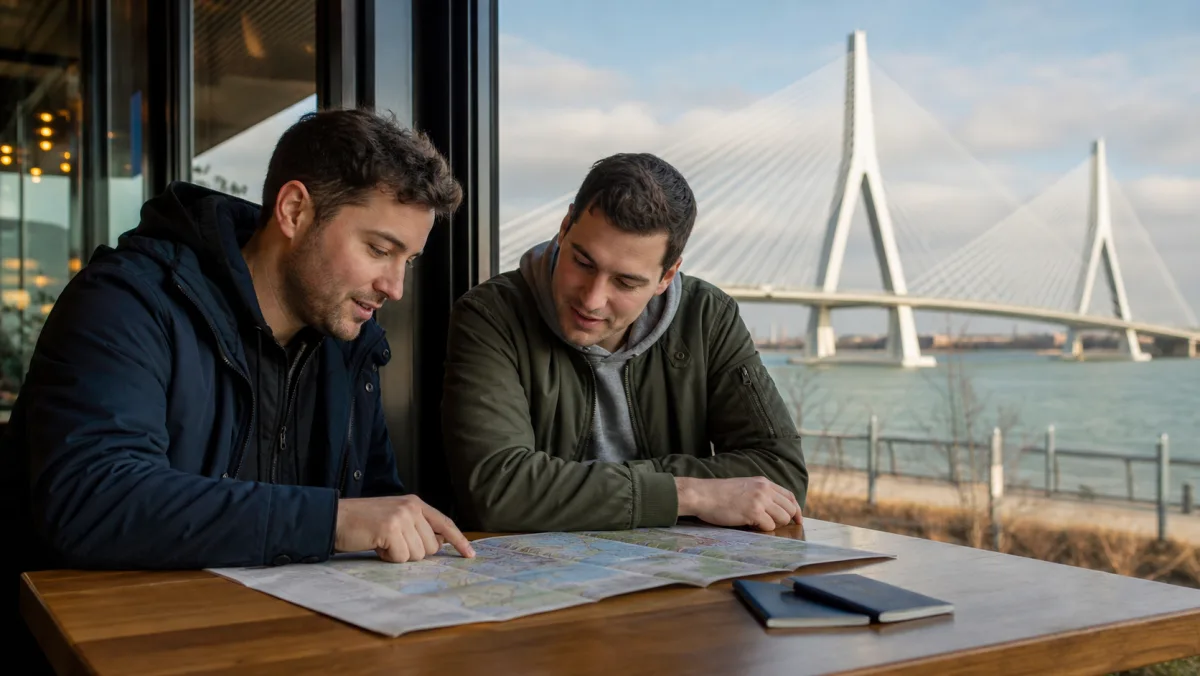
Searching for a gun range near the Gordie Howe International Bridge usually means you want a route that makes sense after entering Michigan—not merely the closest pin on a map. Range 313 is an indoor shooting range at 1125 Fort Street in Lincoln Park, in the Downriver area south of Detroit. The Gordie Howe crossing links the Highway 401 corridor in Windsor to Interstate 75 in Detroit, creating a highway-to-highway option that can fit a trip toward Lincoln Park.
That geography is useful, but the international border remains the most important part of the plan. Every traveler must have the correct entry documents and be admissible to the United States. Every participant must also be legally eligible to possess or use a firearm and meet Range 313’s current policies. A map cannot answer either question.
This guide treats the crossing, range visit, and return as one itinerary. It is designed for eligible adults planning a recreational visit with on-site rentals, not for transporting a personal firearm across the border. Laws, tolls, wait times, inventory, and facility rules can change, so verify the live details before leaving Windsor.
Why the Gordie Howe crossing can fit a Downriver range trip
The bridge’s main routing advantage is its direct connection between Highway 401 and I-75. Range 313 is south of downtown Detroit, so a route that places a visitor onto the interstate system can be convenient when current traffic supports it. The official Government of Canada project page describes a six-lane bridge with direct highway connections, while the Canadian port of entry operates around the clock.
“Convenient” does not mean “always fastest.” A collision, inspection queue, lane change, construction project, event, or toll-plaza delay can alter the day. Windsor-area travelers now have multiple international crossings to compare. Choose with current information instead of assuming the newest route or your familiar route must be best.
Before departing, compare:
- The official U.S.-bound border wait time for the crossing
- The Canadian return wait time you are likely to encounter later
- Live road conditions between the U.S. port of entry and Lincoln Park
- Current toll and payment information
- Range 313’s hours and final check-in time
Do the comparison again before the return trip. A crossing that was efficient in the morning may not be the sensible choice after your visit.
Confirm personal eligibility before choosing a lane time
A Canadian address does not establish that a person may enter the United States or handle a firearm there. Citizenship, immigration status, criminal history, court orders, visa category, and other individual facts can affect the answer. A Canadian citizen admitted without a visa may be in a different position under U.S. federal firearms law than a citizen of another country who resides in Canada and enters under a nonimmigrant visa.
The Bureau of Alcohol, Tobacco, Firearms and Explosives explains that federal law generally prohibits a nonimmigrant admitted under a visa from possessing firearms or ammunition unless an exception applies. ATF also explains that the visa-specific restriction does not apply merely because a nonimmigrant visitor was lawfully admitted without a visa, although every other federal, state, and personal prohibition still matters.
Do not turn those general statements into a personal legal conclusion. Review the current ATF nonimmigrant firearms questions and answers , obtain legal advice when a person’s situation is uncertain, and call Range 313 before making the trip. Tell the staff member each visitor’s actual citizenship or immigration status; “we are coming from Windsor” is not specific enough.
Facility policy may be more restrictive than the legal minimum. Rental availability also changes. The best confirmation is current, direct, and tied to the actual people traveling.
Bring documents for two different checkpoints
Your border document and your range identification serve different purposes. U.S. Customs and Border Protection sets entry-document requirements, while Range 313 sets its check-in requirements within applicable law.
CBP lists several documents that may be accepted from Canadian citizens arriving by land or sea, depending on the traveler and circumstances. A Canadian passport is the most broadly recognizable choice. Canadian permanent residents who are citizens of other countries can face different entry or visa requirements. Children need appropriate travel documents as well, and a consent letter may be prudent when a child is traveling without every parent or legal guardian.
Review CBP’s current guidance for Canadian visitors before the trip. An officer at the port of entry makes the admission decision; a reservation or range plan does not guarantee entry.
For Range 313, bring a current passport or valid government-issued photo ID and confirm exactly what staff will accept. Every adult should carry their own original document. Check expiration dates, name consistency, and the condition of the ID before leaving home. A photograph of a passport stored on a phone is not a reliable substitute for the original document required at the border.
Leave regulated gear at home for a rental-based visit
The lowest-friction plan for many casual visitors is a clean vehicle: ordinary travel belongings, proper identification, suitable clothing, and no firearm-related equipment. Do not assume an item can cross because it is legal in Ontario, was purchased lawfully, or seems harmless.
That means leaving behind personal firearms, ammunition, loaded or empty magazines, firearm components, spent cases, defensive sprays, and other regulated weapons unless you have researched and completed every applicable authorization. Temporary firearm importation into the United States may require prior ATF approval. Returning to Canada introduces Canadian declaration, classification, licence, transport, and import requirements.
ATF provides Form 6NIA information for temporary firearm and ammunition importation . The Canada Border Services Agency firearms guidance separately explains that travelers must satisfy both countries’ rules and declare firearms and weapons when entering Canada. Those processes are not a same-day improvisation.
Instead, ask Range 313 whether an on-premises rental is available and permitted for every eligible visitor. Confirm whether ammunition for the rental must be purchased at the range, what protective equipment is provided, and whether a beginner needs a class or other arrangement. Use approved equipment only on the premises and account for everything before leaving.
Call Range 313 before crossing
Walk-in availability is valuable for local customers, but an international trip deserves a direct confirmation. Call (313) 436-0197 and explain that you are coming from Canada by way of the Gordie Howe corridor.
Ask these questions in one conversation:
- Is each visitor eligible under current range policy based on the status accurately described?
- Which original photo identification should each person present?
- Are lanes expected to be available on the intended date and approximate arrival time?
- What is the current final check-in time?
- Can the eligible visitors rent on site, and what rental conditions apply?
- Are eye and hearing protection available?
- What lane, rental, target, ammunition, protection, and instruction costs should the group expect?
- Does any first-time participant need a separate lesson or reservation?
- What are the current rules for minors, observers, and group size?
- Is an event or maintenance period expected to reduce lane availability?
Write down the answers and the date you called. Inventory and operating conditions can change, so reconfirm if the trip moves to another day. The current Range 313 contact page is the right place to recheck the address, hours, phone number, and visitor notes.
Build a schedule that survives a border delay
Range 313 currently lists daily hours of 10 a.m. to 9 p.m. and a final guest check-in at 8:15 p.m. Those hours are not permission to plan an 8:14 arrival. International visitors may need time for parking, document review, waivers, orientation, rental selection, protection fitting, and lane preparation.
Create the itinerary backward:
- Choose when the session should end.
- Reserve enough time for a calm, deliberate visit rather than a rushed ammunition count.
- Add check-in and orientation time.
- Add the current drive estimate from the U.S. port of entry to Lincoln Park.
- Add a separate border buffer based on current conditions, not a best-case crossing.
- Add time to reach the Canadian port of entry from your starting point in Windsor or Essex County.
If a fixed dinner, work shift, child-care pickup, or medication schedule leaves no room for a secondary inspection, choose another day. Border officers can direct any vehicle for additional examination. That possibility is normal cross-border travel, not a reason to argue or panic.
Use the official CBP border wait-time tool for U.S.-bound traffic and the CBSA border wait-time page for the Canadian return. The bridge’s official toll FAQ also provides current operating and payment information. Screenshotting a wait time hours before departure is not enough; conditions move.
Pack for the range, not for cross-border transport
Wear a high-neck or close-fitting shirt, closed-toe shoes, and comfortable clothing that does not obstruct eye or hearing protection. Hot cartridge cases can bounce unpredictably, so avoid low-cut tops, open footwear, dangling jewelry, and loose scarves. Tie back long hair.
Bring:
- Each traveler’s original border documents and range ID
- A U.S.-compatible payment method
- Prescription glasses, hearing aids, or required medication
- A clean change of shirt if the day continues elsewhere
- A simple written itinerary and the range phone number
- Any confirmation received from Range 313
Do not bring alcohol, cannabis, CBD products, or impairing substances. Cannabis remains illegal to carry across the international border even when possession may be lawful on one side. The CBSA travel checklist highlights cannabis, weapons, and other regulated goods that travelers must understand.
Food and drinks belong outside the live-fire space. After shooting, wash exposed hands and face with cool water and soap before eating. If children are traveling, keep their snacks and personal belongings separate from range equipment.
What first-time visitors should expect inside
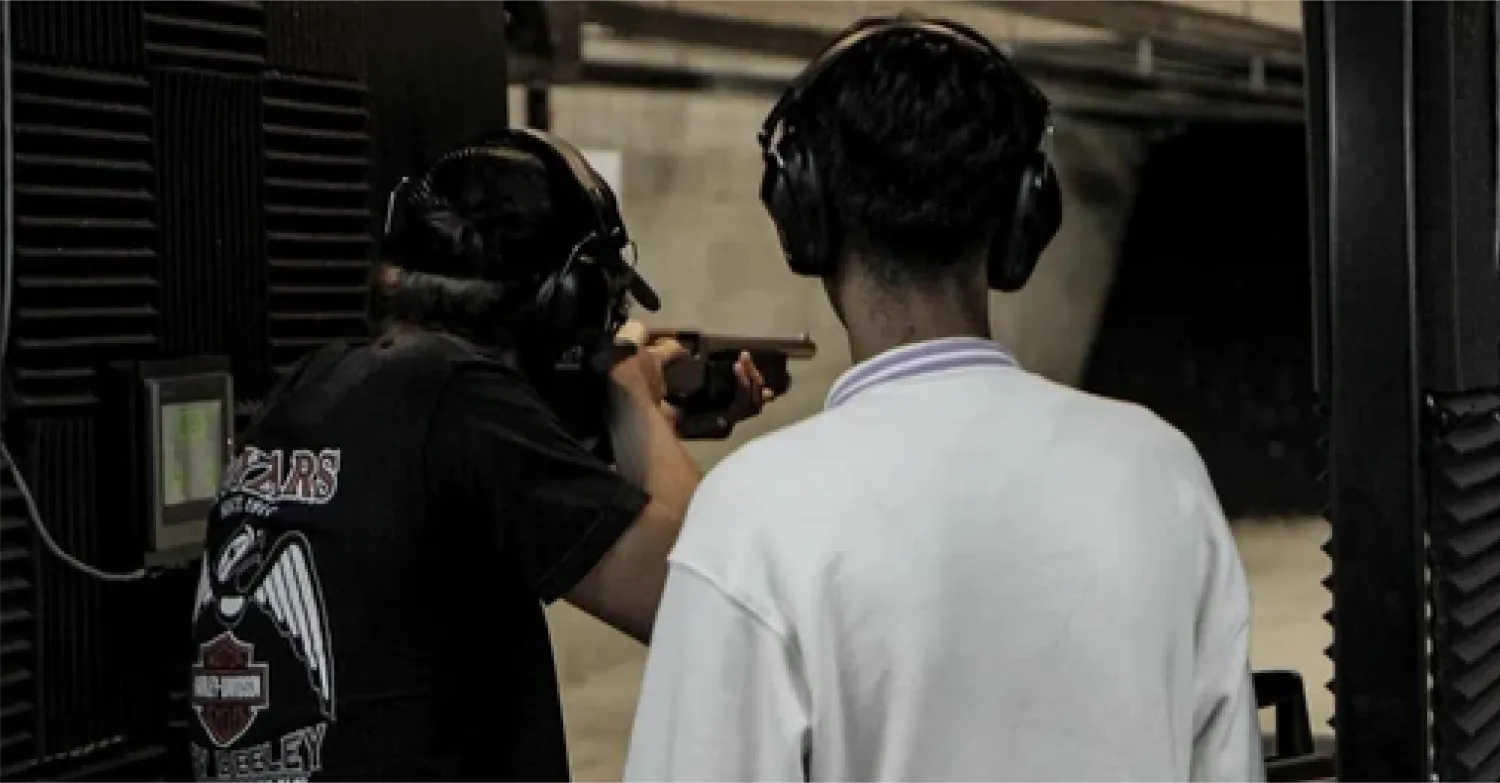
At the counter, say that you are visiting from Canada and disclose your experience level honestly. Present the requested identification, read the waiver, and listen through the complete facility briefing. Ask for plain-language clarification whenever a rule is unfamiliar.
Four principles govern the entire session: treat every firearm as loaded, keep the muzzle pointed in the safe direction, keep your finger away from the trigger until you are ready to fire, and know the target and what is beyond it. On an indoor range, staff commands control the line. Stop immediately when instructed.
A beginner should not choose a rental from appearance or reputation alone. Ask staff for an option that fits the shooter’s hands, strength, comfort, and instruction level. Before loading, understand the controls, approved ammunition, target distance, loading sequence, and procedure for a malfunction. If anything behaves unexpectedly, keep it pointed downrange, remove your finger from the trigger, and signal staff.
Our beginner firearm rental guide explains the rental sequence in more detail. The first-time range checklist provides a useful review for clothing, conduct, and expectations.
Plan the return before the first shot
A good return plan begins with an empty-item policy: no ammunition, casing, magazine, firearm component, target hardware, defensive item, or borrowed range gear goes into a pocket or vehicle. At the end of the session, return rentals and protection exactly as staff directs. Check the lane bench, floor around personal belongings, coat pockets, and bags.
Receipts for ordinary purchases can help with a truthful declaration, but a receipt does not make a regulated item importable. Avoid impulse purchases involving ammunition, firearm parts, knives, sprays, or controlled products. Retail availability in Michigan does not determine what may lawfully leave the United States or enter Canada.
Choose the return crossing with fresh traffic data. Make a full and accurate declaration to CBSA. If you are uncertain whether an ordinary purchase must be declared, say so and ask the officer. Never carry a package for someone else, and never make a joke about firearms or border security.
A practical Gordie Howe range-day sequence
Use this order to keep the trip controlled:
- Verify U.S. admission documents and firearm eligibility for every participant.
- Call Range 313 with accurate status, age, experience, and group information.
- Confirm hours, last check-in, rentals, instruction, equipment, and expected costs.
- Remove regulated and impairing items from the vehicle before departure.
- Check the Gordie Howe crossing’s current toll, payment, and operating information.
- Compare live border waits and road conditions with the other available crossings.
- Cross with documents ready and answer officers directly and truthfully.
- Arrive early enough for an unhurried check-in and orientation.
- Follow staff direction, use only approved on-site equipment, and stop before fatigue affects attention.
- Inventory every pocket and bag, check return traffic, and declare purchases accurately in Canada.
The Gordie Howe International Bridge can make a Windsor-to-Downriver outing easier to organize, especially for travelers approaching on the Highway 401 corridor. It does not remove the need for legal eligibility, clear documents, live traffic checks, or direct confirmation from the range. Treat those steps as part of the experience and Range 313 can be the planned destination—not a gamble after the border.
Sources
- Range 313 contact, hours, identification, and visitor information
- Government of Canada: Gordie Howe International Bridge
- Canada Border Services Agency: Gordie Howe port of entry
- Gordie Howe International Bridge toll FAQ
- U.S. Customs and Border Protection wait times
- CBP documents for Canadian visitors
- ATF nonimmigrant firearms questions and answers
- CBSA firearms and weapons guidance
This article provides general planning information, not legal advice. Entry, possession, rental, transport, and declaration requirements depend on the traveler and can change. Confirm current rules with the responsible agencies and Range 313 before traveling.