A search for a gun range near the Detroit–Windsor Tunnel often comes from someone who knows the downtown crossing and wants an indoor activity on the Michigan side. Range 313 is at 1125 Fort Street in Lincoln Park, south of downtown Detroit. From the U.S. tunnel plaza, visitors continue toward the Downriver area using the current road route.
The tunnel can be convenient, especially when a day also includes a downtown Detroit stop. It is not automatically the quickest way to Lincoln Park. Events, construction, border queues, toll-lane conditions, and local traffic can change the trip substantially.
More importantly, proximity does not establish eligibility. Every traveler must have acceptable U.S. entry documents and be admissible. Every range participant must be legally eligible to possess or use a firearm and meet Range 313’s policies. This guide helps organize those questions, a rental-based visit, and the return to Canada.
Understand what the tunnel route does well
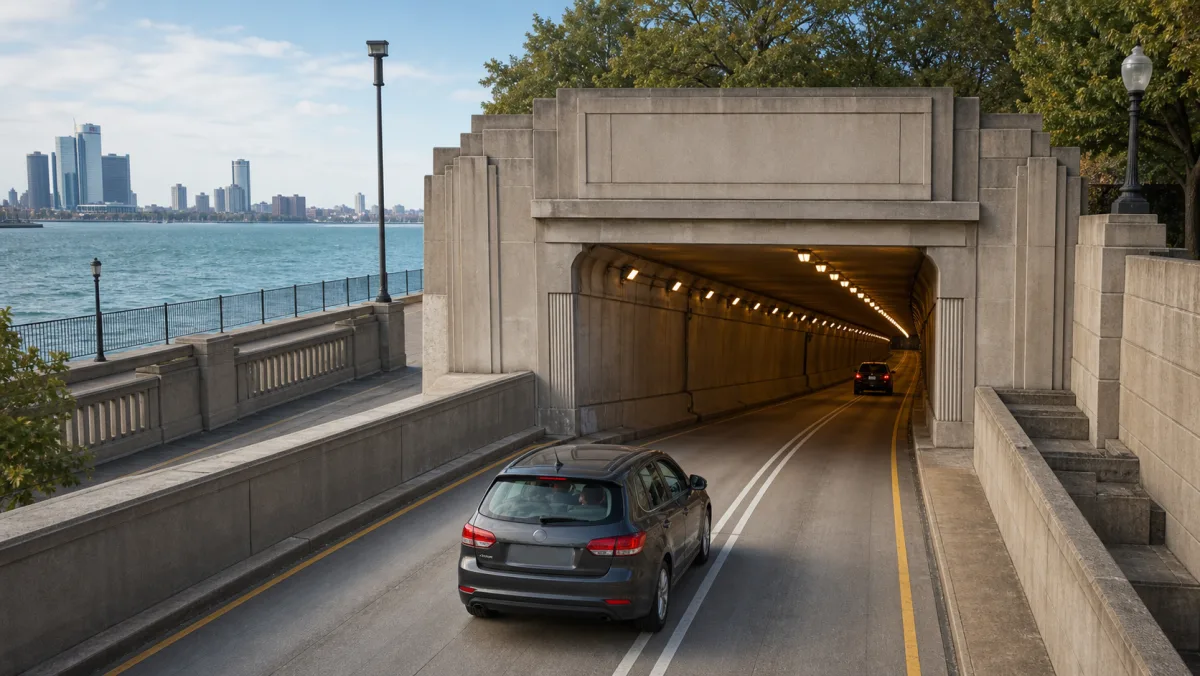
The Detroit–Windsor Tunnel connects the downtowns beneath the Detroit River. The official tunnel site says it operates around the clock, apart from announced exceptions, and publishes current traffic, cameras, tolls, payment information, and alerts.
That central location can work well when the itinerary includes a riverfront, restaurant, museum, sports, or entertainment stop in Detroit. If Range 313 is the only destination, compare the tunnel’s complete route to the available bridge routes. Exiting in downtown Detroit still leaves a drive south to Lincoln Park.
The tunnel route may be a good choice when:
- The Canadian group starts near central Windsor
- Official U.S.-bound waits are favorable
- Downtown roads are moving normally
- The vehicle fits current tunnel requirements
- A downtown activity is included before or after the range
- Current toll and payment arrangements are understood
It may be less attractive during a major downtown event, road closure, maintenance operation, or heavy central traffic. Check again rather than relying on last week’s experience.
Compare the full journey, not the river crossing
Use four measurements:
- Home to the Windsor tunnel approach
- Queue, toll, and inspection time
- U.S. plaza to Range 313
- Parking and range check-in
A map may estimate only moving traffic. Border officers can direct a vehicle to secondary inspection, and the duration cannot be scheduled. Downtown events can also reroute traffic after a quick crossing.
Check the official Detroit–Windsor Tunnel site for live conditions and alerts, the CBP wait-time system for U.S.-bound reporting, and current navigation toward Lincoln Park. Compare those results with the Ambassador Bridge and Gordie Howe International Bridge.
For the return, use the CBSA border wait-time page and new navigation data. The best morning crossing may not be the best evening crossing.
Check toll and vehicle details before the approach
The tunnel’s official toll page provides direction-specific passenger rates and current payment methods. It also describes prepaid or mobile options where available. Rates and systems change, so do not rely on an amount remembered from an earlier visit.
Review the current tunnel toll page before departure. Confirm:
- The passenger-vehicle rate in the direction traveled
- Which currency applies
- Accepted debit, credit, account, or mobile methods
- Whether cash is accepted
- Vehicle height, width, trailer, motorcycle, or other restrictions
- Planned maintenance or special-event changes
Prepare payment before entering the toll approach. Never stop in a live lane to search through luggage or set up an app. If the vehicle is unusually tall, carries a trailer, or has external equipment, confirm current dimensional restrictions directly.
Confirm entry documents for every traveler
U.S. entry documents depend on citizenship, immigration status, age, and method of travel. Many Canadian citizens arriving by land have several approved document options. Canadian permanent residents who are citizens of other countries may face different visa or documentation rules.
Review U.S. Customs and Border Protection guidance for Canadian visitors . Every adult should possess their own original document, and children need appropriate documentation. When a minor travels without every parent or legal guardian, consider the official consent-letter guidance.
Range 313 requests a passport or valid government-issued photo ID. Call to confirm what the facility will accept from each international visitor. A document accepted for border entry is not automatically the only document a private facility can request for identity or eligibility procedures.
Check expiration dates and name consistency before the travel day. A phone photograph does not replace an original passport or other physical document required at the port.
Separate U.S. admission from firearm eligibility
Passing U.S. inspection means a traveler was admitted; it does not independently prove that the person may possess or use a firearm. Citizenship or immigration status can change the federal analysis.
ATF explains that a nonimmigrant admitted under a visa is generally prohibited from possessing firearms or ammunition unless an exception applies. ATF also explains that someone lawfully admitted without a visa is not covered by that visa-specific prohibition solely because of nonimmigrant status. Other federal and state prohibitions still matter.
Read the current ATF nonimmigrant visitor questions and answers . Do not use general language to resolve a criminal record, court order, visa condition, or unusual immigration situation. Seek qualified legal advice.
Call Range 313 before crossing and accurately state each participant’s citizenship or immigration status. Facility policy can be more restrictive, and staff must also consider identification and rental procedures.
Plan around on-site rentals
A Canadian visitor should not put a personal firearm in the vehicle merely because the chosen crossing is nearby. U.S. temporary import authorization and Canadian export, re-entry, declaration, classification, licence, and transport rules can apply.
The simpler casual plan is usually to leave firearms, ammunition, magazines, components, defensive sprays, and other weapon-related items at home. Ask Range 313 whether eligible visitors can use approved on-premises rentals. Confirm ammunition, targets, protection, and staff-assistance policies.
ATF’s Form 6NIA application illustrates the advance process that can apply to temporary firearm and ammunition importation. CBSA’s firearms and weapons guidance explains that travelers need to understand both countries’ rules.
Do not bring an empty magazine, spare part, spent casing, or defensive item as a casual accessory. Empty and small do not mean exempt. Clean out the entire vehicle before driving toward the tunnel.
Call Range 313 before entering downtown traffic
Range 313 currently lists daily hours of 10 a.m. to 9 p.m., with final guest check-in at 8:15 p.m. Walk-ins are welcome, but international visitors should call first at (313) 436-0197 .
Ask:
- Are the actual visitors eligible under current facility policy?
- Which original identification must they present?
- Are lanes available around the expected arrival time?
- What is the final check-in time that day?
- Are rentals available to eligible Canadian visitors?
- Must rental ammunition be purchased on site?
- What protection and target options are offered?
- Should a first-time participant arrange instruction?
- What are the current costs?
- Are there group-size or observer restrictions?
Write down the answers and call again if the travel date changes. Rental inventory and lane demand vary. The Range 313 contact page is the source to revisit before departure.
Build a tunnel-to-range schedule with slack
Start with the time you want to finish the session, not the time you hope to enter the tunnel. Work backward through a manageable lane visit, equipment return, check-in, Lincoln Park drive, inspection, queue, toll, and Windsor approach.
Morning or early-afternoon range plans often give international visitors more flexibility than an evening arrival near the final check-in. A late start can become impossible after a secondary inspection or downtown delay.
If the trip includes a ticketed Detroit event, put a generous interval between activities. Never hurry a safety briefing or lane session to protect a dinner reservation, puck drop, first pitch, or curtain time. Make the range the anchor and let the optional stop absorb schedule changes.
Check the tunnel’s news and alert pages for event-specific traffic. Large downtown gatherings can alter approach roads even when the crossing itself remains open.
Approach the border calmly and truthfully
Place documents within reach before entering the queue. Reduce music and conversation, remove sunglasses when appropriate, and follow the officer’s directions. The driver should answer primary questions unless another traveler is addressed.
Describe the real purpose of the trip: a visit to an indoor range using on-site rentals, plus any actual meal or activity. Do not conceal the destination, say “just shopping” when that is incomplete, or make firearm jokes.
If directed to secondary inspection, comply. A clean vehicle and organized documents make truthful answers easier. A range confirmation does not grant admission or prevent an examination.
If an officer raises a legal concern, do not argue, guess, or try a second crossing with a changed story. End the trip and obtain appropriate guidance.
What to wear and bring
Wear closed-toe shoes and a shirt with a close-fitting neckline. Hot cartridge cases can move into open footwear or loose clothing. Secure long hair and avoid scarves or dangling jewelry.
Bring:
- Original border documents
- Range-accepted photo ID
- A currently accepted toll and range payment method
- Prescription glasses and necessary medication
- A hair tie
- A clean top for later activities, if desired
- The range address, phone, and confirmed notes
Keep alcohol, cannabis, CBD, and impairing substances out of the vehicle and the pre-range day. Cannabis cannot cross the international border simply because it may be lawful in Ontario or Michigan. Prescription medication should be used as directed; do not participate if it impairs safe attention or coordination.
Food and drink stay outside the live-fire area. Wash hands and exposed skin with cool water and soap before eating after the session.
Inside Range 313: slow the day down
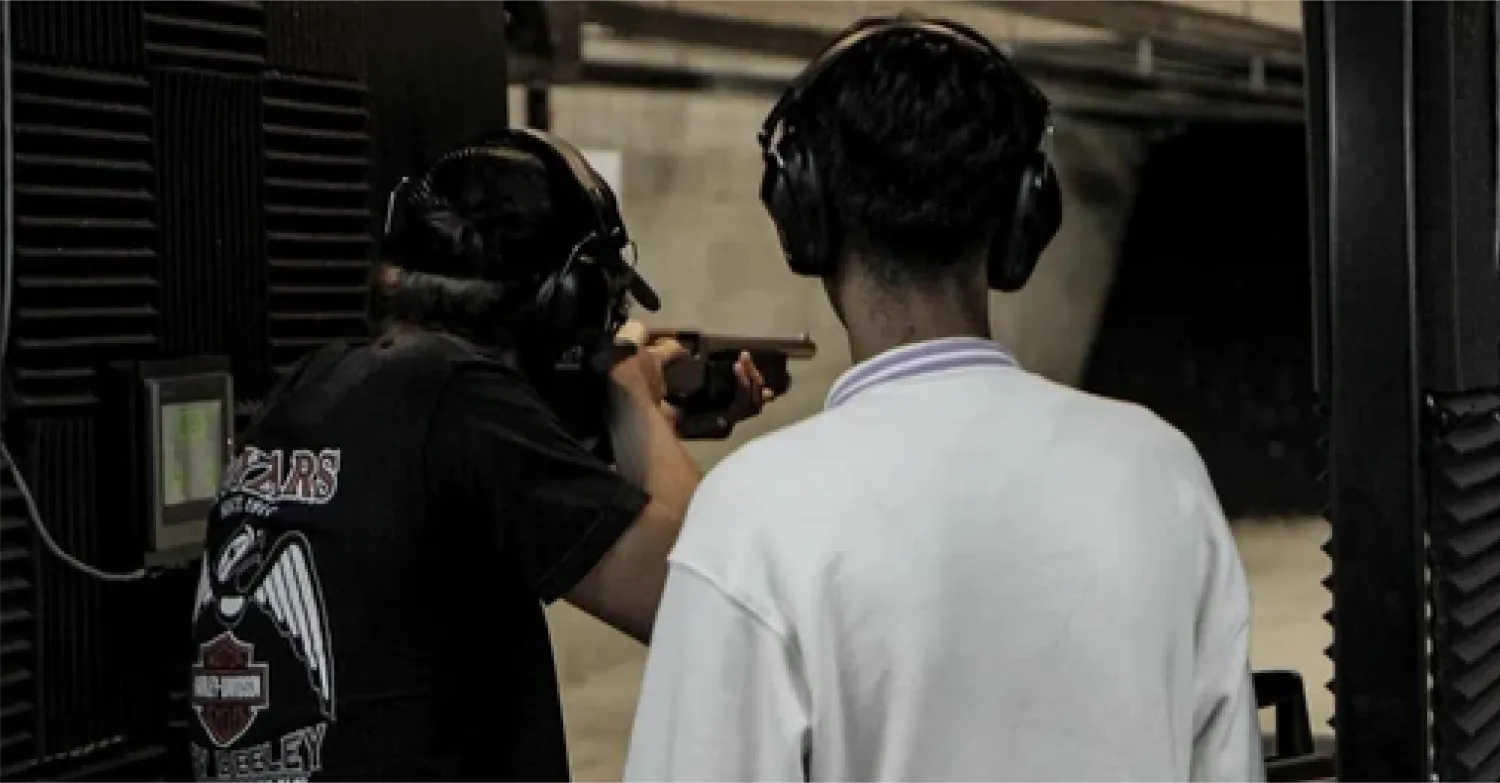
Tell staff that the group came from Canada and identify every beginner. Present requested documents, read the waiver, and listen to the full briefing. Do not let a confident friend replace facility instruction.
Choose a rental for fit, manageability, and instruction needs—not for appearance. Before loading, understand the controls, approved ammunition, target distance, loading sequence, safe direction, and malfunction response.
Treat every firearm as loaded, keep the muzzle in the safe direction, keep the finger outside the trigger guard until ready, and know the target and beyond. Staff commands control the line. When uncertain, maintain safe direction, remove the trigger finger, and request assistance.
Stop before attention declines. A small number of deliberate rounds can create a better first experience than an ambitious session. Review the beginner firearm rental guide and Michigan range safety rules before the trip.
Return through the tunnel—or choose another route
At the end, return every rental and range-owned item as directed. Check the bench, floor, protection, bags, coat pockets, and vehicle. No ammunition, casing, magazine, component, or range equipment should travel to Canada.
Keep receipts for ordinary purchases and avoid buying regulated products as souvenirs. A Michigan retail sale does not determine Canadian import eligibility.
Check current Canadian-bound conditions across all crossings. If the tunnel remains practical, verify the current Detroit-side payment method before joining the approach. If a bridge route is better, follow current navigation.
At Canadian inspection, declare purchases fully and answer questions truthfully. If an item creates uncertainty, state it and ask the officer. The CBSA travel reminder checklist is useful before leaving Lincoln Park.
Tunnel range-trip checklist
- Verify entry documents, admissibility, and firearm eligibility for every traveler.
- Call Range 313 and confirm ID, rentals, instruction, costs, and lane conditions.
- Remove firearms, ammunition, components, defensive items, cannabis, and impairment from the trip.
- Check tunnel alerts, vehicle rules, tolls, payment methods, and U.S.-bound waits.
- Compare the entire route with both bridge options.
- Leave enough time for secondary inspection and downtown traffic.
- Cross with a truthful explanation and organized documents.
- Arrive early, use approved equipment, and follow all staff commands.
- Complete a range-item inventory before departure.
- Choose the return crossing from fresh information and declare goods accurately.
The Detroit–Windsor Tunnel can be a convenient gateway to a Lincoln Park range day, particularly for central Windsor travelers or an itinerary that also uses downtown Detroit. Treat it as one route component, not a guarantee. When the people, documents, rentals, and return plan are confirmed first, the drive from the tunnel to Range 313 becomes the easy part.
Sources
- Range 313 contact and international visitor information
- Detroit–Windsor Tunnel official site and live traffic
- Detroit–Windsor Tunnel current toll rates
- U.S. Customs and Border Protection wait times
- CBP Canadian visitor document guidance
- ATF nonimmigrant firearms questions and answers
- CBSA firearms and weapons guidance
This guide is general planning information, not legal advice. Confirm current entry, eligibility, facility, toll, vehicle, and declaration requirements for the specific people and travel date.