If you are looking for a gun range near the Ambassador Bridge, the most useful destination is not necessarily the business closest to the Detroit customs plaza. You need a facility that fits the route after inspection, can answer questions for Canadian visitors, and offers the equipment an eligible traveler needs without casual cross-border transport.
Range 313 is at 1125 Fort Street in Lincoln Park, Michigan, south of Detroit in the Downriver area. The indoor facility lists lanes, rentals, eye and hearing protection, training, and service for first-time and experienced visitors. Its location can fit a drive from the Ambassador Bridge when current traffic supports the route toward Lincoln Park.
The bridge crossing, however, is not just a segment on a map. Every traveler needs correct documents and admissibility. Every participant must be legally eligible to possess or use a firearm and satisfy Range 313’s current policy. Plan those questions before comparing travel minutes.
Why the Ambassador Bridge remains a practical route to compare
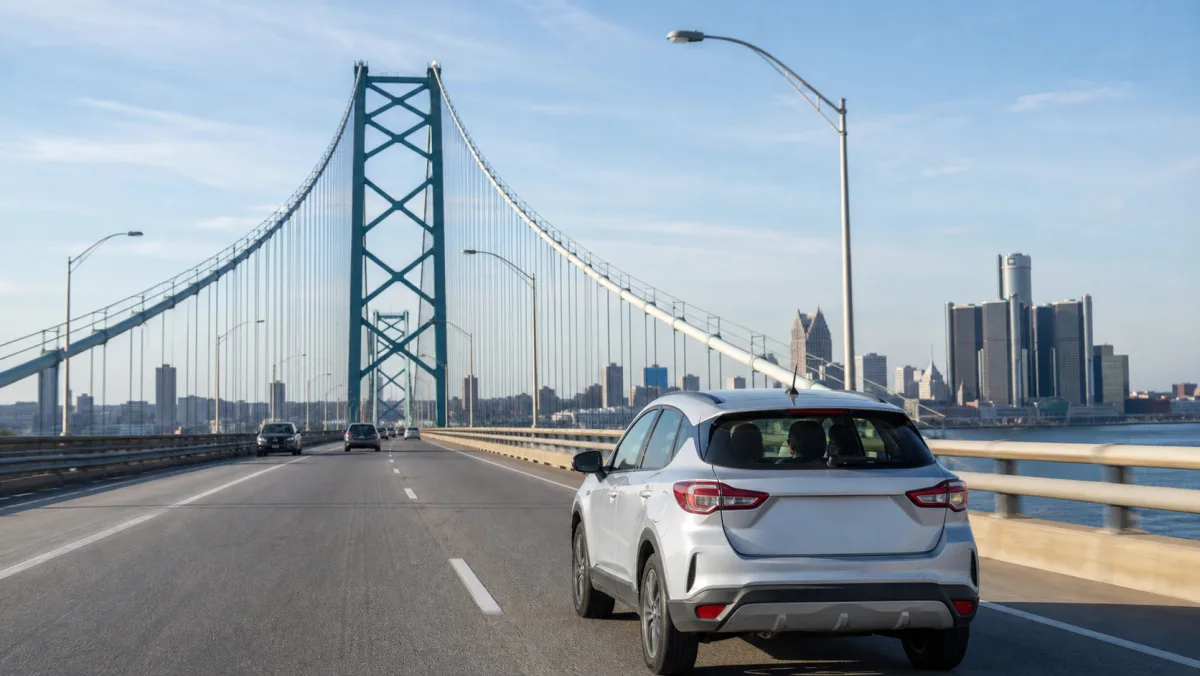
The Ambassador Bridge connects Windsor and Detroit by a tolled suspension bridge. Its Windsor approach near Huron Church Road is familiar to many Essex County drivers, while the U.S. side connects into Detroit’s road network. The bridge’s official site provides current toll information, directions, and live cameras.
Familiarity can be helpful. A driver may already know the approach, toll process, lane layout, and nearby roads. But habit is not evidence that the bridge is best at a particular hour. Passenger and commercial traffic, open lanes, construction, collisions, events, and weather can change the total trip.
Compare the Ambassador Bridge with the other operating Detroit–Windsor crossings immediately before departure. Use the official CBP border wait-time tool for U.S.-bound information, open the Ambassador Bridge site for current crossing details, and use live navigation from the U.S. port of entry to Range 313.
For the return, check Canadian-bound information again. You do not have to use the same crossing in both directions.
Start with the person, not the passport cover
“Canadian visitor” can describe people with different citizenship and immigration circumstances. A Canadian citizen entering the United States without a visa may face different federal firearms questions from a permanent resident of Canada who holds another citizenship and enters under a nonimmigrant visa.
ATF explains that federal law generally prohibits a person admitted under a nonimmigrant visa from possessing firearms or ammunition unless an exception applies. ATF separately explains that a nonimmigrant lawfully admitted without a visa is not subject to that visa-specific prohibition solely on that basis. Other federal and state prohibitions still apply.
Review the current ATF questions and answers and do not turn general guidance into a personal legal opinion. Criminal records, court orders, immigration terms, and other individual factors can matter. Anyone with uncertainty should obtain qualified advice.
Call Range 313 at (313) 436-0197 , state that the trip originates in Canada, and describe each participant’s citizenship or immigration status accurately. Facility policy and rental availability may be more restrictive than the legal minimum.
Bring the right documents for entry and check-in
U.S. Customs and Border Protection determines which travel documents are accepted and whether a traveler is admitted. For many Canadian citizens arriving by land, accepted options can include a passport and certain trusted-traveler or enhanced documents. Different requirements may apply to permanent residents of Canada who are citizens of other countries.
Review CBP’s Canadian visitor document page for the actual people traveling. Every adult should carry their own original document. Check the expiration date and ensure the name matches other trip records.
Range 313 requests a passport or valid government-issued photo ID. Confirm which document is acceptable for the particular visitor. The border document and range check-in ID may overlap, but one agency’s acceptance does not force another organization to use the same document for a different purpose.
Children need appropriate travel documents. If a minor travels without every parent or legal guardian, review the official recommendations for consent documentation. Also ask Range 313 about current age, supervision, ID, and participation policies well before the trip.
Call before choosing a bridge departure time
Range 313 currently lists daily hours of 10 a.m. to 9 p.m. and final guest check-in at 8:15 p.m. Walk-ins are welcome during normal hours, but an international visitor should not cross solely on that general statement.
Ask the range:
- Is every person eligible under the current policy based on the facts provided?
- Which original ID should each visitor bring?
- Are lanes expected to be available at the intended arrival time?
- Can eligible Canadian visitors use on-premises rentals?
- Which ammunition must be used with a rental?
- Are eye and hearing protection available?
- Does a beginner need a class, private instruction, or another arrangement?
- What are the current lane, rental, target, protection, and ammunition costs?
- Can a non-shooting guest observe?
- Is a group booking required for the number of people traveling?
The Range 313 contact page is the current source for address, hours, phone, and visitor information. Reconfirm if the day changes or a specific rental matters.
Use a rental-based plan to reduce border complexity
Do not assume a personally owned firearm or ammunition may cross the Ambassador Bridge because it is lawful and secured in Ontario. Temporary importation into the United States may require advance ATF authorization. Returning to Canada raises a separate set of declaration, classification, licence, transport, and import questions.
For many eligible casual visitors, the clean plan is to bring no firearm, ammunition, magazine, component, defensive spray, or other weapon. Ask about approved on-site rentals and use only the ammunition Range 313 authorizes. Return every item before departure.
ATF publishes a Form 6NIA application for temporary importation , while CBSA provides Canadian firearms and weapons guidance . Those resources illustrate why cross-border transport is not an informal add-on to a same-day rental trip.
Clean out the vehicle on the Canadian side. Check the center console, glove box, door pockets, under-seat area, trunk organizer, coats, and bags for forgotten cartridges, components, sprays, cannabis products, or other regulated items.
Calculate the bridge portion honestly
A navigation estimate may show the distance to the range, but it does not include the complete border process. Build the morning from separate blocks:
- Drive from home to the Ambassador Bridge approach
- Toll and queue time
- Primary inspection and any secondary inspection
- Drive from the U.S. plaza toward Lincoln Park
- Parking, document review, waiver, and range orientation
Use a buffer that protects the range’s final check-in. A group arriving from Leamington or Lakeshore needs additional Canadian-side time compared with someone starting near central Windsor.
Check the official Ambassador Bridge auto toll page before leaving. Rates and payment methods can change. Carry a payment method the crossing currently accepts and do not search for a card while blocking the toll lane.
Live cameras can show conditions near the bridge, but a camera view is not a guarantee of inspection speed. Use it alongside official wait reporting and navigation.
Approach U.S. inspection with a truthful plan
Before reaching the booth, have documents ready, reduce distractions, and let the driver handle the primary conversation unless the officer addresses someone else. Answer directly and truthfully.
If asked why you are traveling, describe the actual range visit and any other planned activity. Explain that eligible participants intend to use approved on-site rentals if that is the plan. Do not hide the destination or make jokes about firearms, ammunition, smuggling, or security.
An officer may ask the group to proceed to secondary inspection. Follow directions calmly. A secondary examination is one reason to leave schedule space and keep the vehicle clean. A reservation does not guarantee admission or priority processing.
If a person is refused entry or a legal concern appears, do not attempt to solve it by giving a different answer at another crossing. End the outing and seek appropriate guidance.
Dress and pack for the indoor range
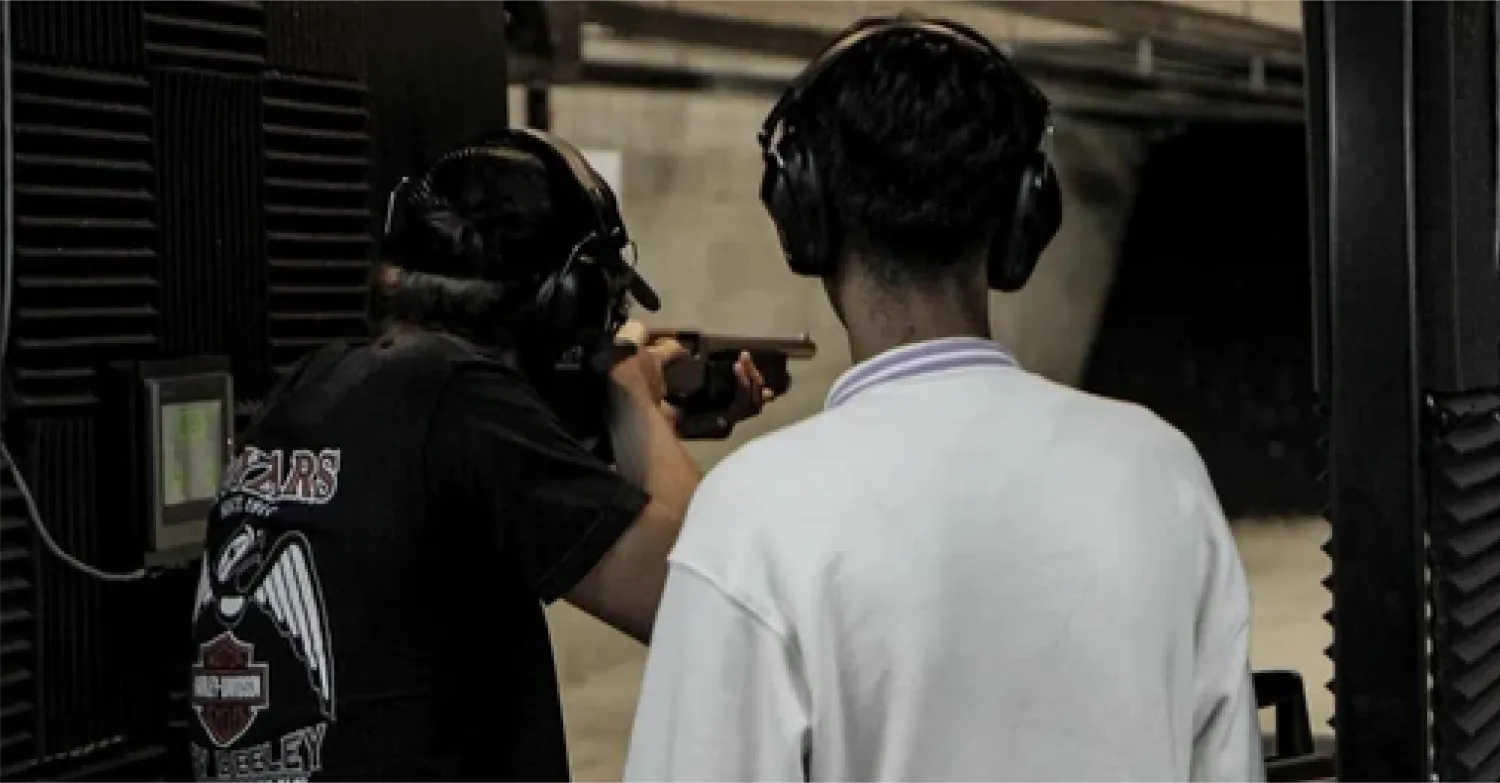
Wear closed-toe shoes and a close-fitting top with a higher neckline. Hot cartridge cases can bounce into open footwear or loose clothing. Tie long hair back and avoid dangling jewelry, scarves, and garments that interfere with protection.
Bring only ordinary essentials:
- Original travel documents
- Range-accepted photo ID
- U.S.-compatible payment
- Required medication
- Prescription glasses
- A hair tie and clean change of shirt
- Written booking or call notes
- The range address and telephone number
Do not bring alcohol, cannabis, CBD, or impairing substances. Canadian or Michigan legalization does not authorize cannabis at the international border, and impairment is incompatible with firearms. Review the CBSA traveler checklist before departure.
Ask whether eye and hearing protection are available rather than assuming ordinary glasses or earbuds qualify. Food and drink should remain outside the live-fire area.
Make the first range session manageable
At check-in, disclose that the group arrived from Canada and identify first-time shooters. Read the waiver completely. Listen to staff rather than relying on a friend’s summary.
Before a rental is loaded, understand the controls, approved ammunition, safe direction, target distance, loading process, and method for requesting assistance. Four safety principles remain active: treat every firearm as loaded, keep it pointed in the safe direction, keep the finger away from the trigger until ready, and know the target and beyond.
If something is uncertain, keep the firearm pointed downrange, remove the trigger finger, and signal staff. Do not turn with it or attempt a guess-based fix. Range officer commands control the line.
Use a pace that protects attention. A small, controlled session with one suitable rental can be more valuable than trying several unfamiliar options. Stop if anyone becomes fatigued, upset, or unable to follow instructions. The first-time range checklist and beginner rental guide provide additional preparation.
Avoid an impulse shopping problem
The U.S. side of the trip can make ordinary shopping convenient, but regulated products require restraint. Do not buy firearms, ammunition, magazines, components, knives, defensive sprays, or similar items for casual return to Canada.
Being offered a product for sale does not establish that you can lawfully export it, import it, possess it in Canada, or transport it along the route. A store employee’s general statement is not an item-specific ruling from border agencies.
If you want to research a future purchase, record the exact manufacturer and model without buying it. Consult responsible authorities or a qualified professional later. Keep range day focused on the experience.
Choose the return route from fresh information
After the session, return rentals and range-owned protection as directed. Check the lane bench, floor, bags, and every pocket. No ammunition, spent case, magazine, component, or range object should enter the vehicle.
Wash hands and exposed skin with cool water and soap before eating. Keep receipts for ordinary purchases. Then compare Canadian-bound conditions at all practical crossings using the CBSA wait-time page , crossing sites, and live navigation.
At the Canadian booth, make a full and accurate declaration. If you are unsure whether an ordinary item must be declared, ask. Never carry a package or object for someone outside the traveling group.
Ambassador Bridge to Range 313 checklist
Use this sequence for a Windsor departure:
- Verify U.S. admissibility, entry documents, and firearm eligibility for every participant.
- Call Range 313 with accurate status and experience information.
- Confirm rentals, protection, instruction, current costs, hours, and final check-in.
- Remove personal firearm gear, weapons, cannabis, and impairing items from the vehicle.
- Check official Ambassador Bridge tolls, payment methods, live cameras, and CBP wait times.
- Compare other crossings before committing to the route.
- Cross with documents ready and a truthful explanation.
- Arrive early, follow the complete briefing, and use a manageable rental plan.
- Inventory every bag and pocket before leaving Range 313.
- Recheck Canadian-bound traffic and declare purchases accurately.
The Ambassador Bridge can be a practical part of a Windsor-to-Lincoln Park range day, especially for drivers comfortable with its approach. Its usefulness depends on the conditions that actually exist when you travel. Verify the people first, the range second, and the bridge third; that order keeps a familiar crossing from creating false confidence about the rest of the trip.
Sources
- Range 313 contact and international visitor information
- Ambassador Bridge official site
- Ambassador Bridge current auto toll rates
- U.S. Customs and Border Protection wait times
- CBP Canadian visitor document guidance
- ATF nonimmigrant firearms questions and answers
- CBSA firearms and weapons guidance
This article is general planning information, not legal advice. Confirm current entry, possession, rental, crossing, toll, and declaration requirements for the exact travelers and date.