A first-time shooting range Michigan visit becomes much easier when you know exactly what to bring, what to wear, and what questions to ask. New visitors often worry that everyone else will know more than they do. A professional range expects beginners and should provide a clear check-in process, posted safety rules, and access to help. Your responsibility is to arrive prepared, be honest about your experience, and follow instructions without improvising.
This checklist walks through the entire visit—from choosing a range to cleaning up afterward—so you can focus on safe learning instead of uncertainty. It is not a substitute for hands-on instruction. If you have never handled a firearm or do not feel confident with a particular model, schedule qualified training before attempting to use it independently.
Choose a beginner-friendly Michigan range
Not every range offers the same experience. For a first-time shooting range Michigan trip, look beyond distance and price. A beginner-friendly facility should publish clear rules, maintain orderly lanes, require eye and hearing protection, and encourage visitors to ask questions.
Call before your visit and say that you are new. Ask whether walk-ins are accepted, whether an orientation is included, whether rentals are available, and whether an instructor can work with you. The answer tells you a great deal about the facility’s culture. Staff should be able to describe what happens without making you feel rushed or embarrassed.
Range 313 welcomes visitors across experience levels at our indoor shooting range in Lincoln Park . If you want structured support rather than a basic orientation, review the available firearms courses and training options .
The Michigan DNR also maintains a statewide shooting range directory , which illustrates the variety of public and private facilities across Michigan. Always verify current policies directly with the location you select.
Call ahead with the right questions
Use a short question list rather than assuming online information answers everything:
- What photo identification is required?
- What is the minimum age, and how are minors supervised?
- Can a first-time visitor rent a firearm?
- Is one-on-one or group instruction available?
- Does the facility provide eye and hearing protection?
- Are there restrictions on ammunition or firearm types?
- How much time should I allow for check-in?
- Are there any requirements for international or Canadian visitors?
Write down the answers. Policies can change, and a social media comment from several years ago may no longer be accurate. Direct confirmation reduces the chance that you arrive without the correct identification or equipment.
Prepare what to bring and wear
Identification and payment
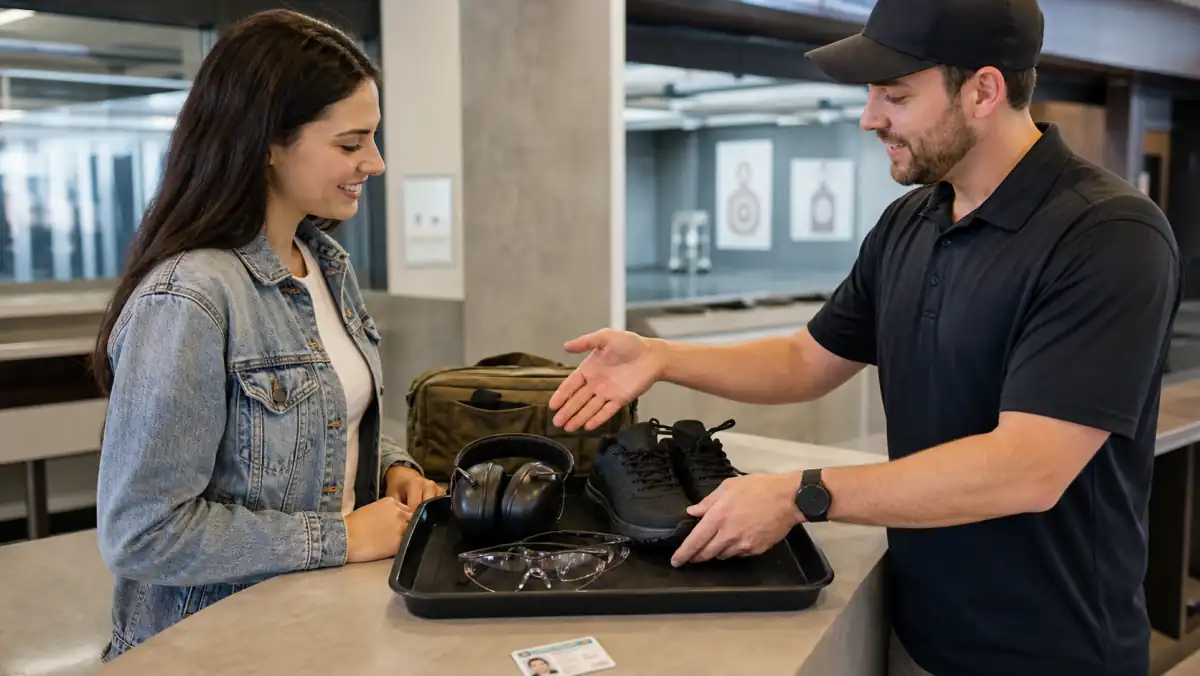
A current government-issued photo ID should be at the top of your first-time shooting range Michigan checklist. The exact identification accepted can vary based on the facility, visitor status, rental policy, and services requested. Contact the range in advance if your ID is expired, issued outside the United States, or does not show your current address.
Bring a payment method for lane time, targets, protective equipment, rentals, and ammunition if applicable. Ask about the pricing structure so you understand whether charges are per person, per lane, per hour, or based on another arrangement.
Do not bring prohibited items, alcohol, or anything that could impair your judgment. Responsible facilities will not permit a person who appears impaired to use the range. The Michigan DNR shooting range rules explicitly prohibit alcohol and people under the influence on the firing line; private ranges enforce their own equally important policies.
Clothing designed for coverage and control
Range clothing is safety equipment. Wear closed-toe shoes with stable soles. Choose a crew-neck shirt that covers the upper chest, because hot cartridge cases can bounce unpredictably. Long pants provide more coverage, and a baseball-style cap can help keep overhead brass away from your face and glasses.
Avoid low necklines, open shoes, dangling earrings, loose drawstrings, and scarves. These items can distract you at exactly the wrong moment. If hot brass touches your skin, keep the firearm pointed safely downrange and place it on the bench as directed before addressing the discomfort. Turning suddenly while holding a firearm creates a much greater hazard than the brass itself.
Tie back long hair and make sure your clothing does not interfere with a secure fit for eye and hearing protection. Dress for the controlled indoor environment rather than Michigan’s outdoor temperature; heavy winter layers may restrict movement once inside.
Use proper eye and hearing protection
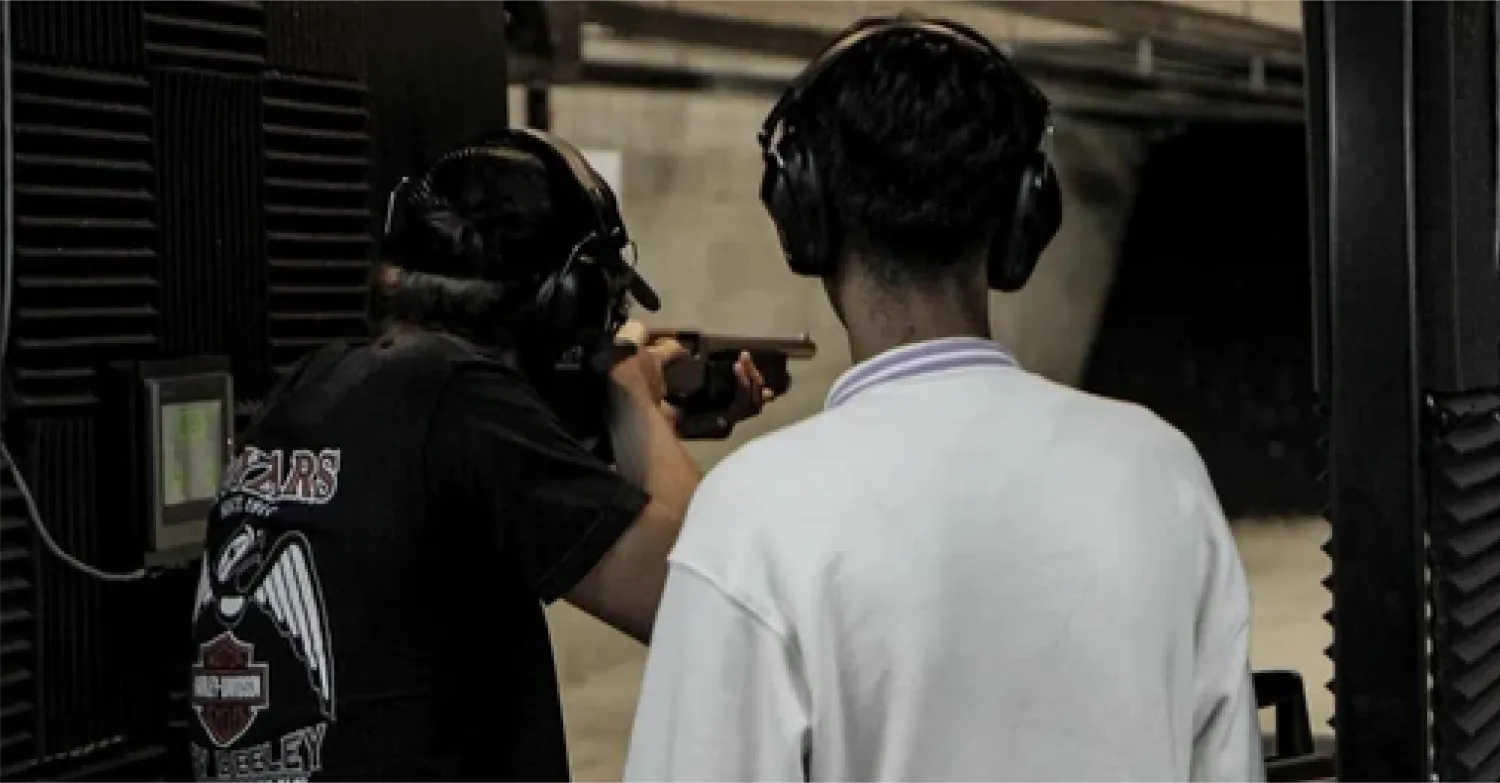
Impact-rated eye protection and effective hearing protection are non-negotiable. If the range provides rental gear, inspect the fit before entering the lane. Glasses should cover your eyes without sliding. Earmuffs should seal around the ears, and the arms of your safety glasses should not create a large gap in that seal.
Many indoor shooters use double hearing protection: properly inserted foam plugs beneath earmuffs. The CDC’s National Institute for Occupational Safety and Health reports that firearm impulse noise can exceed occupational limits and discusses double protection in its indoor firing range guidance . People with hearing aids, tinnitus, sensory sensitivities, or previous hearing damage should consult an appropriate healthcare professional about additional precautions.
Put protection on before entering the live-fire area and keep it on until you have fully exited. Do not lift an earmuff to have a conversation while other lanes are active.
Decide whether you need instruction
Orientation explains facility rules. Instruction teaches you how to handle and operate a firearm safely. Those are not the same service. If you cannot confidently identify the firearm’s basic controls, confirm its condition, load and unload it under supervision, and respond safely to an unexpected issue, instruction is the appropriate choice.
A friend may be experienced, but experience does not automatically make someone a patient or qualified teacher. A trained instructor can organize information in the right order, observe your behavior, and correct small issues before they become habits.
For a first-time shooting range Michigan session, the best goal is not speed or a perfect target. It is leaving with a clear understanding of the safety rules, a calm handling process, and an honest sense of what you should learn next.
Learn the four foundational safety habits
Before you touch a firearm, understand four consistent behaviors:
- Treat every firearm as if it is loaded.
- Keep the muzzle pointed in a safe direction.
- Keep your finger outside the trigger guard until you are ready to fire.
- Know your target and what is beyond it.
These are active habits, not phrases to memorize. “Safe direction” at an indoor range generally means downrange toward the backstop, but staff define the facility’s approved handling areas. A firearm should not point at another person, even when you believe it is unloaded.
Your trigger finger should rest visibly along the frame until you are on target and have made the decision to fire. This position lets staff see that you are responding safely. When someone gives a cease-fire command, stop immediately and wait for directions.
Check in and read every rule
Arrive early enough to avoid rushing. At check-in, tell the employee it is your first visit and your first time shooting, if applicable. Complete required forms carefully. Read the posted rules and ask about any term you do not understand.
Rules commonly cover where firearms can be uncased, how they must be carried, what ammunition is permitted, which targets may be used, and what activities are prohibited. They may also set limits on rate of fire, target distance, or who may supervise a minor.
Do not rely solely on rules you learned elsewhere. A first-time shooting range Michigan visitor must follow the rules of the facility they are in. The backstop, ventilation, lane controls, and operating procedures may be different from another range.
Enter the lane slowly and organize the bench
Once your protection is in place, bring only the necessary equipment into the lane. Keep drinks and food outside. Place ammunition, targets, and personal items where staff direct. Avoid clutter that could obscure the firearm or cause you to reach across it.
If you brought a firearm, keep it cased until you are at the approved bench and have permission to uncase it. Orient the case so the muzzle will point downrange when opened. If you are unsure how to position it, ask before opening.
If you are using a rental, request a clear explanation of the controls and loading process. Do not assume two similar-looking firearms operate identically. Keep the action open and follow the range’s procedure until you are ready to begin under supervision.
Set a simple first-session goal
A useful first session is deliberately modest. Your goal might be to demonstrate safe muzzle and trigger-finger discipline, become comfortable with the sound and environment, and fire a few controlled groups with coaching.
Start at a distance recommended by the instructor or range staff. Use a target with a clear aiming point. Work slowly. After a small number of shots, pause, keep the firearm in the required safe condition, and discuss what you observed.
Avoid judging success only by the center of the target. A tight group away from the center can show consistency that is easier to correct than shots scattered by rushing. Safe, repeatable behavior matters more than the number of rounds fired.
The first-time shooting range Michigan experience should build confidence through clarity—not through pressure to keep up with someone else.
Know what to do when something feels wrong
If the firearm behaves unexpectedly, keep it pointed downrange, remove your finger from the trigger area, and ask staff for assistance. Do not turn around with it. Do not peer into the muzzle. Do not attempt a remedy you have only seen online.
An unusual sound, reduced recoil, failure to fire, or unfamiliar control is a reason to stop. The safest response is to preserve muzzle direction and involve a qualified person. Range staff would rather answer a simple question than watch a visitor guess.
If you become overwhelmed by the noise or environment, place the firearm down safely as instructed and step out with staff permission. Taking a break is responsible. Fatigue and sensory overload reduce attention.
Practice range hygiene after shooting
Do not eat or drink on the firing line. After your session, wash your hands and face with soap and cold water before eating. Keep range bags away from food-preparation surfaces and areas used by children. Consider changing clothes after a longer session.
NIOSH and OSHA both identify lead exposure as an indoor range concern. OSHA’s lead overview links to specific resources for firing ranges, while NIOSH explains that particles may be inhaled or transferred from hands to the mouth. Good ventilation, facility maintenance, and personal hygiene work together.
If you shoot regularly or are pregnant, nursing, or concerned about exposure, discuss your situation with a qualified medical professional. Staff can explain facility controls, but they cannot provide individualized medical advice.
Store and transport equipment responsibly
If you brought a firearm, confirm it is unloaded and secured according to staff direction before leaving the lane. Case it at the bench rather than carrying it openly through public areas. Transport requirements can depend on the firearm, your licensing status, and the circumstances.
The Michigan DNR firearms and bows page provides general transportation information, and Michigan State Police maintains current firearms resources . Because laws change and individual facts matter, contact an appropriate authority or attorney if you are uncertain.
At home, secure storage is an ongoing responsibility. Michigan’s secure-storage law applies in specified circumstances involving minors. The MDHHS secure storage page summarizes current state information and links to additional resources.
Reflect before planning the next visit
After the session, write down what felt clear and what still felt confusing. Did your eye protection fog? Did the earmuffs fit? Was the firearm comfortable? Did you understand every command? These notes help you prepare better next time.
Your next step might be a beginner course, a shorter practice session, or another supervised rental comparison. Avoid buying equipment solely to solve a technique problem. Coaching often identifies a simpler answer.
If regular practice is your goal, compare Range 313 membership options and think about a schedule you can realistically maintain. Consistency supports learning when every session has a specific purpose.
Printable first-time shooting range Michigan checklist
Before you go:
- Confirm hours, age rules, rental policies, and accepted ID.
- Wear closed-toe shoes and a crew-neck shirt.
- Bring valid photo identification and payment.
- Pack properly fitting eye and hearing protection if you own it.
- Transport personal equipment lawfully and securely.
- Arrange instruction if you cannot operate the firearm independently.
At the range:
- Tell staff you are a beginner.
- Read every rule and ask questions.
- Keep protection on in all live-fire areas.
- Maintain safe muzzle and trigger-finger discipline.
- Stop immediately when instructed.
- Ask for help whenever something is unclear.
Afterward:
- Wash your hands and face before eating.
- Secure equipment for transport and storage.
- Record what you learned and plan one next step.
A first-time shooting range Michigan visit does not require you to arrive as an expert. It requires preparation, attention, humility, and a willingness to learn. Those qualities are the foundation of every responsible range experience that follows.