An FFL transfer Michigan buyer arranges is a regulated process, not ordinary package pickup. FFL means Federal Firearms License, and a licensed dealer receiving a firearm must follow federal requirements along with applicable Michigan law. The buyer should contact the receiving dealer before ordering, confirm fees and policies, provide accurate identification, and understand that payment to a seller does not guarantee legal transfer.
This guide explains the typical sequence at a high level. Firearm law changes and individual circumstances differ, so use current ATF, FBI, Michigan State Police, and dealer guidance.
What an FFL transfer is
An FFL transfer occurs when a licensed dealer transfers a firearm to an eligible recipient through required records and checks. A common example is an online purchase shipped by a seller to a local dealer selected by the buyer.
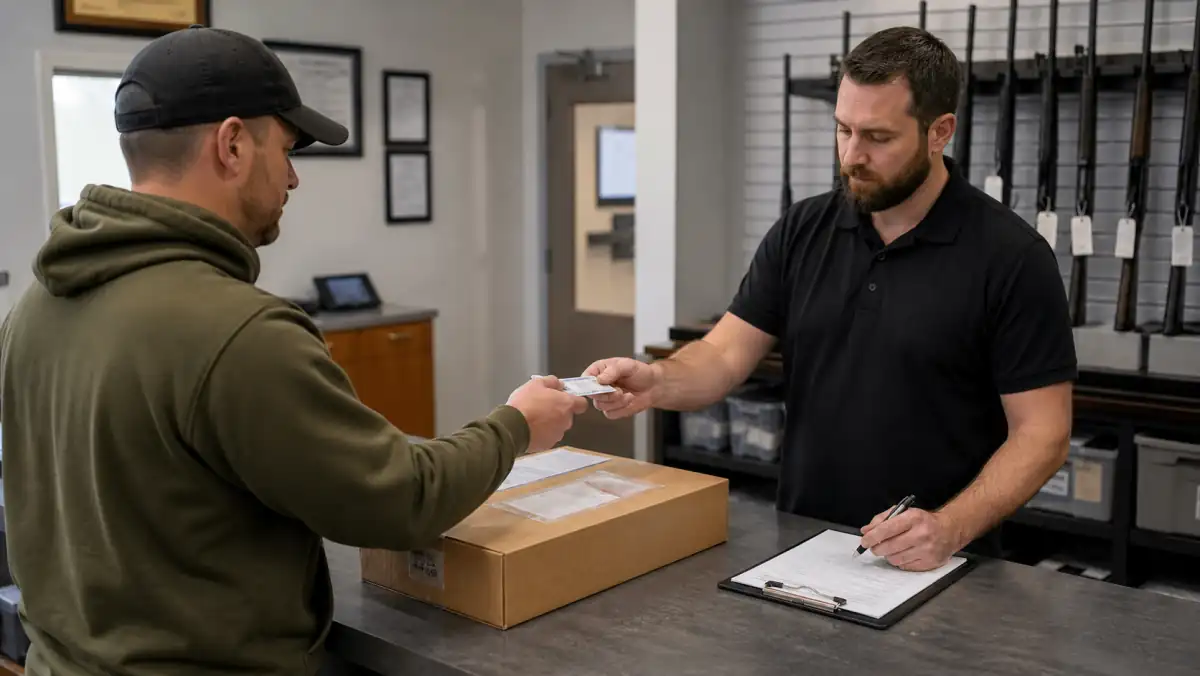
The receiving dealer records the firearm, verifies identity and residency documents as required, has the buyer complete ATF Form 4473, and conducts or verifies the applicable background-check process. Additional Michigan requirements may apply.
The ATF firearms Q&A states that licensed dealers generally must conduct a NICS background check before transferring a firearm to a nonlicensed person, subject to legal exceptions.
Contact the Michigan FFL before ordering
Never assume a dealer accepts every transfer. Call first with the exact item and seller. Ask whether the configuration is lawful and within dealer policy, whether the seller must be an FFL, and what information the sending party needs.
Confirm the transfer fee, storage fee, return fee, background-check fee if separate, and the period allowed for pickup. Ask how the dealer notifies customers when an item is logged and ready.
Range 313 provides FFL transfer and retail support . Contact the team before ordering so the process and current requirements are clear.
Confirm the seller and item
Research the seller’s reputation, return policy, shipping insurance, and contact information. Understand whether the item is new, used, consigned, or sold as-is. Photos and product descriptions may not reveal every condition issue.
Confirm the exact model, caliber, capacity, included accessories, and configuration. Federal, state, and local restrictions can apply. The receiving FFL may decline an item that is unlawful, misrepresented, damaged, or outside policy.
Do not ask a seller or dealer to alter records, misstate the buyer, or bypass a required process. The actual transferee must complete required documents truthfully.
Understand shipping and receipt
The seller ships the firearm to the receiving licensee, not directly to the ordinary buyer in a typical interstate transaction. The dealer must receive and log it before arranging transfer.
Delivery confirmation from the carrier does not mean the firearm is ready for pickup. Staff need time to inspect the package, confirm serial information, enter records, and contact the customer. Wait for the dealer’s notification.
Do not arrive based only on carrier tracking. Repeated calls immediately after delivery slow the receiving process.
Bring correct identification
Ask the FFL which current government-issued photo identification and supplemental residency documents may be required. The name, address, and other details must be accurate and current.
If you recently moved, have an unusual identification situation, are a noncitizen, or expect a mismatch, discuss it before ordering. The dealer cannot ignore documentation requirements because the item is already paid for.
Bring any Michigan license or purchase document that current law requires for the transaction. Michigan State Police maintains official firearms forms and resources , but dealers cannot provide individualized legal advice beyond their role.
Complete ATF Form 4473 yourself
The transferee must read and answer Form 4473 accurately. Do not let another person tell you how to answer or complete it on your behalf. False statements can have serious legal consequences.
The form asks identifying and eligibility questions and includes instructions. Take your time. If you do not understand a question, ask the licensee to clarify the form’s instructions—not to choose an answer for you.
ATF maintains current information about Form 4473 . Forms and instructions can change, which is another reason to rely on the dealer’s current process.
Understand the background check
The National Instant Criminal Background Check System helps FFLs determine whether a transfer is prohibited. The FBI describes possible outcomes such as proceed, delayed, and denied in its NICS overview .
A delay is not the same as a denial. It means additional research may be needed. The dealer must follow current federal and Michigan requirements regarding timing and transfer eligibility.
Do not pressure staff to proceed or promise that a record is a mistake. If denied, use the official challenge or appeal resources explained by the FBI and dealer.
Michigan requirements can be separate
Federal compliance does not eliminate state obligations. Michigan regulates firearm purchases, licenses, records, safe storage, and other matters. Requirements can differ by firearm and buyer circumstances.
Michigan State Police publishes a central firearms resource with links to state law, federal law, forms, and licensing information. These are authoritative starting points, but complex questions should go to an appropriate attorney or agency.
An FFL transfer Michigan dealer completes must satisfy all applicable law, not just the rules discussed in an online seller’s FAQ.
Inspect the firearm before final acceptance
Follow the dealer’s policy for inspecting the item. Confirm the model, caliber, serial number where appropriate, and visible condition. Do not manipulate controls without permission, and keep the muzzle in the safe direction the employee identifies.
If the item is wrong or damaged, stop before completing the transfer and contact the seller. Return options often become more complicated after legal transfer.
For a used firearm, consider arranging qualified gunsmith inspection and service . The receiving dealer’s basic intake is not necessarily a complete mechanical evaluation.
Understand fees and returns
The receiving FFL’s fee compensates for licensing, records, intake, staff time, storage, and compliance responsibilities. It is separate from the seller’s price and shipping.
Ask who pays return shipping if the transfer cannot proceed. Some sellers charge restocking fees or do not accept returns. The local dealer may also charge for return handling or prolonged storage.
Read these policies before paying. A low online price can become expensive after shipping, transfer, taxes, accessories, and a difficult return.
Avoid straw-purchase problems
The actual purchaser and recipient must be accurately identified. Do not buy a firearm for someone who cannot lawfully receive it or misrepresent who is acquiring it. Legitimate gifts and other circumstances involve legal distinctions that should be discussed with the FFL or qualified counsel before the transaction.
ATF Form 4473 and dealer procedures are designed to identify the actual transferee. A person who is uncertain should stop and seek advice rather than guess.
An FFL transfer Michigan process must reflect the real transaction from beginning to end.
Plan safe transportation and storage
Before pickup, bring an appropriate case and know how the firearm will be transported. General Michigan transportation information is available from the Michigan DNR . Your licensing and circumstances can change the analysis.
Have secure home storage ready before the firearm arrives. Michigan’s secure-storage law guidance explains requirements involving minors.
Do not leave pickup planning until the counter transaction is complete.
Consider local inventory before ordering
A local retailer may already have the same or a comparable product. Buying locally can simplify inspection, support, returns, and accessory selection while eliminating shipping and transfer coordination.
Compare total cost rather than sticker price. Ask Range 313 about current firearms, ammunition, and product availability before ordering elsewhere.
Local staff can also help determine whether a product fits your intended lawful use and whether service or magazines are readily available.
FFL transfer Michigan checklist
Before ordering, contact the receiving dealer, confirm item acceptance, fees, seller requirements, identification, and return policies. During receipt, wait for dealer notification, bring correct documents, complete forms truthfully, and follow the background-check process. Inspect the item before final transfer.
After pickup, transport lawfully, secure the firearm, preserve purchase records as appropriate, and arrange qualified training before use if the equipment is unfamiliar.
An FFL transfer Michigan buyer prepares correctly should feel methodical rather than mysterious. Early communication prevents most avoidable problems.
Common transfer delays you can prevent
Several delays begin before the firearm ships. The buyer selects a dealer without confirming acceptance, the seller lacks the receiving FFL information, or the shipment arrives under a name that does not match the customer record. Prevent these issues by following the receiving dealer’s instructions exactly and preserving the order number and seller contact information.
Identification can create another delay when an address is outdated or the name does not match the order. Ask what documents are acceptable before pickup rather than expecting staff to create an exception. Complete Form 4473 carefully; rushing can create errors that require correction under dealer procedure.
Carrier delivery is not a pickup appointment. Dealers receive many packages and must open, inspect, record, and match each shipment. Waiting for the dealer’s notification respects that compliance work. Background-check delays are separate and cannot be solved by repeated pressure at the counter.
Finally, research the seller’s return process before buying. If the item is incorrect, damaged, or cannot lawfully transfer, clear return instructions reduce storage time and expense. A prepared FFL transfer Michigan customer cannot control every outcome, but accurate records, current documents, and early dealer contact eliminate much of the avoidable friction.