Finding CPL classes in Lincoln Park, Michigan should involve more than choosing the nearest date on a calendar. A qualifying class is an important part of Michigan’s concealed pistol license process, but it is also a full day of safety education, legal instruction, supervised range work, questions, and personal evaluation. The value comes from understanding what the course is designed to do and arriving prepared to learn.
Range 313 offers CPL classes at its indoor facility at 1125 Fort Street in Lincoln Park, south of Detroit. Class begins every Saturday at 10am and costs $79.99, including a firearm rental and ammunition with no hidden class fees. No advance sign-up is required, walk-ins are welcome, and successful students receive their certificate in hand the same day.
This local guide explains the Michigan training structure, what students can expect during classroom and range portions, how to prepare, and what happens after successful completion. It is general education, not legal advice or an eligibility decision. Use the current Michigan State Police CPL requirements , the state firearms statutes, your county clerk, and qualified counsel when an individual legal question matters.
What Michigan requires from a qualifying CPL class
Michigan law does not treat a CPL class as a short shooting demonstration. Section 5j of Michigan’s firearms law says a qualifying pistol training or safety program must have been completed within the five years before an application and must include at least eight hours of instruction.
The current statute describes five hours of instruction in subjects that include:
- Safe storage, use, and handling of a pistol, including child-safety considerations.
- Ammunition knowledge and the fundamentals of pistol shooting.
- Pistol shooting positions.
- Firearms law, civil liability, and the use of deadly force.
- Avoiding criminal attack and controlling a violent confrontation.
- Laws that apply to carrying a concealed pistol in Michigan.
The program must also provide at least three hours of instruction on a firing range and require the student to fire at least 30 rounds. Successful students receive a completion certificate containing the information and statements required by law. The official Michigan firearms law publication contains the full text of MCL 28.425j and should control over any summary.
Those minimums explain why an advertisement for an unusually short course should raise questions. A provider should be able to describe the complete schedule, the classroom and live-fire portions, the instructor’s qualifications, and the certificate issued after successful completion.
Why a Lincoln Park location can make the day easier
A local class reduces the logistical pressure surrounding a long training day. Lincoln Park is convenient to Detroit, Allen Park, Dearborn, Melvindale, Ecorse, River Rouge, Southgate, Wyandotte, Taylor, and other Downriver communities. Less travel can mean an easier arrival, a more realistic meal plan, and fewer reasons to rush.
Location is not a substitute for course quality, but convenience matters when it supports punctuality and attention. Students should arrive early enough to check in, organize required equipment, and hear opening instructions without trying to catch up. A familiar local range also makes it easier to return for deliberate practice after the course.
Range 313 combines classroom support, indoor lanes, rentals, and regular range access in one facility. Students can review the dedicated CPL Classes page for the current Saturday 10am class overview.
Who should consider a CPL class
A CPL class is for an adult who wants to complete the training component of a Michigan CPL application and is prepared to engage seriously with safety, law, judgment, and live fire. It can also help someone decide whether concealed carry is a responsibility they want to accept.
Training completion does not establish legal eligibility. The MSP requirements page contains detailed state and federal conditions, including age, residency, identification, criminal-history, court-order, mental-health, and firearm-possession provisions. A class provider cannot promise an approval or resolve a complicated legal history at the registration counter.
Review official eligibility information before paying. If a conviction, pending matter, immigration status, protection order, involuntary commitment, or another circumstance may apply, contact the appropriate authority or a qualified Michigan attorney. Do not rely on a friend’s experience or an online comment about a supposedly similar situation.
Complete beginners should also be honest about skill readiness. Michigan’s course includes fundamental instruction, but one long day can feel overwhelming when every control, range command, and shooting sensation is new. Ask Range 313 whether an introductory pistol lesson before the CPL date would make the experience more productive. Additional preparation is a strength, not an admission of failure.
What happens during the classroom portion
The classroom is where the course connects physical skill to continuous responsibility. Expect discussion of safe storage, handling, ammunition, shooting fundamentals, Michigan carry law, civil liability, use-of-force concepts, conflict avoidance, and the decisions that must occur before a pistol is ever presented.
The legal section should not be treated as a collection of slogans. Students need to hear the difference between an instructor explaining general law and an attorney advising a person about a specific event. Ask questions when a term is unclear, write down the official resource connected to the answer, and avoid inventing a rule from memory later.
Bring a notebook or another approved note-taking method. Useful questions include:
- How should a license holder monitor changes to Michigan law?
- What official page lists prohibited premises?
- How do alcohol and controlled-substance rules affect carry?
- What changes when traveling to another state?
- How should a firearm be secured around minors or unauthorized people?
- What should a student practice after the class?
Michigan State Police maintains an official firearms and CPL portal with links for requirements, applications, renewal, prohibited premises, reciprocity, and carrying under the influence. Bookmarking that hub is more reliable than saving a screenshot that may become outdated.
What happens during the range portion
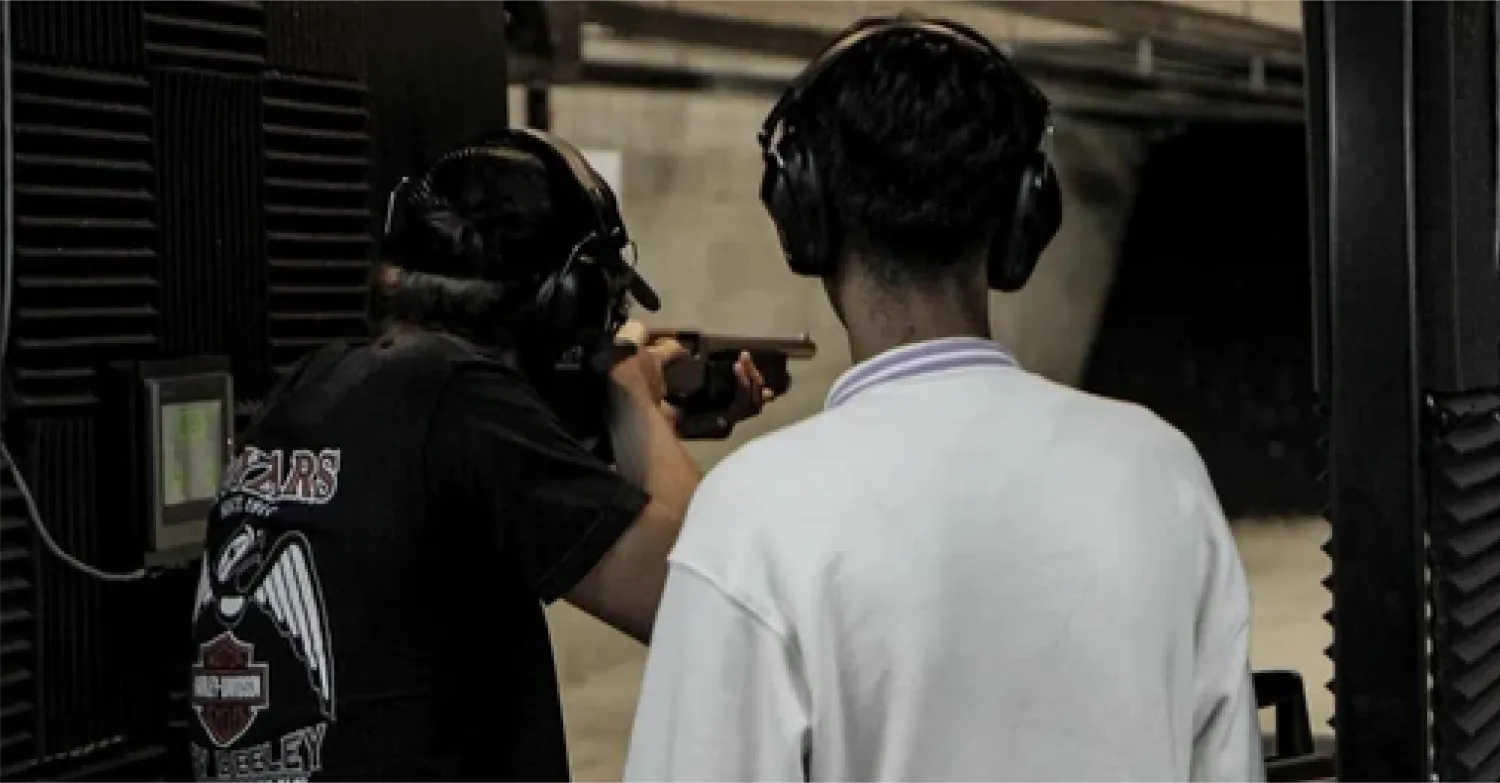
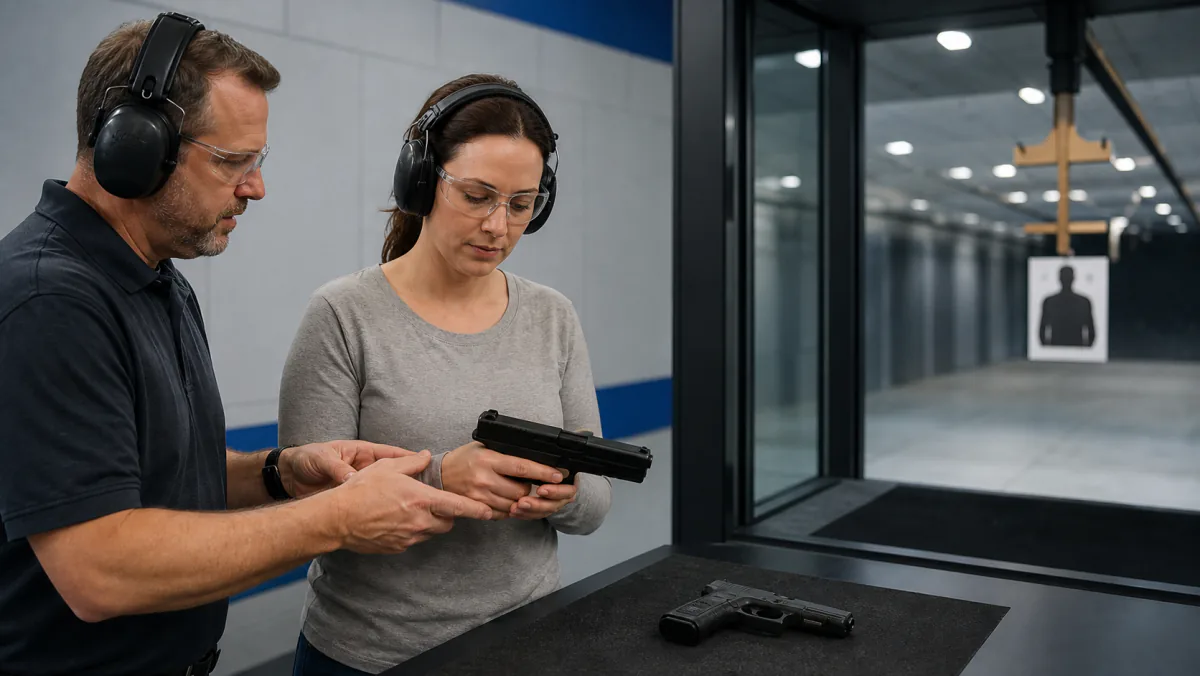
The live-fire portion moves the safety rules from discussion into supervised action. Students receive instructions on range commands, loading and unloading procedures, shooting position, grip, sight use, trigger control, and what to do when something does not feel or function as expected.
The goal is controlled, safe participation—not speed or competition. Keep the muzzle in the designated safe direction, keep the trigger finger indexed outside the trigger guard until instructed and ready to fire, and stop immediately when a range command is given. If a pistol malfunctions or you lose track of a step, keep it safely oriented and ask the instructor for help.
Indoor lanes are loud even with hearing protection. The first pressure wave can surprise a new student, and cognitive fatigue can build during repeated instructions. Listen to one command at a time. Do not copy the person in the next lane or try to hide confusion. A calm request for clarification demonstrates judgment.
Michigan law currently requires at least three hours of range instruction and at least 30 rounds in a qualifying program. A provider can require additional activity within its curriculum. Confirm the ammunition amount and type before class rather than arriving with a guess.
Using a rental for your Lincoln Park CPL class
You do not need to own a pistol before taking the class. Range 313 includes a firearm rental and ammunition in the course price, which can help a student who has not chosen a firearm or who wants to avoid buying equipment before receiving instruction.
Call ahead and say clearly that you need a class rental. Ask:
- Which rental options are available for the scheduled class?
- Is the rental charge included in the listed course price?
- Must approved ammunition be purchased at the range?
- How much ammunition should be budgeted?
- Are eye and hearing protection included or rented separately?
- What identification is required?
A rental is still an unfamiliar firearm. Do not assume its controls work like something seen in a video. Let the instructor identify the controls and approved operation. Keep the rental cased or staged as directed until the authorized portion of class.
If you plan to use your own pistol, ask whether it is suitable for the course and confirm the required ammunition. Bring it unloaded and secured according to current law, facility policy, and class instructions. Do not uncase it in the parking lot, lobby, classroom, or any location not expressly designated by staff.
What to wear and bring
Follow the provider’s exact checklist. A practical starting list usually includes current government-issued photo identification, note-taking materials, water, any permitted food, closed-toe shoes, and clothing that supports safe movement.
A close-fitting crew-neck shirt helps reduce the chance that hot brass enters loose clothing. Avoid low necklines, open footwear, unstable shoes, and anything that interferes with eye or hearing protection. Long hair should be secured. Dress in layers that can be adjusted without creating loose fabric around equipment.
Confirm whether you need to bring:
- A personally owned pistol in a secure case or a rental reservation.
- The exact quantity and type of approved ammunition.
- Eye protection.
- Over-ear or in-ear hearing protection.
- Targets or range supplies.
- Lunch, snacks, or money for a break.
- Any registration confirmation or provider form.
Do not bring alcohol, cannabis, illegal substances, or anything that could impair judgment. Arrive rested. An eight-hour minimum program deserves the same preparation as any other full-day course involving safety-critical decisions.
How to plan the morning of class
Set out ordinary clothing and documents the night before. Confirm the start time, parking, check-in location, and whether the facility wants students to arrive a specific number of minutes early. Check traffic through Detroit and Downriver rather than assuming a normal commute.
Eat a reasonable meal and hydrate. Bring only the items the provider permits. If you become ill, use medication that affects alertness, or experience another condition that may make live fire unsafe, contact the provider rather than trying to push through the day.
When you arrive, leave all cased equipment secured as directed. Tell staff immediately about a rental reservation, unfamiliar equipment, mobility accommodation, hearing concern, or strong anxiety around noise. Early communication gives instructors more options.
What successful completion does—and does not—mean
Successful completion means the student has satisfied the provider’s course requirements and receives the training certificate required for the application process. Review the certificate before leaving. Make sure your name and the instructor information are accurate, then preserve the original as directed.
Completion does not mean:
- A CPL has been issued.
- The government has determined the student is eligible.
- Concealed carry is authorized while an application is pending.
- The student is prepared for every defensive or legal scenario.
- Future practice and legal review are unnecessary.
Eligible applicants must follow the official process. Michigan State Police says an applicant files with the county clerk in the county of residence, includes the required training certificate, pays applicable government fees, and completes fingerprinting steps. Read the current CPL application instructions before visiting the clerk.
Build a responsible plan after class
The day after training is a good time to write down what needs more work. Maybe loading procedures felt unfamiliar, groups opened as fatigue increased, or a legal topic needs an official-source review. Convert those observations into a realistic training plan.
Purposeful practice is more useful than firing quickly without a goal. Early sessions can reinforce safe check-in, range commands, consistent grip, sight management, trigger control, and accurate shooting at a manageable distance. Ask for coaching when a repeated problem does not improve.
Storage also belongs in the post-class plan. Michigan’s secure storage law resource explains the requirements that apply when an unattended firearm is on premises where a minor is or is likely to be present. Responsible storage should protect against unauthorized access in every household, not only when a statute supplies the minimum.
Questions to ask before booking CPL classes in Lincoln Park
Call the provider before registering and ask direct questions:
- What are the next available class dates?
- Does the full course comply with current MCL 28.425j requirements?
- What time does check-in begin and when should class end?
- What is included in the listed price?
- What ammunition is required and what does it cost?
- Are rentals and protective equipment available?
- Is prior pistol experience recommended?
- What identification and paperwork should I bring?
- What is the rescheduling or cancellation policy?
- Who should I contact if I have an accessibility concern?
Clear answers make the class easier to evaluate and prevent class-day surprises. A responsible provider should never guarantee the government’s licensing decision.
Choose a class that supports the next step
A good CPL class establishes a legal and safety foundation; it does not market concealed carry as a shortcut to confidence. The most useful class is one you can attend fully, understand, and build upon afterward.
For students in Lincoln Park, Detroit, Dearborn, Allen Park, Southgate, Taylor, Wyandotte, and nearby Michigan communities, Range 313 provides a local indoor option with rentals and regular range access. Review the Range 313 CPL Classes page for the $79.99 Saturday 10am class. Walk-ins are welcome, with a firearm rental and ammunition included.