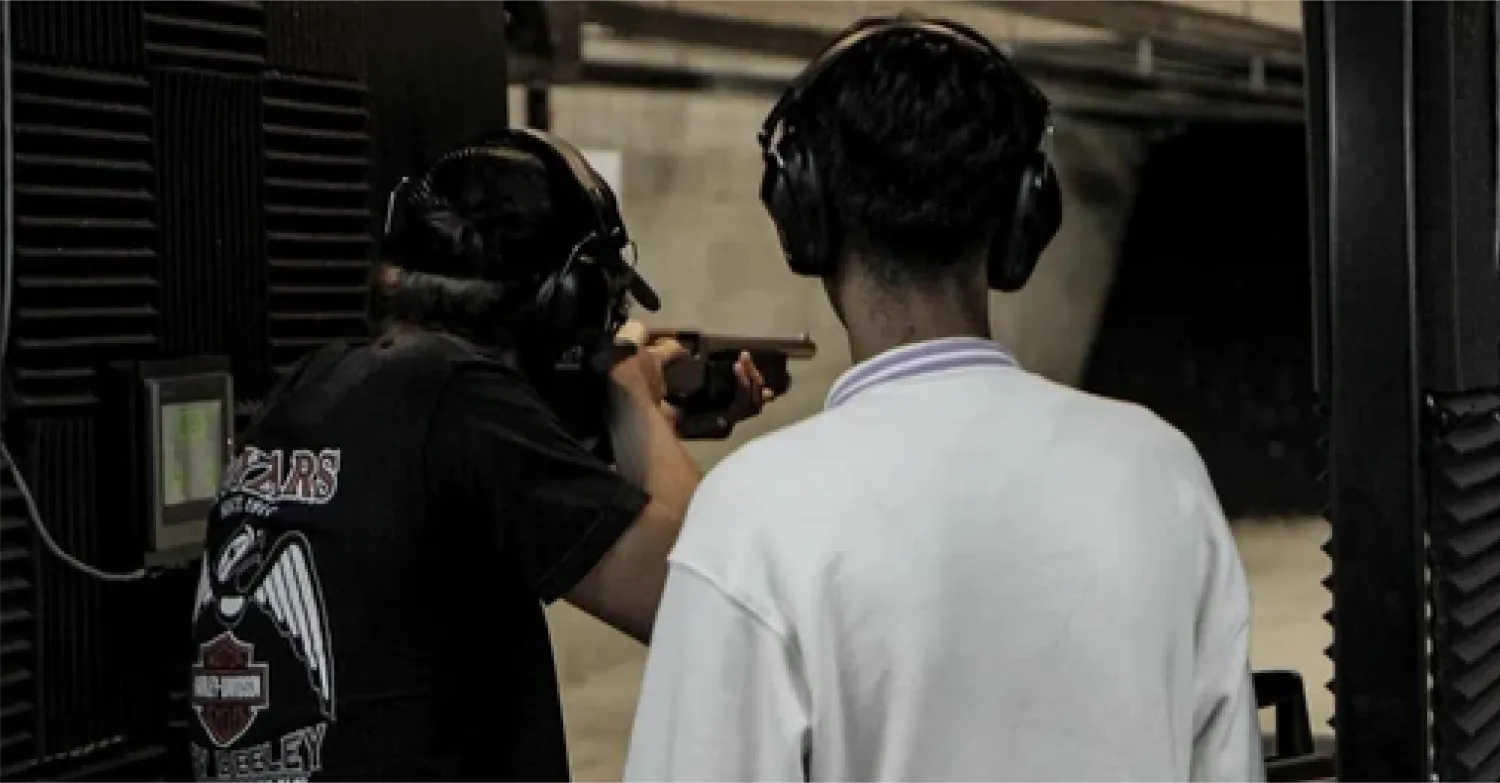
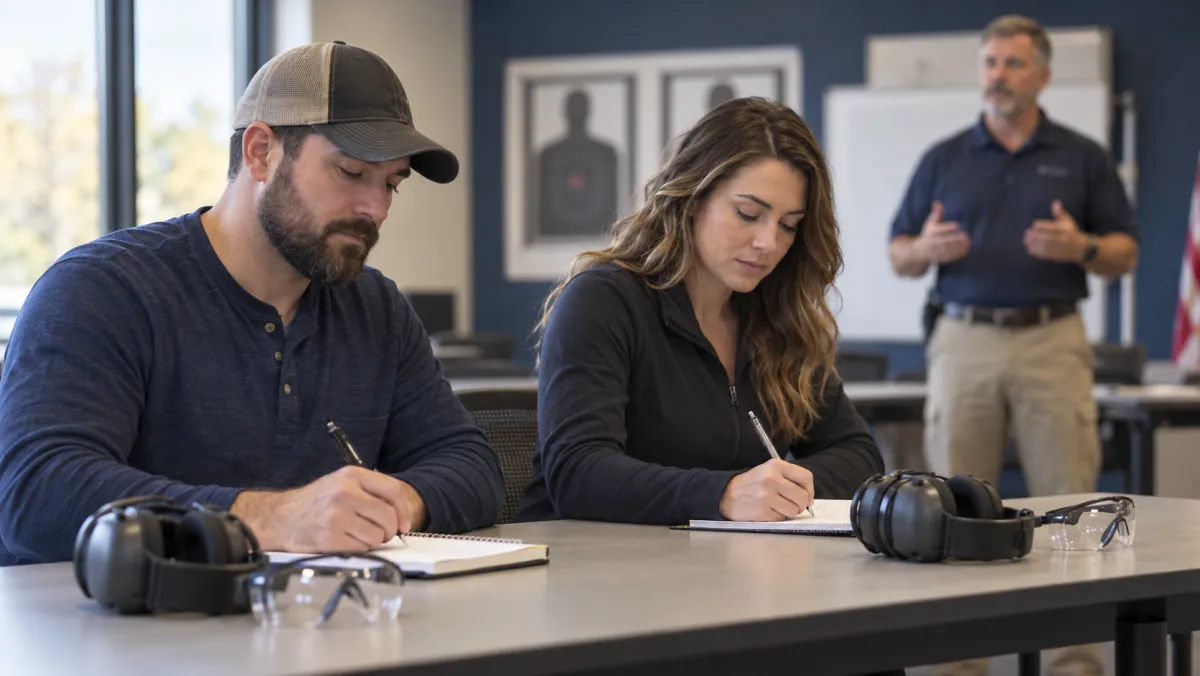
Taking a class with your partner can make an unfamiliar experience feel more approachable. You can compare calendars, travel together, and discuss what you learned afterward. For couples considering a concealed pistol license, there is another benefit: both people hear the safety and responsibility topics directly instead of relying on one partner to explain them later.
Still, CPL classes for couples in Michigan work best when “together” describes the arrangement, not a requirement to learn at the same speed. Each person brings a different history, level of comfort, and reason for attending. Treating those differences honestly makes the class more useful for both students.
The goal is not to finish with matching equipment or identical opinions. It is to understand your own responsibilities, make informed decisions, and establish a practical way to communicate about firearms at home. Here is how to organize the day without turning a shared learning experience into a competition.
Start with two separate reasons for attending
Before comparing dates, ask each person to describe what they want from the course. One partner might be pursuing a license immediately. The other may primarily want a clearer understanding of safe handling and the legal topics that affect the household. Those reasons can coexist, but they should not be left as assumptions.
Give each other room to say whether a full CPL course is the preferred starting point. A person who has never received firearm instruction may want a beginner lesson first. Someone who does not want to handle firearms should not be pressured into live fire to preserve a couple’s plan. Shared scheduling does not replace individual consent.
A useful conversation ends with a decision about readiness, not a promise that both people will feel the same afterward. If you choose different learning paths, you can still discuss household expectations and attend a later class together when that makes sense.
Compare experience without assigning a teacher
Couples often arrive with unequal experience. Perhaps one partner grew up around hunting firearms while the other has never visited a range. That history is helpful information for the instructor, but it does not automatically make the experienced partner the right person to teach every new procedure.
Let the provider hear from both students. Each person should be able to describe their background and ask questions in their own words. If one person answers everything, the instructor may never discover that the other student needs a slower explanation, different equipment, or additional support.
Agree beforehand that the instructor will lead the class. Your role as a partner is to listen and be supportive. Unrequested corrections from the next chair can become distracting, especially if they conflict with the instructor’s terminology. Save nonurgent discussion for an appropriate break and direct safety questions to the person supervising the activity.
Know what both students are committing to
Michigan’s qualifying initial training includes at least eight hours of instruction, with three hours of range instruction and at least 30 rounds fired by each student. These are individual course requirements, not a total that two people can divide. Consult MCL 28.425j in the official Michigan firearms law compilation .
Ask about the full schedule, including check-in, meals, breaks, and the expected finish. Arrange childcare, pet care, and other responsibilities so neither person is watching the clock through the final section. If one partner may need to leave early, discuss that before attending instead of assuming missed instruction can be overlooked.
Completion expectations also deserve a direct question. Find out what happens if one student needs further instruction. A supportive plan allows that person to continue learning without making the other partner’s result feel like a verdict on their own ability.
Budget for two people and separate next steps
Shared travel can reduce some expenses, but tuition and licensing responsibilities usually remain individual. When requesting pricing, ask for the complete cost for two students and identify what is included for each. Rental equipment, ammunition, protection, and any required materials should be clear before the date.
Range 313’s CPL course information currently lists a $79.99 class with a firearm rental and ammunition included, beginning Saturdays at 10am. Confirm details for both students and ask any equipment questions before attending. Government application expenses are separate from class tuition.
Build a household budget that leaves room for later instruction and secure storage rather than spending everything on the first day. The value of a course is not limited to obtaining paperwork. It should help you make better choices about what education and equipment you actually need next.
Do not assume one equipment setup suits both people
A pistol that feels comfortable to one partner may be difficult for the other to handle. Differences in hand size, reach, strength, and familiarity can change the experience. Selecting equipment because it is already owned or because one person prefers it can conceal those differences until the class is underway.
Tell the instructor if you plan to bring your own equipment, and ask whether separate rentals would be more practical. Follow the provider’s instructions for transport, arrival, and where cases may be opened. Do not trade firearms between lanes or improvise a sharing arrangement during live instruction.
Eye and hearing protection should also fit each student individually. Borrowing a partner’s gear for a quick check at home does not establish that it will fit well throughout a class. Our eye and ear protection guide explains the questions to raise with staff before entering the firing area.
Make a simple agreement about communication
The best time to decide how you will support each other is before anyone feels rushed. Agree that either person can ask the instructor for clarification, request an approved pause, or acknowledge that they need additional help. Neither should have to manage the other’s disappointment while trying to follow a new instruction.
Avoid turning the day into a running commentary on performance. A target, a quiz, or a quick response to a question can invite comparison, but each captures only a small part of learning. Attentive listening, safe decisions, and willingness to stop when uncertain matter throughout the course.
You can still encourage each other. Be specific and accurate: “You asked the question I was wondering about” is more helpful than claiming that someone has mastered everything after a single session. Encouragement should make it easier to be honest, including when the honest answer is that more practice is needed.
Keep classroom notes individual
Sharing one notebook sounds efficient until you discover that each person remembers a different explanation. Bring separate notes and record the questions that matter to you. This also gives each student a way to participate without depending on the other person’s memory.
Afterward, compare the parts you found most useful. If your notes seem to disagree, return to the instructor or the cited official source. Two partial recollections do not become a reliable legal answer simply because you discuss them at length on the drive home.
Use particular care with scenarios about carrying, prohibited places, or personal eligibility. A classroom example may illustrate one principle without covering every fact that could change an outcome. Record the question and the source to consult instead of converting a brief example into a household rule that may be too broad.
Turn storage discussion into a household plan
One practical benefit of learning together is that both adults can take part in a storage conversation. Discuss who is authorized to access firearms, how access will be controlled, and what changes when visitors or children may be present. Include the routine after a range visit, when bags and equipment are returning to the house.
Michigan has specific secure-storage requirements when a minor is or is likely to be present. Review the state’s secure storage guidance and the underlying law when making your plan. A general discussion in class should lead to a concrete arrangement at home.
Do not assume agreement because both people attended the same lesson. Decide who checks that storage is secured, where authorized adults keep access information, and how you will revisit the arrangement if your living situation changes. The routine should be understandable to both partners without exposing keys or combinations to unauthorized people.
Allow different outcomes after the class
One student may leave ready to begin the application process. The other may decide to book another lesson or postpone a licensing decision. That difference does not mean the shared class was a mistake. Good education can clarify what someone does and does not want to do next.
Each person must address eligibility and the application process independently. The Michigan State Police application instructions explain the documentation and fingerprinting steps. A training certificate is not a concealed pistol license, and one partner’s approval does not establish the other’s authority.
Keep each person’s documents identifiable and secure. If you create a shared calendar reminder, label whose appointment or task it concerns. Small administrative distinctions prevent the assumption that one completed action has taken care of both applications.
Plan a follow-up that preserves the same respect
Before arranging your next range visit together, ask whether each person would prefer shared practice, separate instruction, or a pause. Learning preferences often become clearer only after the first class. A private lesson can be valuable even for someone who enjoyed the group course.
If you practice together, choose a format approved by the range and keep expectations modest. Discuss who is receiving instruction, where the other person may wait, and how staff want questions handled. Your partner should not become an unofficial range officer or an audience you feel obliged to impress.
For couples in Downriver or the Detroit area, Range 313 in Lincoln Park offers a local starting point for this conversation. Contact the team with both students’ experience levels and any questions about attending the same class. A successful shared day begins when each person has the information and space to participate as an individual learner.