
A Canadian group shooting range checklist should do more than remind everyone to bring ID. The organizer is coordinating private eligibility questions, an international border, several vehicles or passengers, a safety-critical activity, variable costs, and a return declaration. A casual group chat is not enough.
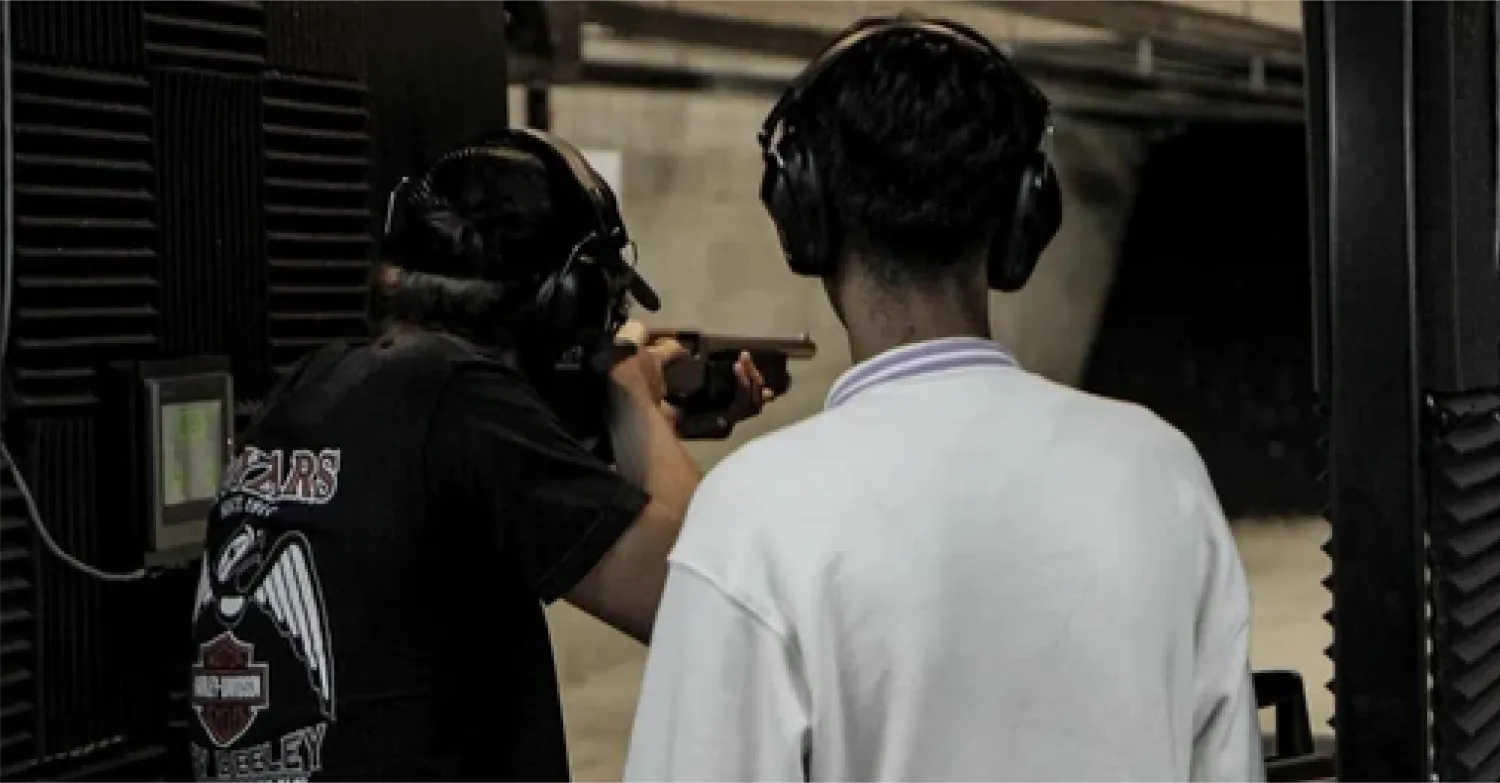
Range 313 is an indoor range at 1125 Fort Street in Lincoln Park, Michigan. The facility offers lanes, on-site rentals, eye and hearing protection, training, and options for first-time and experienced guests. Eligible Canadian groups can call about a visit, but every person remains responsible for their own U.S. admission, firearm eligibility, identification, conduct, and declaration.
This checklist is organized by time: when the idea begins, one week before, 72 hours before, the night before, departure morning, at the range, and on the return. It helps one organizer hold the logistics without collecting sensitive documents or pretending to make legal decisions for friends.
Appoint two organizers, not one
Name a primary organizer and a backup. The primary contacts Range 313, maintains the headcount, and shares the official plan. The backup knows the same information, carries the contact details, and can coordinate if the primary vehicle is delayed.
Also assign:
- Lead driver for each vehicle
- Sober backup driver where practical
- Cost tracker for shared receipts
- Timekeeper who watches departure and check-in cutoffs
- Contact person for non-shooters or separate activities
Do not assign a “group instructor” unless that person is actually qualified, Range 313 accepts the role, and the arrangement is confirmed. Experienced friends can support the schedule, but staff commands and facility rules control the visit.
Keep one short master document with operational information. Protect it with normal device security and do not include passport images, criminal details, or unnecessary personal data.
At the idea stage: define the event honestly
Write one sentence that everyone can understand: “We are planning a sober, voluntary indoor range visit at Range 313 in Lincoln Park, Michigan, using approved on-site rentals if each person is eligible, followed by an optional meal.”
That sentence resolves several ambiguities. It tells guests the country, activity, facility, equipment plan, sobriety requirement, and fact that participation is conditional. Do not invite people with vague language such as “Detroit adventure” and reveal the range later.
Decide:
- Proposed date and backup date
- Approximate departure and return window
- Maximum group size
- Whether the event is adults only
- Whether beginners are welcome
- Whether instruction is expected
- Whether non-shooters can join the broader day
- Per-person budget ceiling
- Whether the group wants a meal or second activity after the range
If alcohol is central to the event, the range must come first and all pre-range hours remain alcohol-free. If that order does not fit the group, choose another activity.
Send a private self-check, not a public interrogation
Each prospective participant should answer the following privately to themselves and confirm only the result:
- Do I want to participate without pressure?
- Can I lawfully enter the United States on the intended date?
- Do I possess an original, unexpired travel document that applies to me?
- Have I confirmed that I may legally possess or use a firearm in the United States and Michigan?
- Is my citizenship or immigration status accurately understood?
- Is there a criminal record, court order, protection order, immigration condition, or other fact requiring legal advice?
- Can I follow spoken and written safety directions in English, or do I need an approved accommodation?
- Do I have a medical, sensory, mobility, hearing, vision, or medication concern to discuss?
- Am I willing to remain free from alcohol, cannabis, and impairment before and during the range?
- Am I comfortable opting out at any point?
The organizer records “confirmed,” “needs private follow-up,” or “not participating.” Do not request the underlying story.
U.S. entry and firearm eligibility are separate. CBP publishes Canadian visitor document guidance . ATF publishes nonimmigrant firearms questions and answers , including the general distinction between some visa and visa-free admissions. People with uncertainty should obtain qualified advice.
Make the first Range 313 call
Call (313) 436-0197 as soon as the likely date and headcount exist. Say that the group is traveling from Canada. Do not describe everyone as “Canadian” if citizenship or immigration categories differ.
Provide:
- Date and arrival window
- Total guests and likely shooters
- Adult and minor counts
- Relevant citizenship or immigration categories
- Number of beginners
- Desired instruction level
- Rental interest
- Observer questions
- Accessibility or communication requests that participants have authorized you to share
Ask the staff member to explain:
- Current group booking or walk-in recommendation
- Lane allocation and capacity
- Identification required for each type of visitor
- Rental eligibility and conditions
- Approved ammunition process
- Target and protection options
- Instructor or class availability
- Deposit, payment, cancellation, and late-arrival rules
- Photo, food, observer, and personal-item policies
- Current hours and final check-in
Read important answers back. Record the date of the call and the name or department when offered. The Range 313 contact page is the source to revisit for current facility details.
Build a privacy-safe roster
Your roster needs logistics, not dossiers. Suggested columns are:
- First name and last initial
- Attendance confirmed
- Adult/minor category
- Entry document self-confirmed
- Firearm eligibility self-confirmed
- Range ID self-confirmed
- Beginner/experienced/non-shooter
- Instruction requested
- Vehicle assignment
- Emergency contact held privately
- Payment status
Do not include passport number, date of birth, visa number, criminal history, medical diagnosis, or photographs of documents unless a lawful process specifically requires it and you understand how to protect it. Range 313 and border officers can review their required documents directly.
Delete the roster after shared expenses are settled and the event no longer needs it. An organizer should not keep a permanent file of friends’ sensitive travel information.
One week before: confirm the equipment plan
For a straightforward group visit, plan around approved on-site rentals. Tell guests to leave personal firearms, ammunition, magazines, components, spent cases, defensive sprays, and other weapon-related items at home.
Temporary U.S. firearm or ammunition importation may require advance ATF authorization, while Canada applies separate export, return, declaration, licence, classification, and transport rules. A group organizer should not try to combine that process with a casual rental outing.
Share the Canadian leave-at-home guide and require every driver to sweep the vehicle. This includes consoles, glove boxes, door pockets, trunk organizers, old range bags, jackets, and emergency kits.
Also exclude cannabis, CBD products, alcohol, and impairing substances from the outbound vehicles. Prescription medication stays with the person who needs it, but anyone impaired by a medication should not participate.
One week before: publish the clothing and conduct list
Every participant should bring:
- Original travel document
- Passport or valid government-issued photo ID accepted by Range 313
- U.S.-compatible payment method
- Closed-toe shoes
- Close-fitting, higher-neck shirt
- Prescription glasses and necessary medication
- Hair tie for long hair
- Optional clean change of top
Guests should avoid low necklines, open shoes, scarves, dangling jewelry, and clothing that interferes with eye or hearing protection. Do not bring costumes, banners, balloons, confetti, food, or props unless the facility approves them.
State the conduct rules clearly: no pranks, no startling, no touching another person’s protective equipment, no phone use during briefings, no unauthorized photos, no competitive pressure, and no arguments with staff.
Seventy-two hours before: reconfirm the facility
Call Range 313 again when appropriate, especially if headcount, status categories, beginners, instruction needs, or arrival time changed. Confirm:
- Final headcount
- Lane or event arrangement
- Rental and ammunition availability
- Instructor schedule
- Deposit balance
- Accepted payment
- Identification list
- Final check-in and expected duration
- Any maintenance or event affecting lanes
Do not substitute another participant at the last minute without asking. The replacement may have different document, eligibility, age, or instruction needs.
Send the final itinerary with the exact address, phone number, Canadian meeting point, departure cutoff, estimated return window, clothing reminder, and individual cost estimate.
Seventy-two hours before: check crossings and weather
The Windsor–Detroit Tunnel, Ambassador Bridge, and Gordie Howe International Bridge provide different routes. Select a crossing to check first and name an alternative, but do not lock the final choice before travel conditions exist.
Bookmark:
- CBP U.S.-bound border wait times
- CBSA Canadian-bound border wait times
- Official toll and alert pages for all practical crossings
- Michigan and Ontario road-condition sources
- Live navigation to 1125 Fort Street, Lincoln Park
Check major Detroit events, road closures, and severe weather. Set a cancellation threshold. An indoor destination does not justify unsafe roads or an itinerary compressed by an extreme border delay.
The night before: freeze the roster and vehicles
Send one final confirmation message. Ask each person to reply privately that documents are physically in hand and the vehicle/item rules are understood.
Each driver confirms:
- U.S. travel insurance or authorization
- Fuel level
- Toll payment method
- Navigation and phone charging
- Passenger list
- No firearm equipment, ammunition, weapons, cannabis, or alcohol in the vehicle
- Ordinary emergency equipment secured
- No unverified package carried for another person
Freeze car assignments. Constant morning changes lead to missing documents, duplicated seats, and unshared cost assumptions.
Ask everyone to sleep normally. Fatigue can impair attention even without alcohol or medication. A guest who becomes ill or unfit should stay home without financial or social pressure.
Departure morning: run a two-minute roll call
At the Canadian meeting point, the primary organizer calls names and each traveler physically confirms:
- Original border document
- Range-accepted ID
- Payment method
- Suitable clothing
- Medication
- Vehicle assignment
Do not handle or photograph the documents. “Physically confirms” means the traveler checks their own possession.
The drivers complete one final vehicle sweep. The organizer checks official border waits, toll alerts, road traffic, and weather, then announces the chosen crossing. Share navigation with every vehicle before leaving.
Use a departure cutoff. A late guest does not get to consume the entire group’s border buffer. They can miss the event or join the post-range plan if independently eligible and safe to travel.
At U.S. inspection: do not coach answers
Have documents accessible, reduce distractions, and follow officer directions. Each person answers truthfully. The organizer should not interrupt with a rehearsed group script unless asked to explain logistics.
The real purpose can be stated plainly: the group is visiting Range 313 in Lincoln Park for an indoor range session using approved on-site rentals, then plans to eat or complete another actual activity before returning to Canada.
Do not hide the range, describe the trip as only shopping, or joke about firearms. A secondary inspection is possible; allow for it and comply calmly. If one vehicle is delayed, the other drivers continue safely to the agreed waiting point or destination rather than stopping on a shoulder.
At Range 313: hand control to staff
Arrive early. The organizer provides the confirmed group context; each visitor presents their own identification and answers individual questions. Everyone reads their own waiver.
First-time shooters identify themselves. Staff determine lane assignments, rental procedures, protection, and safety instructions. The group organizer becomes an ordinary participant once the live-fire process begins.
Before loading, each shooter must understand:
- The specific equipment’s controls
- Approved ammunition
- Safe muzzle direction
- Trigger-finger discipline
- Target distance
- Loading and unloading procedure
- How to request staff help
- What to do if anything is uncertain
Staff commands control the line. Anyone may stop. Keep rotations calm, phones put away, and attention on one task. The group shooting event guide provides more detail.
The organizer’s job during the session
The organizer watches group conditions without policing technique. Look for fatigue, rushing, teasing, unauthorized photos, schedule anxiety, or a guest becoming uncomfortable. Ask for a break or staff help early.
Do not pressure the group to use every purchased round. Do not let an upcoming reservation accelerate the pace. Contact the next venue and move the reservation instead.
Keep non-shooters included according to the agreed plan. Verify they have safe transportation and know when the group will regroup. No one should wait alone without their documents or phone.
The organizer should also avoid distraction from cost tracking. Save receipts in one envelope or digital folder and reconcile them later.
Closeout: use a spoken inventory
Before anyone leaves the facility, the organizer says the closeout list aloud:
- All rentals returned
- Range-owned eye and hearing protection returned
- Unused ammunition handled as staff directs
- Benches and floor checked
- Pockets and bags checked
- Paper targets cleared of loose objects
- Passports, wallets, and phones counted
- Hands and exposed skin washed before food
No ammunition, casing, magazine, component, or range item goes to Canada. Do not purchase regulated products as souvenirs. Ordinary retail availability does not establish export or import permission.
Return to Canada: choose the crossing again
Open fresh Canadian-bound wait times and navigation. The outbound crossing does not control the return. Confirm toll payment, fuel, vehicle groups, and the location of every document.
Each traveler is responsible for declaring purchases and goods truthfully. The organizer can remind everyone to keep receipts accessible, but cannot make one blanket declaration for separate households unless the officer’s process allows it.
Review the CBSA travel reminder checklist before leaving Michigan. If anyone is unsure about an item, disclose the uncertainty and ask the officer. Never move an item into another vehicle or bag to avoid a question.
After the trip: reconcile and delete
Within a day or two, share a transparent expense summary:
- Receipts for shared tolls, fuel, parking, and group fees
- Original currency
- Actual conversion where one organizer paid
- Amount already collected
- Refund or balance per person
Do not divide individual ammunition, rental, or meal choices equally unless the group agreed beforehand. The Windsor-to-Michigan range cost worksheet helps separate shared and individual charges.
After balances are settled, delete the operational roster and any private eligibility notes. Keep ordinary business receipts only as long as needed. Ask guests for feedback on timing, consent, instruction, vehicle organization, and cost clarity—not scores or competitive results.
One-page organizer checklist
People
- Voluntary informed consent confirmed
- Entry documents self-confirmed
- Firearm eligibility self-confirmed
- Age and guardian requirements checked
- Beginners and instruction needs counted
- Non-shooter alternative arranged
Range
- Date and arrival confirmed
- Accurate status categories discussed
- Lanes and group size confirmed
- Rentals and ammunition confirmed
- Protection and targets confirmed
- Instruction confirmed
- Costs and cancellation terms recorded
Travel
- Drivers and vehicles assigned
- Insurance and toll payment checked
- Regulated and impairing items removed
- Official crossing sources bookmarked
- Weather and road conditions checked
- Departure cutoff and backup route shared
Range day
- Documents physically confirmed
- Border purpose stated truthfully
- Staff controls all live-fire activity
- Participation remains optional
- Fatigue and time pressure monitored
- Equipment and belongings inventoried
Return
- No range-related objects in vehicles
- Receipts accessible
- Current Canadian-bound route selected
- Purchases declared accurately
- Shared expenses reconciled
- Sensitive roster deleted
The best Canadian group organizer does not control everyone. They create a plan in which each person can make an informed choice, carry their own responsibilities, and hear accurate instructions from the right authority. With the roster kept private, the vehicles kept clean, and Range 313 contacted early, a Windsor-area group can cross to Lincoln Park with fewer surprises and a much stronger safety culture.
Sources
- Range 313 contact and international visitor information
- U.S. Customs and Border Protection: Canadian visitor documents
- U.S. Customs and Border Protection wait times
- ATF nonimmigrant firearms questions and answers
- Canada Border Services Agency wait times
- Canada Border Services Agency travel reminder checklist
This checklist is general planning information, not legal advice. Every traveler must verify current entry, firearm eligibility, facility, transport, and declaration requirements for their own circumstances.