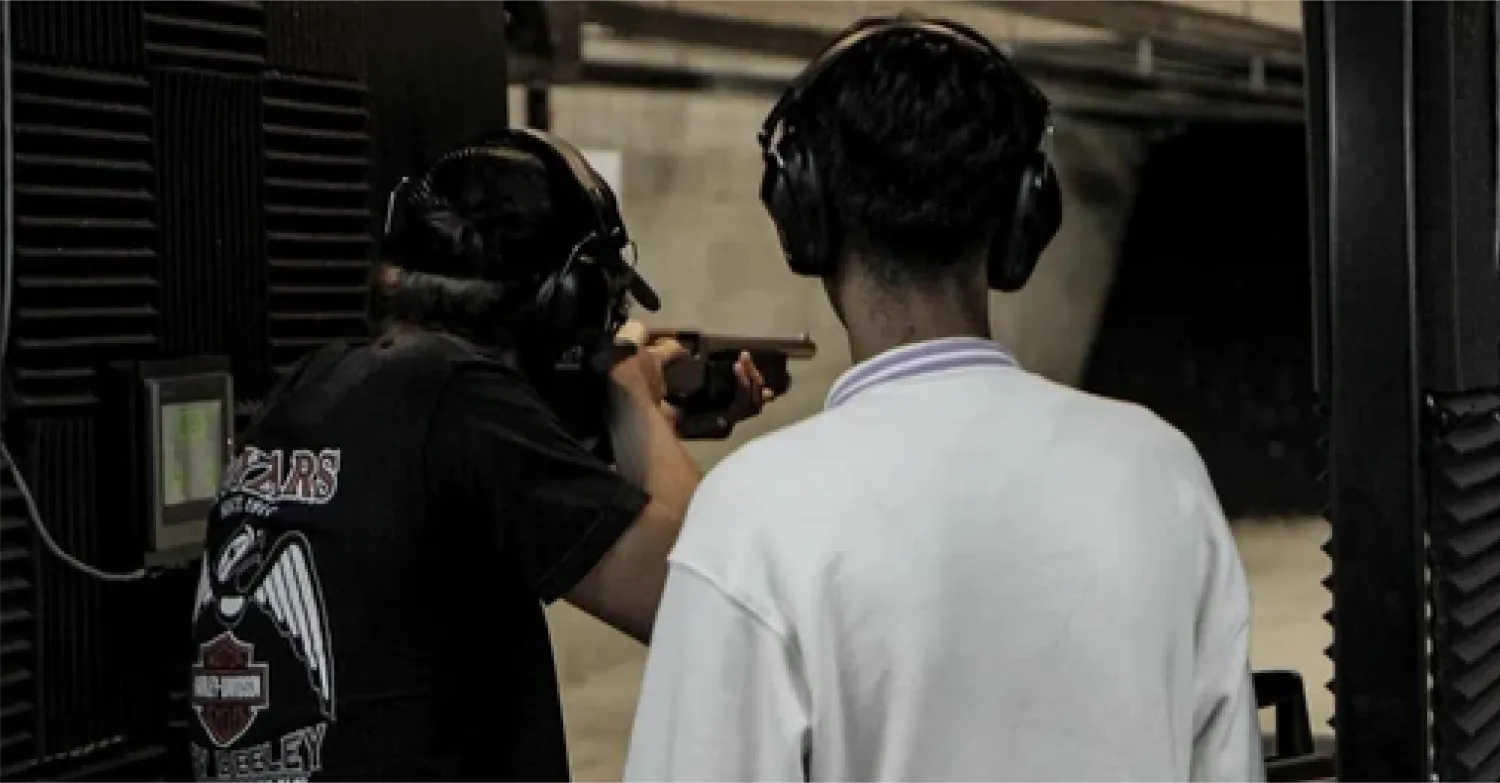
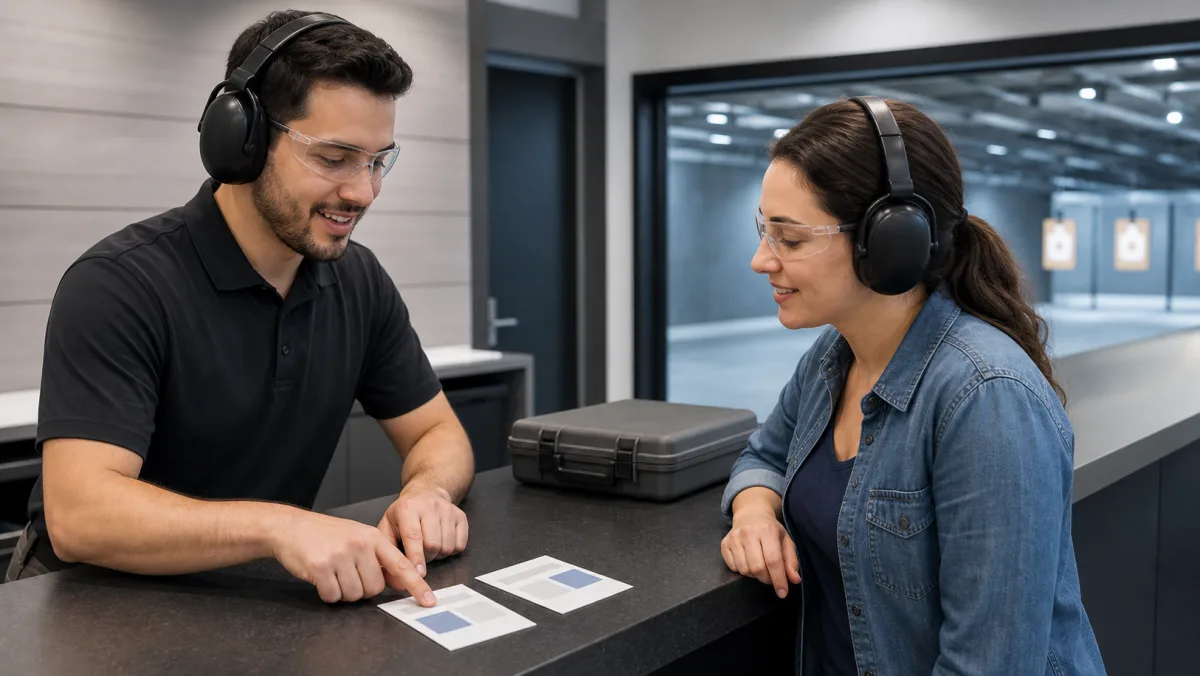
Renting can be the simplest way to experience an indoor range without buying equipment first. A beginner firearm rental also gives you a chance to learn what fit, control access, and manageable operation actually feel like. The goal is not to sample everything behind the counter. It is to choose one suitable option, understand it, and practice under rules you can follow consistently.
Range 313 offers rental firearms and specialty rentals at its Lincoln Park indoor range, subject to eligibility, availability, and current policies. First-time shooters are welcome, and protective equipment is available. Call before visiting if you need a particular model, a lesson, or clarification about identification.
This guide walks through the rental process from the first phone call to the final return.
Renting is not a substitute for instruction
A counter explanation can show you the controls on a specific firearm. It cannot always provide the foundation a true beginner needs. Safe independent use requires consistent muzzle direction, trigger-finger discipline, an understanding of loading and unloading, and the ability to follow range commands.
Tell staff exactly what you have done before:
- Never handled any firearm
- Handled an unloaded firearm but never fired
- Fired once with a friend
- Completed a safety class but need supervision
- Used rifles but not handguns
- Used one handgun model but not the proposed rental
That information helps the team recommend an orientation, private lesson, group class, or ordinary lane rental. There is no advantage in overstating experience.
If you cannot keep the muzzle in a safe direction while listening or keep your finger outside the trigger guard without reminders, arrange structured instruction. Review Range 313 course options before the visit.
Confirm eligibility and rental policy
An on-site rental is not a firearm purchase, but every renter must still be legally eligible and satisfy facility policy. Bring a current passport or valid government-issued photo ID. Answer all questions accurately.
ATF explains that a firearm rented for use on a federal licensee’s premises is not treated as a sale, disposition, or delivery, so Form 4473 and a NICS background check are not required solely for the on-premises rental. This procedural difference does not allow a prohibited person to possess a firearm and does not prevent a range from using additional safeguards.
Ask before arrival about:
- Minimum age
- Required identification
- Solo-renter or group policies
- International visitor eligibility
- Waivers or account setup
- Required ammunition
- Rental exchanges
- Specialty rental requirements
- Instructor availability
Our Michigan shooting range ID guide explains the difference between lane access, rentals, and purchases.
Call before a rental-dependent visit
Rental inventories change as firearms are reserved, serviced, cleaned, or temporarily removed. A website list may not reflect what is available at the exact hour you arrive.
Call Range 313 at (313) 436-0197 and say:
“I am a first-time visitor and need to rent. I would like help choosing a manageable option. What identification, experience, and advance arrangements do you currently require?”
If you are traveling from another state or Canada, state that clearly. Canadian and other international guests need separate entry-status and eligibility planning. The Canadian visitor guide provides current official-source links.
Budget for the complete rental setup
The advertised rental fee is only one line item. A typical beginner setup can include:
- Lane access
- Rental firearm
- Range-approved ammunition
- Paper target
- Eye protection
- Hearing protection
- Orientation or instruction
- Tax
Ask whether the rental price covers one model or permits exchanges. Confirm how ammunition is sold and whether unused ammunition must remain with you. International visitors should not leave the facility with regulated items unless fully authorized.
Use our Michigan shooting range cost guide to build an itemized budget.
Start with fit, not caliber reputation
People often begin with “What caliber should I rent?” A better first question is “Can I safely reach and operate this firearm?” Cartridge choice matters, but a poor grip fit or unreachable control can undermine every other decision.
With staff permission and the firearm verified in the required safe condition, consider:
- Can you place the firing hand consistently on the grip?
- Can your trigger finger remain straight along the frame?
- Can you reach the trigger without twisting the hand?
- Can you reach the magazine release or other controls as intended?
- Can you operate the slide, cylinder, bolt, or charging handle safely?
- Can you see the sights clearly?
- Does the firearm feel balanced rather than merely light?
Small firearms are not automatically easier. A shorter grip can reduce hand contact, and a lighter firearm can transmit more felt recoil. A larger model may be easier to control but difficult to reach around. Test assumptions at the counter before moving to the lane.
Learn one rental’s controls at a time
Two firearms that look similar can have different safeties, magazine releases, slide stops, loading procedures, sight systems, and takedown controls. Do not let a friend say, “They all work the same.”
Before receiving ammunition, ask staff to identify:
- The muzzle and safe direction
- Trigger and trigger guard
- Manual safety, if present
- Magazine or loading system
- Magazine release
- Slide or action release
- Slide, cylinder, bolt, or charging handle
- Sights or optic
- Method for verifying unloaded condition
- Procedure for returning the firearm
Repeat the important steps back to the staff member. A correct verbal explanation reveals misunderstandings before live fire.
The handgun terminology guide can help you prepare useful questions.
Ammunition must match exactly
Use only the ammunition the range supplies or explicitly approves for that rental. The caliber marking must match exactly, but matching a number alone is not enough. Cartridge names can be similar while describing different ammunition.
The range may restrict projectile materials, loads, remanufactured ammunition, steel cases, armor-piercing designs, tracers, incendiary ammunition, or other types. Those rules protect people, backstops, ventilation systems, and rental equipment.
Keep ammunition in its original packaging until staff directs you. Do not mix loose cartridges. If a round looks damaged, corroded, unusually seated, or different from the rest, set it aside and ask for help.
Never force a cartridge, magazine, cylinder, or action. Resistance is a reason to stop, maintain safe direction, and call staff.
Eye and hearing protection come before handling
Put on properly fitted protection before entering the live-fire area and keep it on until you return to the approved safe zone. Clear wraparound glasses should provide suitable impact coverage. Earmuffs should seal around the ears without gaps from hair, glasses temples, hats, or jewelry.
Many indoor shooters use correctly inserted foam plugs under earmuffs. Ask staff if you cannot hear commands clearly; do not remove protection on the line.
Wear closed-toe shoes and a close-fitting shirt. Hot cartridge cases can land unpredictably. If one contacts skin or clothing, keep the firearm pointed safely, remove your finger from the trigger area, set it down as instructed, and then address the discomfort.
Use a simple first-rental sequence
A first rental session can follow this structure:
1. Dry orientation under staff direction
With no ammunition present and the firearm in the condition staff specifies, learn the grip, controls, sights, and safe loading sequence. Do not conduct unapproved dry practice at the counter or lane.
2. Load a small amount
Staff may recommend loading only one round or a small number at first. This keeps the initial task simple and lets you assess control without a full magazine.
3. Fire a deliberate group
Use a close, staff-approved target distance. Focus on safe sequence and consistent operation, not speed. Pause between shots.
4. Make the firearm safe and review
Follow the unload procedure, place the firearm as required, and examine the target. Note grip comfort, control effort, sight visibility, and recoil response.
5. Continue or stop
If operation remains safe and comfortable, repeat. If you are confused, fatigued, or unable to control the firearm, stop and ask for another option or instruction.
A beginner rental comparison scorecard
If you try two rentals, evaluate the same factors for each:
| Factor | Rental A | Rental B |
|---|---|---|
| Grip fits without strain | 1–5 | 1–5 |
| Controls are reachable | 1–5 | 1–5 |
| Action is manageable | 1–5 | 1–5 |
| Sights are easy to see | 1–5 | 1–5 |
| Recoil remains controllable | 1–5 | 1–5 |
| Safe sequence is easy to repeat | 1–5 | 1–5 |
| Staff support or parts are available | 1–5 | 1–5 |
Write notes after the firearm is made safe and set down. Do not handle a phone or notebook while holding the firearm.
Accuracy is only one category. A tight group with a firearm you cannot safely load or unload is not a good beginner result.
Limit the number of rentals
More options can make the session less useful. Each new model requires another control briefing and introduces another set of sensations. Recoil and noise also accumulate, so the last rental may seem worse simply because you are tired.
One or two suitable firearms are enough for a first visit. If neither works, record why and return another day with a narrower list. Do not force a purchase decision from a single session.
A rental is a sample, not proof of long-term reliability, ownership comfort, or suitability for every purpose. Combine the experience with qualified training, secure-storage planning, maintenance research, and a lawful purchase process.
What to do with a malfunction
If the firearm does not fire or operate as expected:
- Keep the muzzle pointed downrange.
- Keep your finger straight outside the trigger guard.
- Do not turn around with the firearm.
- Follow the range’s wait procedure for a possible delayed discharge.
- Signal staff using the approved method.
- Do not improvise a repair or look into the muzzle.
Rental equipment is maintained by the facility. Let staff inspect it. Repeatedly cycling live ammunition without understanding the problem can worsen the situation.
Return the rental correctly
At the end of the session, unload and present the firearm exactly as staff directs. Do not case a range rental with personal belongings or carry it toward the lobby without permission.
Return magazines, cases, optics, loaders, protection, and other included items. Ask what to do with unused ammunition. Wash hands and face with cool water and soap, then check pockets and bags.
Tell staff about any malfunction, unusual recoil, loose sight, damaged magazine, or control problem. Accurate feedback supports maintenance and the next renter’s safety.
Common beginner rental mistakes
Avoid these choices:
- Hiding inexperience
- Choosing the most dramatic firearm first
- Assuming smaller means easier
- Handling several models without separate briefings
- Bringing unapproved ammunition
- Removing protection on the line
- Letting a friend override staff directions
- Firing faster when groups spread
- Attempting to clear an unknown malfunction alone
- Treating a rental session as a purchase commitment
A calm pace is a skill. The new shooter mistakes guide covers additional problems and safer corrections.
Plan your beginner rental at Range 313
Bring current government-issued photo identification, wear closed-toe shoes and a suitable shirt, and arrive early. Tell Range 313 staff that you are a beginner and want a manageable rental. Ask about current lane availability, model options, ammunition requirements, protection, total cost, and instruction.
The right beginner firearm rental is not the one that looks most impressive. It is the one you can understand, operate safely, and evaluate without pressure. Keep the first visit focused, stop before fatigue, and let qualified guidance shape the next step.